
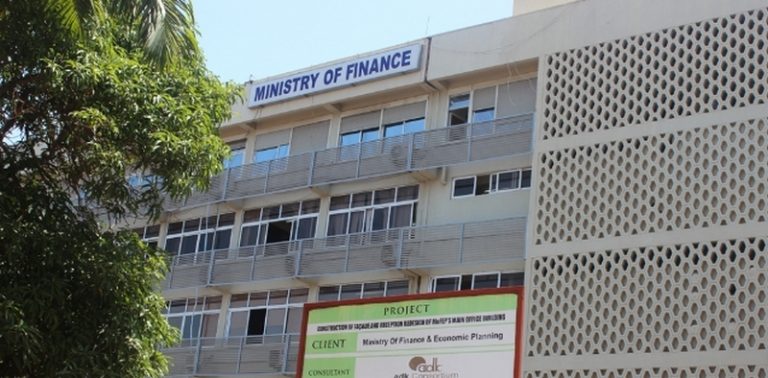
The Ministry of Energy has come under intense public scrutiny following the release of the 2024 Auditor-General’s report, which implicates the ministr
The Ministry of Energy has come under intense public scrutiny following the release of the 2024 Auditor-General’s report, which implicates the ministry in a staggering GH¢15.8 billion worth of financial irregularities — representing an alarming 86% of all irregularities reported across the public sector last year.
The revelations, detailed in the Report of the Auditor-General on the Public Accounts of Ghana: Public Boards, Corporations and Other Statutory Institutions for the Year Ended December 31, 2024, point to systemic procurement breaches, contract irregularities, and revenue misreporting as key contributors to the ballooning financial mismanagement within the energy sector.
Energy Ministry Tops the List in Financial Misgovernance
According to the Auditor-General’s breakdown, total public sector irregularities for 2024 amounted to GH¢18.42 billion, out of which GH¢15,832,975,487 was directly traceable to the Ministry of Energy.
This places the ministry at the top of the list of government institutions failing to comply with financial regulations.
The sheer size of the irregularities not only dwarfs those of other ministries, departments, and agencies (MDAs) but also raises red flags about internal financial controls and accountability frameworks within the ministry.
Electricity Company of Ghana (ECG) at the Heart of the Crisis
A significant portion of the mismanagement originates from the Electricity Company of Ghana (ECG), one of the most crucial institutions under the Energy Ministry’s oversight.
The report reveals that in 2023, ECG underreported its revenue by over GH¢2.95 billion.
Though the company collected GH¢11.59 billion, it declared only GH¢8.64 billion to the Ministry of Energy and relevant government bodies — a discrepancy that signals grave weaknesses in internal accounting practices and oversight mechanisms.
These figures come on the heels of earlier findings that ECG paid GH¢75 million to private tech firm Hubtel Limited in 2022 without a signed contract — a transaction now under investigation for procurement violations.
Persistent Breaches in Procurement and Tax Administration
Beyond revenue underreporting, the Auditor-General flagged a series of breaches in procurement procedures, store management, and tax obligations.
The report underscores a pattern of non-compliance in how public contracts are awarded, managed, and monitored within the ministry and its agencies.
Much of the irregularities stem from contract inflation, sole-sourced procurements without PPA approval, and failure to adhere to value-for-money auditing.
The report cautioned that these practices, if left unchecked, will continue to erode public trust and deepen inefficiencies in Ghana’s critical energy infrastructure projects.
Implications for Economic Recovery and IMF Deal
The findings come at a time when Ghana is under pressure to meet performance benchmarks set under its IMF-supported Extended Credit Facility programme, and as the government pushes to stabilize the economy amidst inflation and high public debt.
The energy sector is a key pillar of Ghana’s economic transformation agenda, and billions in public funds have been allocated to enhance grid stability, expand rural electrification, and accelerate energy transition policies.
With the Energy Ministry accounting for over four-fifths of all financial irregularities, experts warn that the sector’s mismanagement could trigger a loss of development financing and stricter donor oversight in the months ahead.
Auditor-General Demands Urgent Reforms and Sanctions
In its concluding recommendations, the Auditor-General called for strict enforcement of financial management regulations, greater investment in internal audit capacity, and disciplinary action against officials who either enabled or failed to prevent the lapses.
“We recommended strict implementation of our recommendations to ensure financial discipline in the management of public resources,” the report emphasized.
It also advised that the Ministry of Energy conduct a comprehensive audit of all existing contracts and procurement frameworks and establish independent review mechanisms to prevent further abuse of public funds.

COMMENTS