
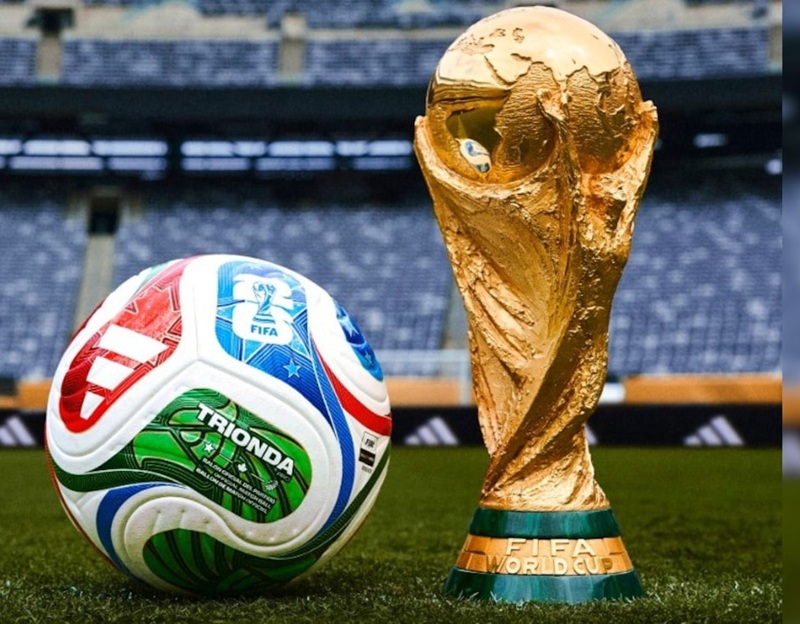
Global football governing body FIFA has announced a series of significant rule changes ahead of the 2026 FIFA World Cup, aimed at increasing match tem
Global football governing body FIFA has announced a series of significant rule changes ahead of the 2026 FIFA World Cup, aimed at increasing match tempo, reducing time-wasting, and improving officiating accuracy through expanded technology.
The new regulations will come into effect for the tournament scheduled to run from June 11 to July 19, 2026. They will impact several aspects of the game, including substitutions, restarts, injury management, and the application of Video Assistant Referee (VAR) decisions.
One of the key changes involves substitutions. Under the revised rule, players leaving the field must do so within 10 seconds when substituted. If a player deliberately delays leaving the pitch, the incoming substitute will be required to wait one full minute before entering the field of play, a measure designed to discourage time-wasting late in matches.
FIFA has also introduced stricter time limits for restarts. Throw-ins and goal kicks must now be taken within 5 seconds; otherwise, possession will automatically be awarded to the opposing team. Officials believe this change will prevent players from deliberately slowing the pace of the game.
Another rule targets the handling of injuries during matches. Players who receive medical treatment on the pitch will now be required to leave the field immediately and can only return after one minute of resumed play, except in special circumstances such as serious injuries. The adjustment is intended to prevent teams from using injury stoppages as a tactical delay.
The governing body has also expanded the use of the Video Assistant Referee system (VAR) to improve decision-making in critical situations. Referees will now be able to review incidents involving second yellow cards as well as clear errors related to corner kick decisions, adding layer of scrutiny to ensure fairness and accuracy.
Beyond the rule changes, the 2026 World Cup itself will mark a historic milestone in international football. For the first time, the tournament will be co-hosted by three nations—the United States, Canada, and Mexico—with matches taking place across 16 host cities, including 11 in the United States, three in Mexico, and two in Canada.
The tournament will also expand to 48 teams, making it the largest World Cup in history. This expansion will provide more opportunities for emerging football nations to participate on the global stage.
Mexico will make history as the first country to host three men’s World Cup tournaments, having previously staged the competition in 1970 and 1986, while Canada will host the event for the first time.
The hosting rights for the 2026 edition were awarded to the United 2026 bid, which defeated Morocco during the 68th FIFA Congress in Moscow. The competition will also mark a return to the traditional summer schedule, following the 2022 World Cup in Qatar, which was staged in November and December due to climatic conditions.
Several nations are expected to make their World Cup debut as a result of the expanded format, including Cape Verde, Curaçao, Jordan and Uzbekistan national football teams.
Meanwhile, defending champions Argentina national football team will enter the tournament aiming to retain the title they won in 2022.
Ghana will also be among the participating nations, marking its fifth appearance at the World Cup. The Ghana national football team will begin their Group L campaign against the Panama team on June 17, before facing the England team on June 23 and the Croatia team on June 27.

COMMENTS