
Dr. Mohammed Amin Adam, former Minister of Finance, has urged the government to enact legislation that would prevent Ghana from borrowing to fund recu
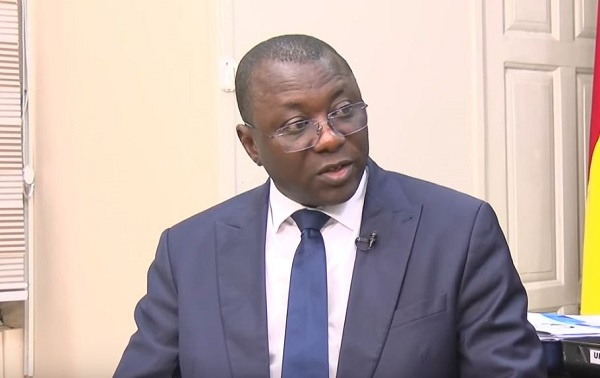
Dr. Mohammed Amin Adam, former Minister of Finance, has urged the government to enact legislation that would prevent Ghana from borrowing to fund recurrent expenditure, a practice he warned undermines long-term economic growth.
Speaking during parliamentary debates on the 2026 budget, Dr. Amin Adam drew attention to the need for stricter fiscal discipline to safeguard the country’s financial sustainability.
The former minister recommended that Ghana adopt a legal framework similar to the United Kingdom’s “golden rule,” which bars governments from borrowing to finance consumption.
While the current public financial management framework restricts the virement of capital expenditure to recurrent expenditure, Dr. Adam noted that it does not explicitly prohibit borrowing for consumption.
“This must stop; we should not borrow for consumption anymore,” he emphasized, stressing that future borrowing should be directed toward capital investment to drive economic transformation.
He argued that the use of both tax revenue and borrowed funds indiscriminately for budget components blurs the distinction between investment in infrastructure and everyday government spending, limiting the country’s capacity for growth and job creation.
Citing recent trends in the budgetary allocations, Dr. Adam noted that the proposed capital expenditure for 2026 stands at 3.6% of GDP, up from 1.5% in 2025 but below the 4.6% recorded in 2024.
He linked these figures to the nation’s projected economic growth of 4.8% in 2026, suggesting that insufficient capital spending continues to hinder real economic transformation.
Revenue mobilisation was another area of concern for the former minister. He highlighted that by September 2025, total revenue and grants amounted to GH¢154.9 billion, equivalent to 11.1% of GDP, against a full-year target of GH¢226.5 billion, or 16% of GDP.
This implies that the final quarter would need to generate GH¢71.6 billion—roughly 32% of the entire year’s revenue—to meet the 2026 budget target, an outcome he described as highly ambitious given historical performance.
Dr. Adam called for a review of how revenue allocations are tied to expenditure in the national budget, advocating for policies that prioritise capital investment over recurrent consumption.
He emphasized that aligning borrowing with productive investment, rather than everyday spending, is essential for achieving sustainable growth, creating jobs, and boosting economic resilience.

COMMENTS