
An investigative report has exposed the growing crisis in the fisheries sector, where illegal, unreported, and unregulated (IUU) fishing—dubbed “galam
An investigative report has exposed the growing crisis in the fisheries sector, where illegal, unreported, and unregulated (IUU) fishing—dubbed “galamsey at sea”—is threatening the livelihoods of local fishers, undermining sustainable development goals, and jeopardizing the access to the European Union (EU) seafood market.
According to Ministry of Fisheries and Aquaculture data obtained through a Right to Information (RTI) request, the sector generated over GHC 235 million in revenue in 2023 and 2024.
Despite this, allegations of overfishing, industrial trawler violations, and other fisheries-related crimes persist, leaving thousands of Ghanaian fishers exposed to economic and physical vulnerabilities.
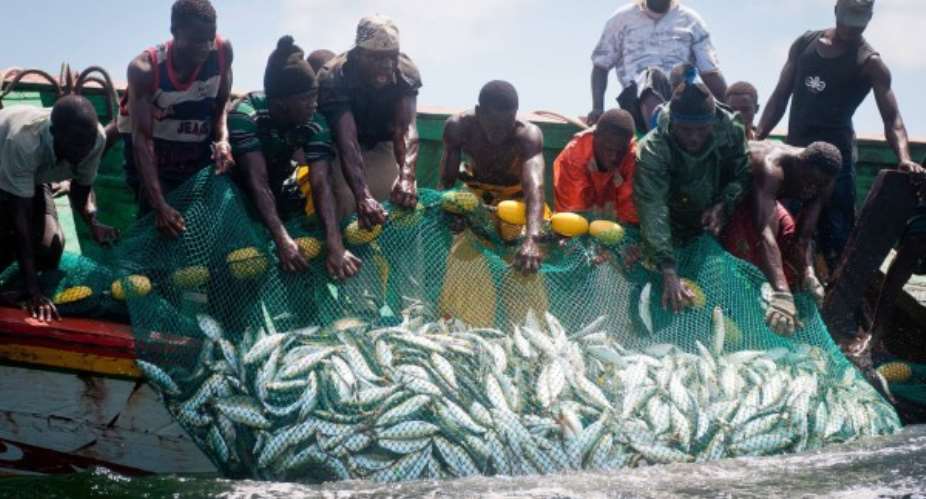
The sector employs about 10% of the national population, yet industrial fishing practices have displaced traditional canoe fishers from their fishing grounds, while poor enforcement has allowed foreign-owned vessels to dominate Ghanaian waters.
This imbalance has contributed to Ghana receiving a second EU “yellow card” warning, a regulatory measure signaling potential trade restrictions on exports.
Human Cost of Unregulated Fishing
Local fishers report poor working conditions, low wages, and intimidation on foreign-operated trawlers.
Kwesi Odaadi, a former worker on a Chinese-owned vessel, revealed that Ghanaian workers earn no more than GHC 400 for 30 to 45 days at sea and are often physically assaulted due to language barriers and misunderstandings.
Despite repeated complaints to the Fisheries Commission, many fishers say there has been little intervention, prompting some to seek guidance from the Trade Union Congress (TUC) to establish industrial trawler worker unions—efforts that failed amid intimidation.
These abuses violate the International Labour Organization’s (ILO) Work in Fishing Convention (C188), which sets minimum standards for employment, safety, accommodations, and repatriation on fishing vessels.
Yet, enforcement in Ghana remains weak, leaving local fishers to fend for themselves.
Environmental Impact
Industrial trawlers are reportedly catching unwanted juvenile fish, including fingerlings, while neglecting regulations that restrict them to demersal species near the seabed.
This practice contaminates the marine ecosystem, reduces fish stocks, and forces local canoes away from traditional fishing grounds, threatening both biodiversity and community livelihoods.
Weak Oversight and Corruption
Despite awareness of these illegal practices, enforcement is limited. License fees paid by foreign vessels are often cited as justification for inaction.
Observers tasked with monitoring compliance face corruption, intimidation, and unsafe working conditions—three observers have reportedly died on duty, and many more refuse assignments due to personal safety concerns.
Former Ghana Industrial Trawlers Association Board Secretary, E.K. Ofori-Ani, noted that insufficient compensation for observers makes them susceptible to bribery and collusion, undermining regulatory effectiveness.
Politically-Linked Trawlers Evade Accountability
Investigations suggest that several Ghanaian-owned industrial trawlers are linked to political figures, with Beneficial Ownership (BO) data unavailable, complicating accountability.
The Office of the Registrar of Companies confirmed that the sector has not been prioritized for BO disclosure due to its classification as “not high-risk,” highlighting gaps in governance and transparency.
Call to Action
The report urges the Ghanaian government to strengthen regulatory frameworks, enforce compliance, protect local fishers’ rights, and hold industrial trawler operators accountable.
Without urgent intervention, the livelihoods of thousands of Ghanaians and the sustainability of the country’s fisheries sector remain at serious risk.

COMMENTS