
Ghana is accelerating its journey toward a cashless, inclusive economy with the unveiling of the eCedi, the country’s central bank digital currency, a
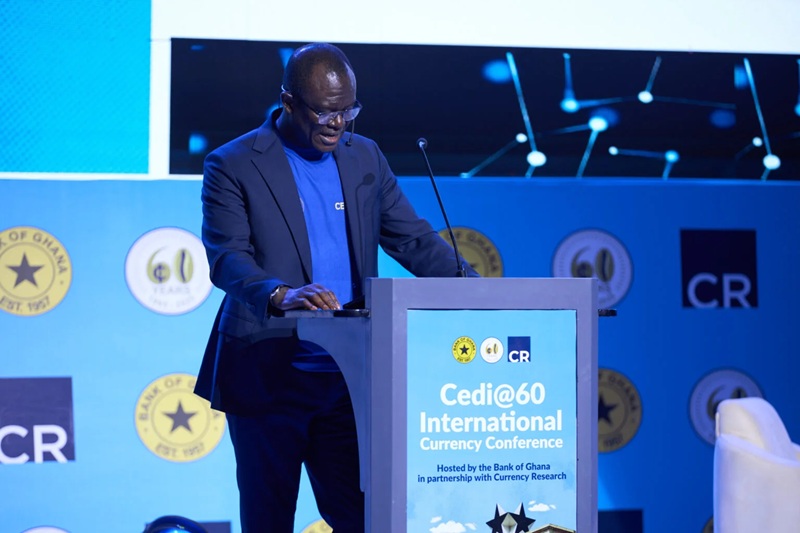
Ghana is accelerating its journey toward a cashless, inclusive economy with the unveiling of the eCedi, the country’s central bank digital currency, at the CEDI@60 International Currency Conference held at the Accra International Conference Centre.
The presentation, delivered by Dr. Zakari Mumuni, First Deputy Governor of the Bank of Ghana, highlighted the strategic role of the eCedi in transforming payments, strengthening financial inclusion, and advancing national economic growth.
Dr. Mumuni outlined Ghana’s progression from traditional cash-based systems to a modern digital payments ecosystem.
He traced the evolution from the Ghana Interbank Settlement System and the establishment of GhIPSS in 2007, to innovations including e-zwich biometric smartcards, Gh-Link, and mobile money interoperability launched in 2018.
These developments, he noted, laid the foundation for real-time, convenient, and secure digital transactions for households, businesses, and financial institutions.
“The journey toward the eCedi is a natural next step in Ghana’s financial evolution,” Dr. Mumuni said, pointing out that while cash remains widely used, digital payments have become central to the nation’s economy.
Mobile money now accounts for nearly half of interbank RTGS transactions, demonstrating the growing acceptance and reliance on digital channels.
The eCedi, Ghana’s sovereign digital currency, is designed to complement existing financial infrastructure while enhancing accessibility, affordability, and security.
Its features include offline payment capabilities to support rural communities, seamless interoperability across banks and mobile networks, and regulatory oversight to safeguard against fraud and unregulated private digital currencies.
Dr. Mumuni emphasized that the eCedi will strengthen payment efficiency, financial resilience, and economic transparency.
It is expected to provide a platform for fintech innovation, deepen financial inclusion for underserved populations, and improve monetary policy transmission by enabling the Bank of Ghana to monitor and respond to economic activity in real time.
The initiative also leverages Ghana’s digital strengths, including the national ID system, a comprehensive digital addressing framework, and a digitally literate population, particularly among the youth.
Challenges such as digital literacy gaps, cybersecurity threats, and limited access to devices are being addressed through education programmes, strong technical safeguards, and policies ensuring data protection.
“The eCedi is more than a digital currency—it is a strategic instrument to modernize economy, enhance financial sovereignty, and empower citizens with secure, reliable payment options,” Dr. Mumuni stated.

COMMENTS