
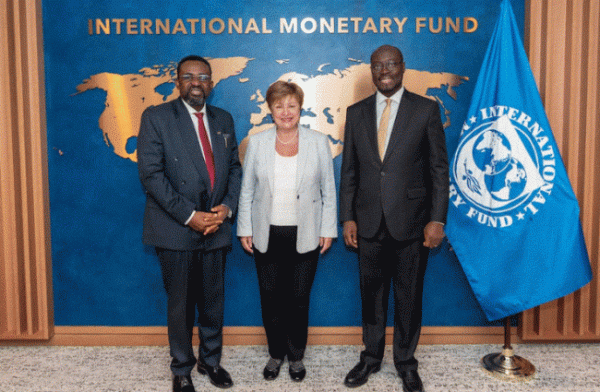
Accra will play host to officials from the International Monetary Fund (IMF) from September 29, 2025, when the Fund begins its fifth review of Ghana’s
Accra will play host to officials from the International Monetary Fund (IMF) from September 29, 2025, when the Fund begins its fifth review of Ghana’s $3 billion Extended Credit Facility (ECF) programme.
The mission comes at a critical time, as the country edges closer to the end of the three-year arrangement, which is set to conclude in May 2026.
Why This Review Matters
This fifth review is not just another routine exercise. It represents the penultimate checkpoint before Ghana exits the IMF programme, with the final assessment scheduled for April 2026.
The outcome will determine whether the country secures a further disbursement of about $360 million in October, adding to the $2.3 billion already received since the programme began in May 2023.
Market watchers, however, warn that Ghana could face difficulties sustaining fiscal discipline once the IMF oversight ends.
Some development partners are therefore urging the government to build “shock absorbers” that would cushion the economy against possible instability after May 2026.
The government, for its part, maintains that it has already put in place mechanisms to reassure investors and sustain expenditure discipline beyond the programme.
Key Issues
The IMF’s review will focus on Ghana’s economic performance data ending June 2025. Priority areas include:
Inflation trends and monetary policy effectiveness.
Foreign reserves build-up and sustainability.
Audit and clearance of arrears, particularly in statutory funds such as NHIL, GETFund, and the Road Fund.
Financial sector stability, with special emphasis on weak private banks and state-owned banks like the National Investment Bank (NIB), which may require recapitalisation.
Fiscal policy alignment, as the appreciated cedi raises concerns about achieving the 1.5% of GDP primary surplus target.
Social spending, where shortfalls in programmes for vulnerable groups remain a challenge.
The IMF Programme in Perspective
The IMF approved Ghana’s current ECF arrangement on May 17, 2023, providing a total package of SDR 2.242 billion (about $3 billion).
The first tranche of $600 million was released immediately, with subsequent disbursements tied to successful programme reviews.
The programme is designed to restore macroeconomic stability after Ghana’s severe debt and balance of payments crisis in 2022, when inflation soared above 50% and the cedi lost more than half its value against the dollar.
The government defaulted on external debt that year, prompting a painful debt restructuring process.
The IMF-supported plan focuses on:
Restoring fiscal sustainability through revenue mobilisation and efficient spending. Initiatives such as increased funding for the LEAP cash transfer programme and school feeding have been part of efforts to protect the vulnerable.
Implementing structural reforms in tax administration, public financial management, energy, and the cocoa sector.
Reducing inflation and stabilising the currency, with the Bank of Ghana tightening monetary policy and halting central bank financing of the budget.
Safeguarding financial stability while creating a more conducive environment for private investment and job creation.

COMMENTS