
Ghana has officially moved from a high risk to a moderate risk of debt distress, according to the latest Debt Sustainability Analysis (DSA) conducted
Ghana has officially moved from a high risk to a moderate risk of debt distress, according to the latest Debt Sustainability Analysis (DSA) conducted in October 2025.
The development marks a significant milestone in the West African nation’s ongoing efforts to restore macroeconomic stability and strengthen investor confidence.
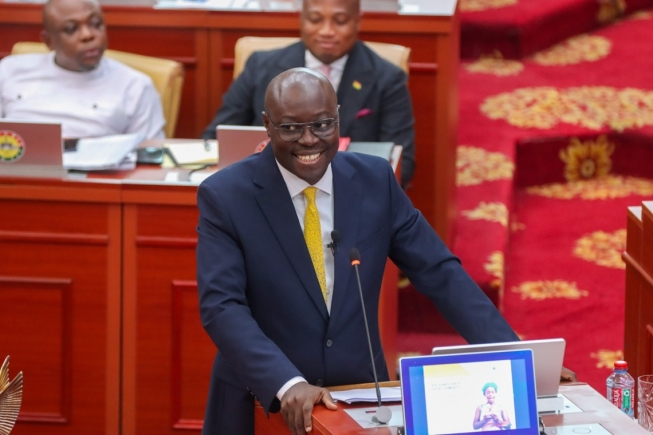
Finance Minister Dr. Cassiel Ato Forson, presenting the 2026 Budget in Parliament, described the shift as a tangible outcome of responsible fiscal management.
“This achievement demonstrates that disciplined fiscal governance and adherence to reform strategies deliver measurable results,” he said, emphasizing the government’s commitment to sustaining these gains.
The move comes after Ghana embarked on a bold fiscal consolidation program at the start of 2025, aimed at rebuilding fiscal buffers, controlling the budget deficit, and anchoring debt sustainability.
Analysts note that the government’s focus on both expenditure restraint and revenue mobilisation has been central to the improvement.
Dr. Forson highlighted key indicators reflecting progress.
According to him, the fiscal deficit has narrowed considerably, the primary balance has turned positive, and expenditure restraint has been achieved without undermining essential social protection schemes or growth-enhancing investments.
Provisional fiscal data for the first three quarters of 2025 shows the government is on track to meet the revised deficit target of 2.8% of GDP on a commitment basis, with a primary surplus of 1.5% of GDP.
On a cash basis, the overall deficit stands at 3.8% of GDP, accompanied by a primary surplus of 0.5% of GDP.
Economists say the recent performance signals a departure from previous Akufo-Addo administration periods of unsustainable borrowing that had heightened concerns over debt distress.
Over the past decade, the country has faced cycles of high debt-to-GDP ratios, rising interest payments, and fiscal pressures that affected public investment and social services.
The latest moderate risk classification indicates that, while vulnerabilities remain, Ghana has strengthened its fiscal position and improved its capacity to service debt sustainably.
Dr. Forson assured Parliament that the government would continue to adhere strictly to the Medium-Term Debt Management Strategy, deepen domestic revenue mobilisation, and maintain fiscal prudence.
“Sustaining this momentum is critical for creditworthiness restoration and attracting investment,” he added.
The International Monetary Fund (IMF) and other development partners have previously urged Ghana to implement structural reforms and enhance debt transparency to secure macroeconomic stability.

COMMENTS