
Ghana’s economy received a major boost in 2025, with the Bank of Ghana (BoG) confirming that the country recorded a trade surplus of $6.2 billion betw
Ghana’s economy received a major boost in 2025, with the Bank of Ghana (BoG) confirming that the country recorded a trade surplus of $6.2 billion between January and August.
The improvement, according to Governor Dr. Johnson Asiama, was largely driven by robust gold exports and higher earnings from cocoa, two commodities that remain the backbone of the external trade.
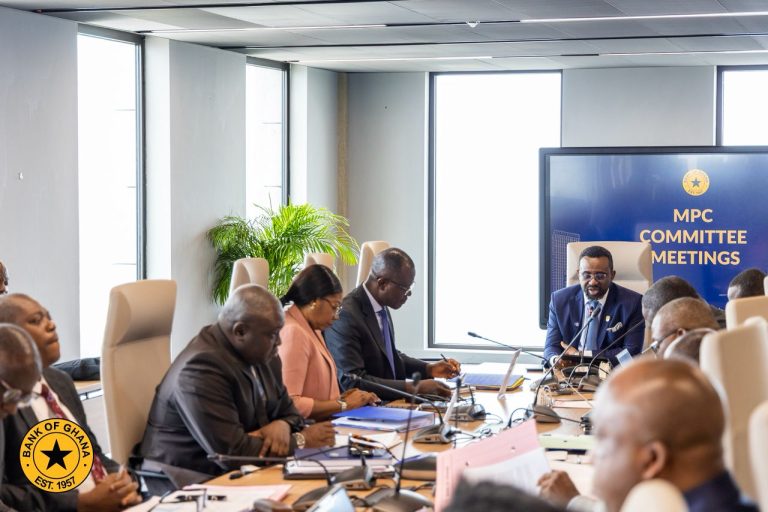
The Governor made this announcement while opening the 126th Monetary Policy Committee (MPC) meeting in Accra on Monday, September 15, 2025.
He emphasized that the healthy trade performance has contributed significantly to strengthening the country’s external buffers at a time when exchange rate stability and inflation management remain top policy priorities.
Stronger External Reserves
Dr. Asiama revealed that Ghana’s gross international reserves stood at $10.7 billion as of August 2025, providing import cover for about 4½ months.
This comes despite seasonal pressure on the cedi and a moderation in remittance inflows in recent weeks.
Reserves had been under strain in 2022 and 2023, when Ghana struggled to maintain adequate foreign currency buffers amid debt servicing challenges and reduced investor confidence.
The present turnaround highlights the impact of both international support packages and commodity windfalls.
Cedi’s Global Performance
The BoG Governor also defended the performance of the cedi, describing it as one of the strongest-performing currencies globally in 2025.
He noted that, as of September 12, the cedi had appreciated by 21% year-to-date against the US dollar, ranking alongside high-performing currencies such as the Russian ruble, Swedish krona, Norwegian krone, Swiss franc, euro, and British pound.
The cedi had previously appreciated by 45% just two months again.
“This outperformance reflects prudent monetary policy, effective liquidity management, fiscal consolidation, and increased foreign-exchange inflows,” Dr. Asiama said, stressing that investor sentiment toward Ghana had significantly improved compared to the crisis years of 2022–2023.
Banking Sector Stability
Beyond the external sector, the Governor reported improvements in the banking industry.
The capital adequacy ratio without regulatory reliefs rose to 19.5% in July 2025, well above the statutory minimum. Although non-performing loans (NPLs) remain elevated at 21.7%, he explained that the figure falls to 8.4% when losses are fully provisioned, showing resilience as recapitalization efforts and stricter underwriting standards continue to take effect.
This update comes against the backdrop of the 2017–2019 banking sector clean-up, during which several indigenous banks collapsed or were consolidated after failing to meet new capital requirements.
The Governor stressed that lessons from that period are still guiding reforms today.
Fiscal Consolidation And Debt Reduction
On the fiscal front, Dr. Asiama disclosed that government performance in the first half of 2025 pointed to continued consolidation.
The budget deficit on a commitment basis was contained at 0.7% of GDP, which was below target. This, together with the strengthening cedi and ongoing external debt restructuring, contributed to a mid-year decline in the public debt-to-GDP ratio.
Ghana had faced one of its worst debt crises in 2022, culminating in a domestic debt exchange programme and subsequent IMF bailout.
The Governor said the government’s current discipline, coupled with structural reforms, was beginning to bear fruit.
Inflation And Policy Outlook
Inflation, which peaked at over 54% in late 2022, has now moderated to 11.5% as of August 2025.
The Governor credited this progress to the BoG’s tight monetary stance and fiscal consolidation efforts.
Looking ahead, he reiterated the MPC’s readiness to adjust interest rates as needed, especially in the face of potential global trade disruptions or utility tariff adjustments that could reignite inflationary pressures.
“The Committee stands ready to respond decisively as the disinflation process evolves and risks are assessed,” Dr. Asiama assured.

COMMENTS