
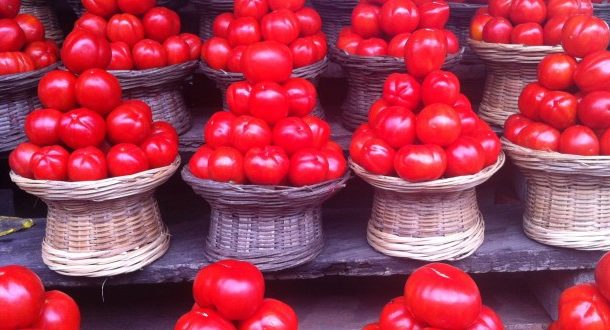
Ghana plans to produce between 200,000 and 300,000 metric tonnes of tomatoes within the next two to three years, particularly during the dry season, a
Ghana plans to produce between 200,000 and 300,000 metric tonnes of tomatoes within the next two to three years, particularly during the dry season, as part of a broader strategy to reduce the country’s heavy reliance on imports.
The Deputy Minister for Food and Agriculture, John Dumelo, disclosed this during an interview on Joy FM’s Super Morning Show on Wednesday, February 18.
According to Mr Dumelo, Ghana’s annual tomato demand is estimated at nearly 800,000 metric tonnes, making import reduction a gradual but deliberate process.
“Our yearly demand is almost 800,000 metric tonnes. And hopefully, by the end of two to three years, we should be doing about 200,000 or 300,000 metric tonnes, especially in the dry season,” he said.
He explained that successive governments have attempted to make Ghana self-sufficient in tomato production, but structural challenges have slowed progress. The current approach, he noted, places strong emphasis on irrigation, research, and farmer support.
“It would be interesting to know that over the years, we’ve tried so many ways to be able to be self-sufficient when it comes to tomato production,” he said.
“As we speak, there are certain irrigation facilities around the country where trials are ongoing with different varieties of tomatoes to see how best we can commercialise them.”
Mr Dumelo revealed that he would be touring some of these irrigation sites to assess the progress of ongoing trials.
“From tomorrow to Friday, I’ll be around some of these irrigation schemes to see how far they’ve gone,” he said, adding that harvesting has already begun in some locations.
He cited key trial sites across the country, including the Akomadan irrigation scheme in the Ashanti Region, the Tono Dam area in northern Ghana, where trials are being conducted under the Food Systems Resilience Programme (FSRP), and irrigation facilities in Garu.
The Deputy Minister noted that the current administration assumed office last year and is now in its second dry season, expressing optimism that output will increase significantly by the next farming cycle.
“By the end of this year, when we are beginning the third dry season, I’m sure we’ll be able to scale up production,” he said.
In the short term, the government aims to cut tomato imports by 20 to 30 per cent within two years.
Beyond irrigation, Mr Dumelo said the government is providing direct logistical support to farmers, including the installation of solar-powered boreholes for selected beneficiaries and the distribution of water pumps to farmer-based organisations.
He disclosed that during a recent engagement with vegetable farmers in the Eastern Region, assurances were given to support expanded dry-season cultivation.
Asked whether producing an additional 200,000 metric tonnes would make Ghana fully self-sufficient, Mr Dumelo admitted it would not, stressing that agricultural transformation is a long-term process.
“If you look at how agriculture works, there are periods of research and development, and there are periods of trials. It’s going to take some time,” he explained.
He likened the tomato strategy to the government’s poultry policy, which is also focused on gradually reducing imports rather than achieving instant self-sufficiency.
Looking ahead, the Deputy Minister expressed confidence that sustained investment in research and trials could eventually eliminate tomato imports from neighbouring countries.
“I can assure you that if we continue as we are doing now in terms of the trials and the research and everything we are undertaking, I should think that in about five or six years we should stop the total importation of tomatoes from Burkina Faso and neighbouring countries,” he said.

COMMENTS