
Ten years after its establishment, the Ghana Fixed Income Market (GFIM) has emerged as more than a trading platform—it is now a key instrument for eco
Ten years after its establishment, the Ghana Fixed Income Market (GFIM) has emerged as more than a trading platform—it is now a key instrument for economic stability, investor confidence, and long-term development.
The Wednesday anniversary celebration at Mövenpick Ambassador Hotel, themed “Deepening Markets, Expanding Possibilities,” brought together government officials, financial institutions, and investors to reflect on a decade of growth, challenges, and transformation.
When GFIM was launched in 2015, it was a bold experiment in building trust between savers, investors, and the government. Starting with GHS 5.2 billion in trade volume, the market has now surpassed cumulative trading of GHS 1.2 trillion, becoming an indispensable link between capital and development projects across the country.
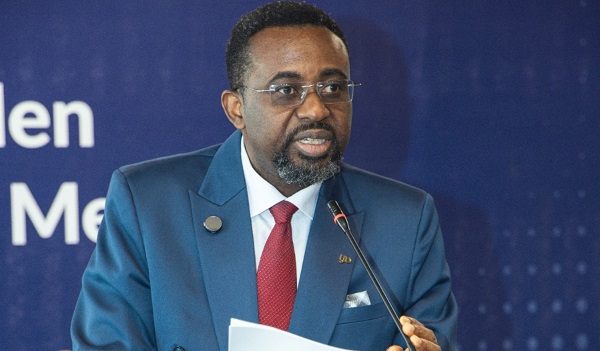
Speaking at the event, Dr. Johnson Pandit Asiama, Governor of the Bank of Ghana, highlighted how GFIM’s evolution reflects Ghana’s broader financial maturation.
“Our market has become a mirror of the nation’s fiscal and monetary credibility. Every trade signals trust—or the lack of it—in our economic management,” Dr. Asiama said.
The market’s resilience was tested during the 2022–2023 debt crisis, when trading volumes plummeted from GHS 230 billion to GHS 98 billion.
Yet, as policies stabilized and investor confidence returned, volumes rebounded to GHS 214 billion by October 2025.
The crisis, Dr. Asiama noted, revealed three vital lessons: credibility is essential, predictability fosters confidence, and fiscal-monetary coordination is the bedrock of resilience.
The experience aligns with global examples, from Jamaica’s successful debt exchanges to Greece’s post-crisis transparency measures.
In each case, recovery depended on openness, dialogue, and institutional discipline—principles that guided GFIM through its most turbulent period
The celebration also spotlighted areas for growth. Currently, government securities dominate market activity, while corporate issuance remains limited to GHS 24 billion from a few companies.
Pension funds, holding over GHS 90 billion in GFIM assets, represent a significant source of patient capital that could drive private-sector development if effectively mobilized.
To this end, the Ghana Stock Exchange has launched an academy to prepare companies for market participation, while the Bank of Ghana plans to operationalize repo and securities-lending frameworks to improve liquidity.
Digital transformation was another key theme. By integrating GFIM with Ghana Interbank Payment and Settlement Systems (GhIPSS) and the Real-Time Gross Settlement (RTGS) platform, authorities aim to build a fully automated, end-to-end bond market. Lessons from Brazil and India demonstrate how such systems reduce settlement risks and broaden access to investors.
Dr. Asiama concluded by emphasizing that GFIM’s first decade was built on trust, discipline, and collaboration. The next decade, he said, must focus on resilience, market depth, and diversification.
“We now have the opportunity not only to trade bonds but to transform Ghana’s economy,” he noted, urging all stakeholders to strengthen partnerships and continue the path toward a more inclusive, credible, and innovative market.

COMMENTS