
A fresh controversy involving an estimated GH¢17,710,760 million has erupted at the Ghana Revenue Authority (GRA), following allegations that the inst
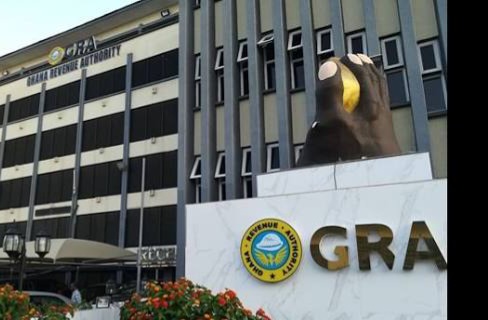
A fresh controversy involving an estimated GH¢17,710,760 million has erupted at the Ghana Revenue Authority (GRA), following allegations that the institution unlawfully granted self-recognizance bond status to an oil marketing company that failed to meet mandatory regulatory requirements, deepening public concern over governance and abuse of power at the tax agency.
The company is among others who failed to fulfil their contractual obligations to the state after granting them unqualified self-recognizance bond status.
The latest allegations are being spearheaded by a civil society group which is determined to formally push the case to the Commission on Human Rights and Administrative Justice (CHRAJ) in in a few days’ time. The civil society group had previously triggered major probes into procurement and revenue-related scandals at the GRA.
The allegations indicated that the Commissioner General, Anthony Kwasi Sarpong and some senior officers are flouting their own operational guidelines in granting financial concessions to unqualified oil marketing companies, OMCs.
Attempts to speak to the affected people were not successful.
Bond System
Under GRA and Customs regulations, self-recognizance bond status allows Oil Marketing Companies (OMCs) to lift petroleum products without upfront cash payment, based on trust and past compliance after several years of operations.
The system is designed strictly for financially sound, tax-compliant firms with a proven operational track record, to safeguard state revenue.
However, the civil society group contends that the system has been abused, exposing the state to huge financial risk. Central to the case is an Energy company that had earlier applied for self-recognizance bond status in 2024 but was rejected for failing to meet the qualifying criteria.
Sudden Approval Under New Administration
However, following a change in government, the company and others were suddenly granted self-recognizance bond status by the GRA new leadership, despite no evidence that their operational or financial circumstances had improved to meet the laid-down requirements.
This approval runs directly contrary to GRA’s own guidelines for Oil Marketing Companies,” a source familiar with the case told The Daily Gist.
Breach of GRA’s Own Guidelines
The GRA’s internal guidelines for granting self-recognizance bond status clearly spell out strict conditions, including:
A minimum six-month probation period under cash-and-carry operations;
At least three consecutive years of lifting petroleum products on bond;
Four years of continuous operations on the bond;
Full tax compliance for at least three consecutive years, including timely filing and payments;
A bond sum capped at the applicant’s average monthly lifting payments to GRA.
However the company failed to satisfy any of these benchmarks.
The company has already defaulted on payments for petroleum lifted, with arrears running into millions of cedis—forming part of the GH¢17,710,760 million exposure now confronting the state at the time the GRA is struggling to meet its revenue target.
The company defaulted in October 2025 Window; November 2025 Window1 and November 2025 Window2.
No Evaluation Committee Constituted
Perhaps more troubling, is allegation that the mandatory evaluation committee required under Customs Regulations, 2016 (L.I. 2248) was never constituted before the approvals were granted. Regulation 15 of the Customs framework requires a multi-departmental committee—drawing officers from Customs Policy, Petroleum Operations, Post-Clearance Audit, Legal and Risk Management units—to assess applicants and submit a report to management.
However, the approvals were allegedly granted without any such committee sitting or submitting a report in direct violation of Act 891 and internal customs procedures.
Risk To State Revenue
It’s been established that granting self-recognizance status to companies without financial capacity places public funds at risk, especially when defaults occur.
The company’s alleged failure to pay for lifted products has heightened fears that the state may struggle to recover the outstanding sums since it was not bonded as the law stipulated.
The civil society group indicated that “If companies that clearly lack capacity are allowed to lift petroleum on trust, how will the state recover its money when they default, as has already happened?”
CHRAJ Investigation
It is the basis of the negligence that a petition may land on CHRAJ table calling for investigation into each beneficiary company individually, examine the approval process, and determine whether public officials abused their authority or acted in breach of administrative justice principles.
The accountability for officials who authorized the approvals, especially in light of earlier scandals at the GRA that resulted in findings of corruption, procurement breaches, and sanctions against senior officers.

COMMENTS