
President John Dramani Mahama led government is facing renewed political and social pressure following the announcement of significant increases in el
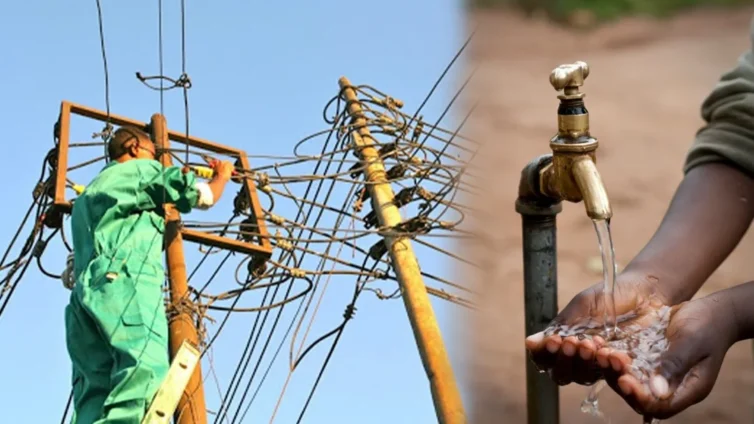
President John Dramani Mahama led government is facing renewed political and social pressure following the announcement of significant increases in electricity and water tariffs set to take effect from January 1, 2026.
The Public Utilities Regulatory Commission (PURC) approved a 9.86 percent rise in electricity charges and a 15.92 percent hike in water rates, part of a multi-year tariff review running from 2026 to 2030.
The adjustments, according to PURC, are intended to address growing investment needs in the utility sector, account for inflation and exchange rate fluctuations, and ensure the financial sustainability of service providers.
Strangely the depreciation of the Ghana Cedi has been tamed and inflation reduced to single digit raising questions about the justification of the tariff hikes.
Opposition lawmakers and organised labour groups have described the increases as punitive, poorly timed, and economically harmful.
Speaking to journalists in Accra, George Kwame Aboagye, Ranking Member of the Energy Committee and Member of Parliament for Asene Manso Akroso, criticised the government for imposing tariff hikes while systemic inefficiencies in electricity distribution remain unresolved.
He noted that Ghana continues to experience annual commercial and technical power losses of approximately 32 percent, which translates into millions of dollars lost, and argued that recovering these losses could significantly reduce the need for tariff increases.
“The cumulative 28.14 percent increase in electricity tariffs within such a short period is unacceptable,” Aboagye stated, warning that ordinary households and small businesses—the backbone of the economy—would be disproportionately affected.
He described the hikes as “a direct assault on livelihoods” and “utility punishment” that could negate the recently approved 9 percent wage adjustment for 2026.
The Trades Union Congress (TUC), represented by Vice Chair Ken Tweneboa Kodua, also condemned the tariff announcement, asserting that the process excluded meaningful consultation with organised labour.
Kodua revealed that the TUC had been negotiating a fair and realistic tariff structure for workers, and that PURC’s unilateral decision undermined trust between regulators and labour stakeholders.
Organised labour has called for an immediate suspension of the tariff increases and warned that they would resist any policy that erodes wage gains.
Analysts have highlighted that the peak electricity demand currently stands at 4,080 megawatts, with an average of 3,500 megawatts.
When adjusted for technical and commercial losses, the country is effectively losing between $80 million and $90 million annually.
Lawmakers and labour leaders argue that such inefficiencies must be addressed before passing costs onto consumers, particularly as households and businesses are still recovering from previous tariff adjustments.
The backlash comes amid broader economic pressures in Ghana, including inflationary challenges and currency volatility, which have already strained household budgets.
Previous tariff reviews in the country have frequently sparked public protests and political debate, and the current increases are expected to intensify discussions on economic governance, energy sector reforms, and consumer protection.
However, the Minority in Parliament and organised labour groups are calling on the government to reverse the increases, streamline operational inefficiencies, and prioritise transparent engagement with stakeholders.
Failure to do so, they warn, could deepen “utility poverty” and threaten the survival of small and medium enterprises across the country.

COMMENTS