
In the 2026 Budget Statement, the government unveiled an ambitious plan to upgrade and expand educational infrastructure across Ghana, signaling a ren
In the 2026 Budget Statement, the government unveiled an ambitious plan to upgrade and expand educational infrastructure across Ghana, signaling a renewed focus on quality learning, accessibility, and equitable opportunities for students at both the basic and secondary levels.
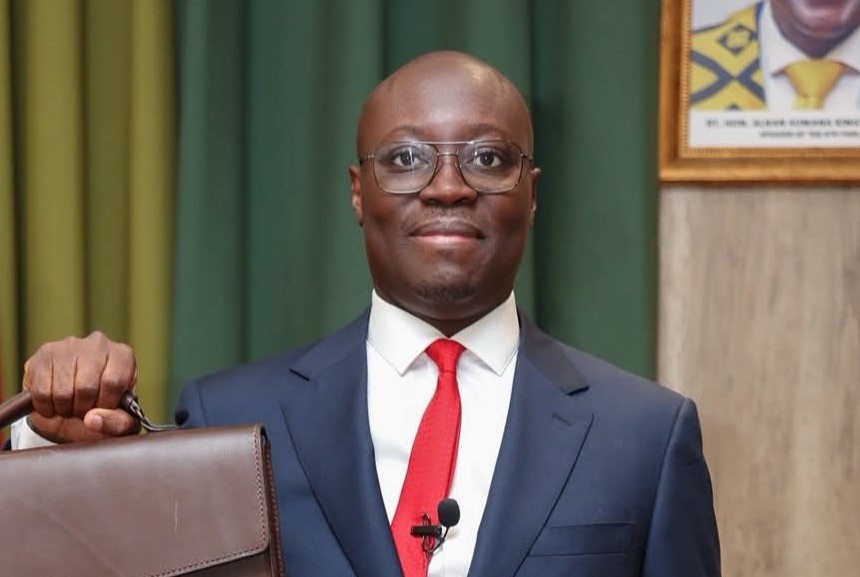
Highlighting the government’s commitment to modernizing education, the Finance Minister announced that 30 Category C senior high schools will be upgraded to Category B standards.
The upgrades will include new classrooms, dormitories, modern science resource centres, digital learning facilities, and improved water and sanitation systems, aimed at enhancing both academic performance and student welfare. This move follows previous initiatives where the government sought to standardize facilities across high-demand schools, responding to increasing student enrolments in urban and peri-urban areas.
The government also pledged to complete 30 previously abandoned E-Blocks in Community Day Senior High Schools (SHSs) located in urban and peri-urban districts.
These structures, left incomplete in earlier budget cycles, are intended to expand access to secondary education in high-demand regions, helping to address overcrowding and reduce pressure on existing school facilities.
At the basic education level, the government plans to enhance both infrastructure and teaching resources.
The GETFund will oversee the construction of 200 new junior high schools, 200 primary schools, and 200 kindergartens, alongside the building of 400 four-unit teachers’ bungalows and 400 sanitary facilities in underserved communities.
Each school will come fully furnished, and these interventions are expected to benefit over 200,000 additional students annually, reflecting the administration’s long-standing commitment to expanding access to education for all children.
To complement the infrastructure expansion, the government will distribute free, comprehensive, curriculum-based textbooks. This includes:
Four sets of kindergarten books and workbooks for about 1 million learners,
Four sets of primary school textbooks for 2 million learners, and
Nine sets of Junior High School (JHS) Level 3 textbooks for 1 million learners.
Secondary schools and selected district education directorates will also receive essential teaching and learning resources, including 2 million metal mono-desks and chairs, 200 66-seater buses, 200 double-cabin pick-up vehicles, and 50 salon cars, aimed at enhancing mobility for both teachers and students.
This comprehensive package of infrastructure, teaching resources, and transportation demonstrates the government’s strategic approach to improving learning outcomes, teacher welfare, and access to quality education, particularly in underserved communities.
It also represents a continuation of the government’s ongoing investments in education, seeking to address historical disparities in school facilities and resource availability.
The 2026 interventions mark a significant step toward equitable education, reinforcing the government’s policy goal of resetting growth, creating jobs, and promoting economic transformation through a well-educated workforce.

COMMENTS