
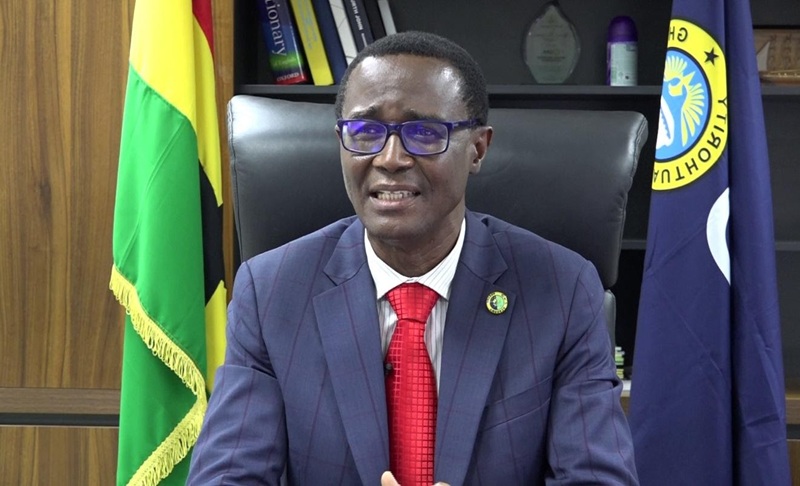
A detailed investigation into procurement activities at the Ghana Revenue Authority (GRA) under previous Commissioner General, Ammishaddai Owusu-Amoah
A detailed investigation into procurement activities at the Ghana Revenue Authority (GRA) under previous Commissioner General, Ammishaddai Owusu-Amoah has uncovered a troubling trail of contracts awarded to companies that investigators later struggled to physically locate, raising serious questions about due process, tax compliance and possible corruption within the public institution.
The controversy dates back to 1 October 2021, when the GRA, acting as a Head of Entity under the Public Procurement framework, awarded contracts for the supply of vehicles and other logistics to Ronor Motors Ghana Ltd, Sajel Motors Ltd and Telinno Ghana Ltd totaling over GHC85million.
The contracts covered the supply of new vehicles and logistics such as surveillance drones, motorcycles and accessories intended to support the operational work of the Authority.
According to findings by a Commission on Human Rights and Administrative Justice, CHRAJ, the GRA employed the single-source procurement method in awarding the contracts.
This directly contradicted earlier claims that a restrictive tender process had been used.
Investigators concluded that the use of single sourcing was not adequately justified and breached provisions of the Public Procurement Act, 2003 (Act 663) and its subsequent amendments.
Tax Liabilities And Unsettled Payments
A major red flag identified by the Commission was the failure of the companies to fully meet their tax obligations, despite receiving substantial payments from the GRA.
In the case of Ronor Motors Ghana Ltd, records showed a total tax liability of GHS1,339,821.54, leaving an outstanding balance of GHS642,361.62 after partial payments.
Documents attached to Ronor Motors’ correspondence included receipts for payments of GHS56,961.54, GHS259,692.23 and GHS124,394.00 made between October 2021 and February 2023.
The company formally applied to settle the remaining balance in four equal monthly instalments beginning May 2023. Meanwhile GRA had made full payment under the contractual obligations.
However, the CHRAJ stated it could not establish whether the GRA approved or rejected this request.
More damning were findings relating to Telinno Ghana Ltd and Sajel Motors Ltd, which failed to provide any credible documentation showing that taxes had been paid on vehicles and logistics supplied to the GRA. The two companies’ office locations were difficult to locate after a whistleblower tried to establish.
As at the date of the complaint, investigators concluded that none of the three companies had fully paid the required taxes, despite having been paid by the state.
‘Ghost’ Offices And Missing Garages
The investigation was triggered by a complaint filed by Joseph Bediako, Convener of the Movement for Truth and Accountability, who alleged that the contracts were awarded to companies that lacked capacity and proper operational presence.
In interviews with the Commission, Bediako disclosed that he personally visited addresses supplied by the GRA for Telinno Ghana Ltd and Sajel Motors Ltd but could not locate their offices or garages.
At Telinno’s stated address, he found a completely different company, Auto Mall Ltd, operating there. Similar attempts to locate Sajel Motors’ premises also failed.
These findings were reinforced by field investigations conducted by the Commission, which attempted to physically verify the business offices and garages of all three firms.
Capacity Concerns And Cancelled Contracts
Beyond location issues, the Commission raised concerns about the technical capacity of the companies to execute contracts of such magnitude.
Bediako argued that the firms lacked garages necessary to provide after-sales service and warranty, which were mandatory components of contracts for the supply of new vehicles.
According to information obtained by the Commission, some of the vehicles supplied to the GRA were serviced not at company garages but at various informal locations, including within the compound of Accra High School.
Others were reportedly serviced within GRA premises, undermining the claim that the suppliers had the requisite infrastructure.
The lack of capacity, investigators noted, partly explained why some aspects of the contracts were eventually cancelled, particularly where vehicles were not delivered as agreed.
Despite these shortcomings, the contracts were still awarded, raising suspicions of favoritism.
Allegations Of Corruption And Cronyism
Bediako told the Commission that, taken as a whole, the procurement process bore the hallmarks of corruption and fraud.
He alleged that the contracts were awarded to “novice companies” with no proven track record, possibly linked to friends, family members or political associates.
He questioned why established suppliers such as Toyota Ghana Company Limited, which had previously supplied similar vehicles to the GRA, were bypassed in favour of lesser-known firms that could not meet contractual obligations and at higher prices.
Commission’s Verdict And Sanctions
After reviewing evidence from institutions including the Office of the Registrar of Companies, the Public Procurement Authority (PPA), the Financial Intelligence Centre (FIC) and interviews with senior GRA officials and company directors, the Commission reached far-reaching conclusions.
It found significant acts amounting to fraud and corruption, breaches of procurement laws and financial loss to the state. Consequently, the Commission ruled that the Respondent, Dr. Ammishaddai Owusu-Amoah as Head of Entity at the GRA at the time, be disqualified from holding any public office for five years, in line with Section 9 of the relevant statutes governing public officeholders.
The Commission further referred the Respondent and directors of the three companies to the Attorney-General for possible prosecution under the Criminal Offences Act, 1960 (Act 29), and for recovery of US$826,551.00 said to have been lost to the state.
Companies Face Blacklisting
In addition, the Commission formally requested the Public Procurement Authority to debar Sajel Motors Ltd and Telinno Ghana Ltd from doing business with the state and its international agencies as the two companies sub-let their contracts to Ronor Motors headed by Atta Frimpong Addo.
The recommendation was based on findings that the companies made false representations to place themselves in good standing to win the contracts, whereas they lacked the capacity.
The Commission also urged the PPA Board to strictly enforce the Public Procurement Regulations, 2022 (L.I. 2466), particularly provisions governing single-source procurement, to prevent future abuses and ensure value for money.

COMMENTS