
A new international survey has revealed a startling development in the world of music and technology — the line between human-created songs and artifi
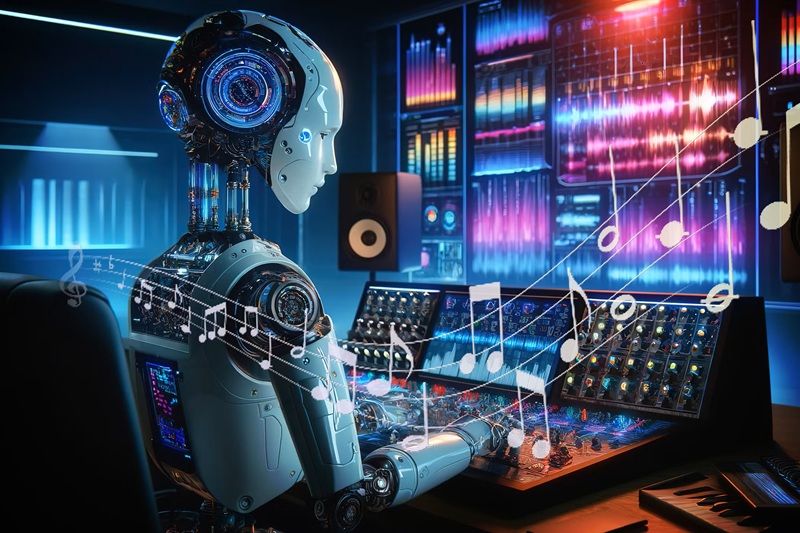
A new international survey has revealed a startling development in the world of music and technology — the line between human-created songs and artificial intelligence (AI)-generated tracks has become almost invisible to listeners.
The poll, conducted by Ipsos for France-based streaming platform Deezer, found that 97 percent of respondents were unable to tell the difference between songs composed by humans and those created entirely by AI.
AI’s Silent Takeover of the Music Industry
The findings, released on Wednesday, November 12, 2025, come amid growing debates about the role of AI in creative industries, particularly in music production.
Over the past year, major streaming platforms have witnessed an unprecedented surge in the number of AI-generated tracks uploaded daily — many of which are now gaining significant listener traction.
According to Deezer, in January 2025, around one in every ten tracks streamed on its platform was AI-generated.
Just ten months later, that figure had quadrupled, with nearly 40,000 AI-produced songs streamed daily, representing more than one-third of all new uploads.
Survey Findings
The Ipsos survey sampled 9,000 people from eight countries — Brazil, Britain, Canada, France, Germany, Japan, the Netherlands, and the United States — between October 6 and 10, 2025.
Participants were asked to listen to three music clips: two created by AI and one by a human artist. Shockingly, the vast majority failed to correctly identify which tracks were human-made.
Deezer’s report stated:“Ninety-seven percent could not distinguish between music entirely generated by AI and human-created music.”
More than half of those surveyed admitted feeling uncomfortable with their inability to tell the difference.
The results also revealed widespread skepticism about AI’s long-term impact on the quality and authenticity of music.
Fifty one percent of respondents believe AI will lead to an increase in low-quality music flooding streaming services.
Nearly two-thirds fear that AI’s rise will cause a decline in human creativity in the arts.
Public Demand for Transparency
The overwhelming sentiment among listeners was a call for transparency. A staggering 80 percent of respondents said they wanted AI-generated music to be clearly labeled on streaming platforms so that audiences know exactly what they are listening to.
In response, Deezer’s Chief Executive Officer Alexis Lanternier emphasized that the company is committed to maintaining clarity and trust between creators and listeners.
“The survey results clearly show that people care about music and want to know if they’re listening to AI or human-made tracks,” he said.
Lanternier noted that Deezer remains the only major streaming service that systematically labels fully AI-generated content, setting it apart from competitors such as Spotify, Apple Music, and YouTube Music, which have yet to adopt similar transparency measures.
A Growing Debate: Innovation vs. Authenticity
The blending of artificial intelligence and music creation has sparked an ethical and creative dilemma within the industry.
Proponents argue that AI tools democratize music production, enabling more people to create and distribute songs quickly and affordably. Critics, however, warn that AI threatens to devalue human artistry and erase emotional authenticity from the creative process.
In recent years, AI has been used to mimic the voices and styles of famous artists — from The Weeknd and Drake to the late Freddie Mercury — prompting lawsuits and copyright reforms across several countries.
The issue has reignited calls for global regulation on how AI-generated works are created, labeled, and monetized.

COMMENTS