
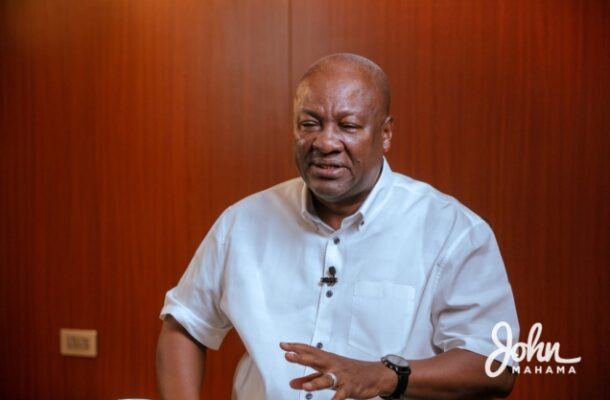
President John Dramani Mahama has announced that his administration has successfully delivered on three of the four major tax relief promises it made
President John Dramani Mahama has announced that his administration has successfully delivered on three of the four major tax relief promises it made during the 2024 election campaign, as part of efforts to reduce the cost of living and improve the business climate in Ghana.
However, the government has held back on scrapping the COVID-19 Health Recovery Levy, citing its connection to Ghana’s ongoing fiscal programme with the International Monetary Fund (IMF).
In a national address delivered on Wednesday, 7th May 2025—marking 120 days since assuming office—President Mahama confirmed the repeal of the Electronic Transfer Levy (E-Levy), the 10% betting tax, and the emissions levy.
These were signed into law on 2nd April 2025, he noted, as part of a broader initiative to stimulate economic activity and restore public confidence in the tax system.
“To alleviate hardships and ease the high cost of doing business, I promised to scrap the E-levy, COVID levy, 10% levy on bet winnings, and the emissions levy within my first 90 days,” Mahama said.
“We have delivered on three of these four specific tax repeals as promised, and we remain committed to the fourth.”
The tax reforms were a key component of the National Democratic Congress (NDC) 2024 campaign manifesto, which framed the levies as burdensome and regressive.
The NDC argued that these taxes disproportionately affected ordinary citizens and small businesses, particularly as the country struggled with inflation, high unemployment, and the lingering effects of the COVID-19 pandemic.
The E-Levy, introduced in 2022 under the Akufo-Addo administration, was particularly controversial, imposing charges on electronic financial transactions such as mobile money.
The betting tax and emissions levy similarly faced resistance, especially from youth groups and transport operators.
Their removal has been widely welcomed across segments of the population.
COVID Levy
Despite these gains, the government has held back on repealing the COVID-19 Health Recovery Levy, a tax embedded within the broader Value Added Tax (VAT) structure.
This levy, introduced after the pandemic, was intended to finance public health recovery efforts but has since become a fiscal mainstay.
President Mahama explained that the delay in repealing the COVID levy stems from ongoing negotiations with the IMF, which is overseeing a multi-year economic recovery programme for Ghana.
“The COVID levy has intricate linkages to the existing IMF programme,” he noted.
“As a value-added tax, we have agreed with our multilateral partners to include it in our overall VAT rationalisation exercise scheduled for September of this year.”
This explanation aligns with Ghana’s commitments under the Extended Credit Facility (ECF) arrangement with the IMF, which includes structural benchmarks on domestic revenue mobilisation and tax efficiency. Removing the COVID levy prematurely, officials argue, could compromise fiscal targets and risk undermining donor confidence.
Public Sentiment and the Road Ahead
The continued existence of the COVID levy has drawn criticism from sections of the public, particularly small traders and low-income earners, who argue that it exacerbates the cost of goods and services.
Civil society groups have called on the government to fast-track negotiations and find alternative revenue sources that do not burden vulnerable households.
Nevertheless, economists see the repeal of the other three levies as a strong signal of the Mahama administration’s commitment to pro-growth policies.
Analysts say the next phase of tax reform—particularly the September VAT restructuring—will test the government’s ability to balance international obligations with domestic expectations.

COMMENTS