
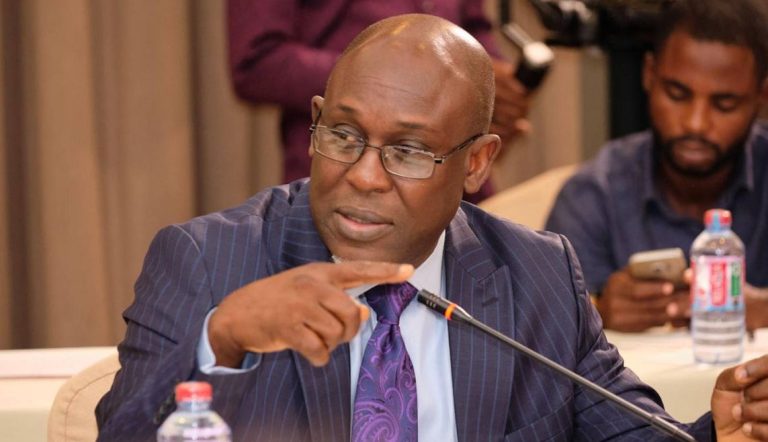
Policy expert and Vice President of IMANI Africa, Kofi Bentil, has delivered a scathing critique of President John Dramani Mahama’s flagship 24-hour e
Policy expert and Vice President of IMANI Africa, Kofi Bentil, has delivered a scathing critique of President John Dramani Mahama’s flagship 24-hour economy proposal, cautioning that Ghana may only realize less than 30% of its intended outcomes if structural inefficiencies persist.
Speaking on JoyFM’s Newsfile program on Saturday, Bentil likened the plan to what he described as Ghana’s history of “fanciful but unproductive” initiatives, warning that unless fundamental infrastructure and governance issues are tackled, the policy could become yet another expensive illusion.
A Pattern of Promises Without Progress
Bentil drew parallels between the 24-hour economy concept and past government policies such as the One District One Factory (1D1F) initiative, which saw over $541 million invested across 169 enterprises.
Many of these businesses, he pointed out, are now either underperforming or completely stalled.
“We have a tradition of making big promises that collapse under the weight of poor planning, underinvestment in critical sectors, and bloated bureaucracies,” he said.
“We create excuses for underdevelopment, then excuses for failed projects, and finally excuses for wasted funds.”
He argued that Ghana’s governments repeatedly choose spectacle over substance, with high-profile launches that lack the groundwork necessary to succeed.
According to him, pilot phases are often used as a convenient method to access funds without accountability.
“They’ll access $300 million, dig a few trenches, and declare progress. By 2028, we’ll be probing where the money went,” he stated.
Ignoring the Basics
Bentil emphasized that no 24-hour economy can flourish without robust foundational systems in place.
He cited water, energy, roads, and telecommunications as essential preconditions for any economy to function efficiently on a 24/7 basis.
“Providing reliable water supply to just the Accra-Tema corridor will cost about $2 billion over four years,” he revealed.
“Meanwhile, the 24-hour economy plan has a budget of $4 billion. That should tell you the scale of the challenge.”
He questioned the practicality of launching a new economic regime without solving these infrastructure deficits first, calling it a case of “putting the cart before the horse.”
Bureaucratic Overload
The proposal to create a new regulatory body—the 24-Hour Economy Authority—was also met with strong criticism from Bentil.
He referenced warnings from the International Monetary Fund (IMF) about Ghana’s ballooning public sector wage bill, arguing that creating more agencies would only compound inefficiency.
“Ghana’s bureaucracy already consumes nearly 80% of government revenue. The last thing we need is more institutions. We need existing agencies to deliver results,” he asserted.
NDC Defends, Critics Skeptical
President Mahama and the National Democratic Congress (NDC) have consistently defended the 24-hour economy proposal, promoting it as a transformative vision that will expand employment, stimulate industrial growth, and formalize the informal sector.
The policy includes incentives such as tax breaks for companies that operate night shifts, enhanced security for night-time workers, and reforms to support round-the-clock public service delivery.
However, Bentil and other analysts view the plan with skepticism, describing it as a well-branded policy with weak prospects for execution.
“We must be wary of ending up with glossy reports and empty outcomes,” he warned.
A History of Flash Over Function
Bentil’s criticism reflects IMANI Africa’s long-held concern about what it calls “branded underdevelopment”—where governments, irrespective of political colour, invest heavily in public relations and ribbon-cutting while neglecting sustainable implementation and monitoring.
He stressed that without a commitment to fixing underlying inefficiencies, the 24-hour economy, like many past initiatives, could fade into obscurity after political cycles shift.
Presidential Advisor on the 24-Hour Economy, Augustus Goosie Obuodum Tanoh, said the programme is projected to cost $4 billion.
According to Tanoh, the government is prepared to inject between $300 million and $400 million as seed capital to attract private sector investment and cover what he termed a “viability gap.”
“This initial investment is crucial to make the bulk infrastructure commercially sound and bankable to investors,” he noted, adding that private sector interest has already yielded near $2 billion in preliminary pledges.
The programme is anticipated to create 1.7million jobs in four years.

COMMENTS