
Ghana’s largest referral facility, the Korle Bu Teaching Hospital, Accra is once again grappling with a growing health crisis as breast cancer cases s
Ghana’s largest referral facility, the Korle Bu Teaching Hospital, Accra is once again grappling with a growing health crisis as breast cancer cases surge beyond its capacity.
For more than a decade, Korle Bu has served as the country’s primary oncology hub, handling the bulk of cancer diagnoses and surgeries due to Ghana’s limited number of specialized treatment centres.
Despite repeated calls over the years for decentralised cancer care, the burden continues to mount—an issue that has now reached critical levels.
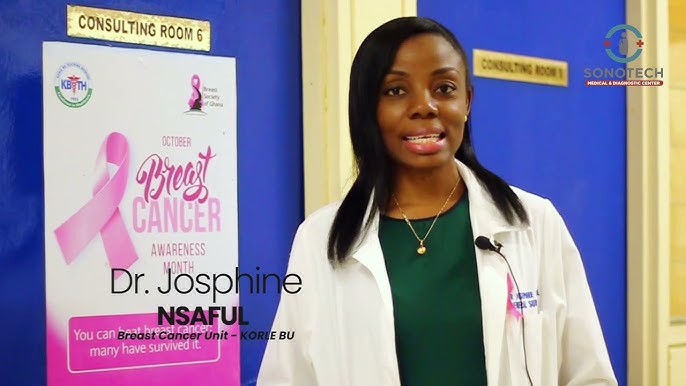
Speaking at the launch of the Dzidula Breast Cancer Foundation in Accra on Sunday, December 8, 2025, Dr. Josephine Nsaful, a General Surgeon at the hospital’s Breast Cancer Unit, sounded the alarm once again.
She revealed that the unit currently receives no less than 600 new breast cancer cases every year, in addition to hundreds of patients already undergoing treatment.
This, she said, has created enormous pressure on a system that remains understaffed and overstretched.
Dr. Nsaful noted that the Breast Cancer Unit now records one of the longest clinic days in the entire surgical department, a direct consequence of the sheer volume of patients waiting to be seen.
The unit’s longstanding workload has deepened concerns about treatment delays, access barriers, and the overall quality of care.
She emphasized that without more cancer centres across the country, the burden will continue to fall heavily on Korle Bu and Komfo Anokye Teaching Hospital—the only major referral points for advanced cancer management.
“It is quite concerning and alarming. We are overwhelmed by the large number of patients we have to attend to,” she stated.
“If more treatment centres are created in the regions, it would ease the pressure on teaching hospitals and ensure that cancer care is accessible, timely, and equitable for all Ghanaians.”
The call for decentralisation echoes longstanding advocacy from health experts who say that the two major oncology centres are insufficient for a country with a rising cancer burden.
Breast cancer remains the most diagnosed cancer among Ghanaian women, with late presentation and interrupted treatment contributing to high mortality rates.
At the same event, breast cancer survivor and founder of the Dzidula Breast Cancer Foundation, Fafa Gozo, highlighted another longstanding challenge—financial hardship and stigma.
She revealed that many women battling the disease struggle to maintain consistent treatment because of cost barriers and social fears.
Some patients, she said, refuse interviews or public exposure due to stigma, while others are forced to pause treatment for months because they cannot pay for laboratory work, surgery, chemotherapy, or follow-up care.
“There are people who go today and return tomorrow, and then take long breaks because they simply cannot afford continuous treatment,” Gozo lamented.
“This does not help them. We are trying to raise money because the government cannot do it alone,” she indicated.

COMMENTS