
The National Democratic Congress Government strong condemnation of the November 2025 coup d’état in Guinea-Bissau has triggered a fierce political bac
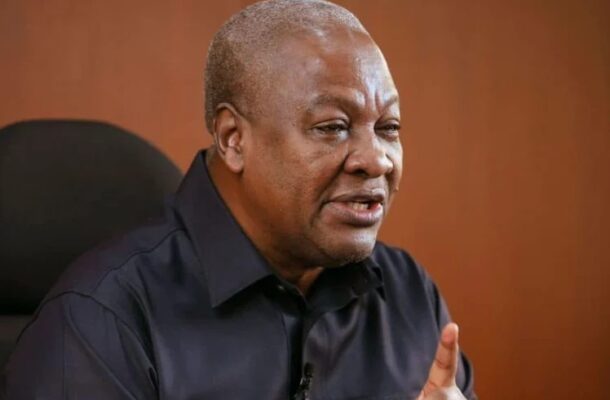
The National Democratic Congress Government strong condemnation of the November 2025 coup d’état in Guinea-Bissau has triggered a fierce political backlash at home, with critics accusing President John Dramani Mahama of practicing “pendulum diplomacy” and projecting damaging inconsistencies in the foreign policy posture.
In a sharply worded critique circulating among political actors and security analysts, President Mahama is being questioned for what some describe as “blatant double standards” in dealing with military juntas across West Africa.
The criticism intensified shortly after the Ministry of Foreign Affairs issued an official statement on 26 November 2025, denouncing the Guinea-Bissau military for interrupting the electoral process barely days after peaceful presidential and legislative polls.
But detractors argue that the government’s condemnation rings hollow against the backdrop of Mahama’s recent diplomatic engagements.
They point particularly to his invitation of Burkinabè military ruler Captain Ibrahim Traoré to his presidential inauguration earlier this year, and his subsequent appointment of retired Colonel Larry Gbevlo-Lartey as Ghana’s special envoy to the Alliance of Sahel States (AES) — a bloc comprised exclusively of military-led governments currently under ECOWAS sanctions.
Political opponents claim these actions not only undermine ECOWAS protocols on unconstitutional changes of government but also project Ghana as tacitly endorsing repressive regimes.
“How do you invite a coup-maker to your inauguration, appoint an envoy to an alliance of sanctioned military rulers, and then turn around to condemn a coup in Guinea-Bissau?” one critic charged, accusing Mahama of abandoning the principles of statecraft and international consistency.
The attacks have taken on a more personal tone as well, with Mahama mockingly labeled “Bole Idi Amin” — a reference to the brutal former Ugandan dictator — while Foreign Affairs Minister Samuel Okudzeto Ablakwa, who has been at the forefront of defending the government’s diplomatic decisions, is derisively referred to as “Bole Condoleezza Rice.”
Critics argue that Okudzeto Ablakwa’s perceived populist style has infused Ghana’s diplomacy with unnecessary showmanship, weakening the country’s credibility in multilateral forums.
According to the Ministry of Foreign Affairs’ official statement, Ghana views the Guinea-Bissau coup as a “direct assault on democratic governance” and a disruption of the expected announcement of election results scheduled for 27 November 2025.
The government called for an immediate restoration of constitutional order, protection of ECOWAS election observers, and calm among Guinea-Bissau’s citizens.
However, critics says the condemnation — though consistent with ECOWAS and AU protocols — has been overshadowed by what they describe as a worrying pattern of selective engagement with military regimes.
They warn that close association with juntas such as those in Burkina Faso, Mali, and Niger risks legitimizing undemocratic rule and eroding Ghana’s long-standing reputation as a champion of constitutional order in West Africa.

COMMENTS