
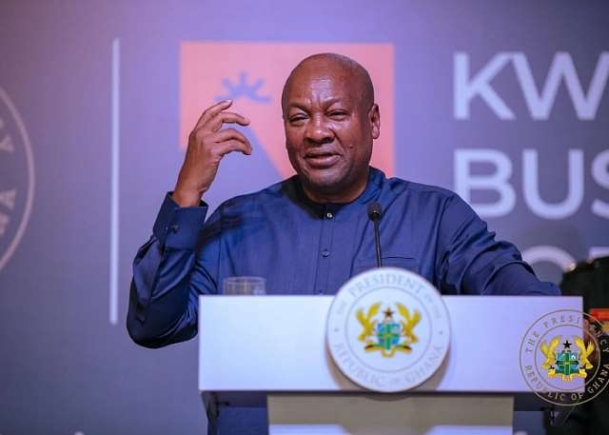
President John Dramani Mahama has announced a strong crackdown on hate speech and incitement in Ghana, warning that those who use online platforms to
President John Dramani Mahama has announced a strong crackdown on hate speech and incitement in Ghana, warning that those who use online platforms to spread divisive or violent rhetoric will be tracked and prosecuted under the country’s criminal code.
Speaking during his first major media encounter in his second term, the President cautioned that law enforcement agencies are now equipped to trace the Internet Protocol (IP) addresses of individuals behind such speech.
“We can find you, those doing hate speech. We will use your IP number to trace you and deal with you under the criminal code for inciting violence and disturbance of peace,” Mahama declared.
The President’s remarks mark a significant shift in government policy toward online commentary, especially in the context of the increasingly polarized political environment.
Critics, however, argue that this new posture contradicts the NDC’s own history in opposition, when its communicators frequently exchanged fiery rhetoric with the then-ruling NPP.
NPP Pushes Back
The opposition New Patriotic Party (NPP) has swiftly condemned the government’s actions, describing them as part of a broader effort to suppress dissent.
The backlash followed the arrest and detention of the party’s Bono Regional Chairman, Kwame Baffoe, popularly known as Abronye.
In a strongly worded statement issued on September 10, 2025, and signed by General Secretary Justin Kodua Frimpong, the NPP accused the Mahama administration of using state security agencies to silence critical voices.
“It is worrying that the government of John Mahama is today using the police to erode all the democratic gains and progress that the nation has achieved, particularly in the media space. Criminalising speech has no place in a democracy,” the statement read.
Abronye was arraigned before the Accra Circuit Court on two counts: publication of false news and offensive conduct conducive to the breach of peace.
His supporters argue that such charges hark back to the pre-2001 era, before the repeal of the Criminal Libel Law, which decriminalized speech offences and allowed defamation matters to be addressed through civil litigation instead.
Accusations of Selective Justice
The NPP further alleged that the enforcement of laws against hate speech is selective, claiming that inflammatory remarks made by NDC members have gone unpunished.
The opposition also linked Abronye’s arrest to the government’s failure to address urgent national security challenges, pointing to recent violent clashes in the Savannah Region that left over 32 people dead and displaced more than 50,000 residents.
“The government is using the law as a tool of intimidation instead of focusing on protecting lives and property,” the NPP charged, calling on civil society and Ghanaians at large to resist what it described as “growing authoritarianism.”
Government Defends Policy
Meanwhile, the Ministry of Communication, Digital Technology and Innovation, led by Sam George, has defended the administration’s approach.
Earlier in July, the Minister announced that a National Misinformation and Disinformation Bill was being drafted to curb the deliberate spread of harmful or false digital content. According to him, the bill is designed to protect public trust and democratic institutions while upholding freedom of expression.
“The bill is not meant to clamp down on free speech. Where your right to free expression ends, your duty not to misinform begins,” Sam George explained, underscoring that the government sees misinformation and hate speech as national security threats.
A Tense Political Climate
President Mahama’s tough stance comes at a time when Ghana is grappling with increasing levels of political intolerance, both online and offline.
While supporters of the new policy argue that unchecked speech risks fueling violence, especially during election seasons, opponents warn that the government risks rolling back hard-won democratic freedoms.

COMMENTS