
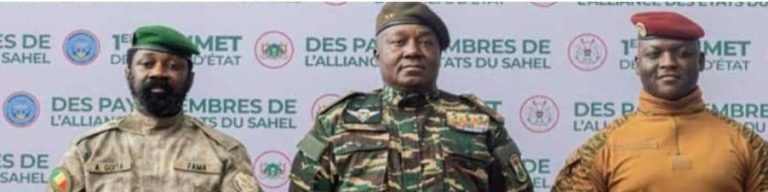
In a dramatic move underscoring their widening rift with Western institutions, Mali, Burkina Faso, and Niger on Monday, September 22, 2025, jointly an
In a dramatic move underscoring their widening rift with Western institutions, Mali, Burkina Faso, and Niger on Monday, September 22, 2025, jointly announced their withdrawal from the International Criminal Court (ICC).
The decision, made public in a statement by the three military-led governments, marks another step in their coordinated rejection of global institutions they claim operate under the influence of Western imperial powers.
According to the juntas in Bamako, Ouagadougou, and Niamey, the ICC has “transformed into an instrument of neocolonial repression in the hands of imperialism” and has become “a global example of selective justice.”
They argued that the court, which was established to prosecute war crimes, crimes against humanity, and genocide, has consistently failed to hold powerful nations accountable while targeting weaker states, particularly in Africa.
Linking ICC Exit
This latest withdrawal follows a pattern. Between 2022 and 2023, the three countries pulled out of the Economic Community of West African States (ECOWAS), accusing the regional bloc of bowing to external pressures after sanctions were imposed on them for unconstitutional changes of government.
Since then, the three military regimes have formed the Alliance of Sahel States (AES), a new confederation meant to bolster security, sovereignty, and political cooperation outside of ECOWAS structures.
In their ICC statement, the juntas reiterated similar reasoning, stressing that the Court had proven itself “incapable of prosecuting proven war crimes, crimes against humanity, crimes of genocide, and crimes of aggression.”
Instead, they pledged to develop “indigenous mechanisms for the consolidation of peace and justice,” suggesting a shift towards homegrown judicial and conflict resolution systems.
Coups, Violence, And Realignments
The political backdrop to this decision is crucial. Mali, Burkina Faso, and Niger all experienced coups between 2020 and 2023, which ousted elected governments amid worsening insecurity linked to jihadist insurgencies.
Since then, the ruling juntas have sought to consolidate power while distancing themselves from their former colonial ruler, France, and Western allies.
The three regimes have instead moved closer to Russia, securing military support, arms supplies, and training arrangements.
This pivot is seen as part of a broader rejection of Western influence, which they argue has failed to stem years of jihadist violence and instability across the Sahel.
Ironically, while the governments accuse the ICC of bias, their own armed forces have faced repeated allegations of extrajudicial killings, enforced disappearances, and other human rights abuses against civilians in the fight against Islamist militants.
Rights groups argue that the ICC could have served as a check against such impunity—an accusation the juntas have flatly rejected.
What the ICC Represents
Established in 2002 under the Rome Statute, the ICC is the world’s first permanent tribunal tasked with prosecuting individuals for genocide, crimes against humanity, war crimes, and crimes of aggression.
Based in The Hague, Netherlands, the Court was designed to complement national judicial systems where states are unwilling or unable to act.
Despite its global mission, the ICC has often been criticized for disproportionately focusing on African cases, a charge that has fueled discontent among several African leaders.
Major world powers including the United States, China, Russia, and Israel are not parties to the Rome Statute, raising questions about selective jurisdiction and enforcement.
A New Frontline In Global Justice Debate
By walking away from the ICC, Mali, Burkina Faso, and Niger join a small group of countries that have either withdrawn or threatened to withdraw from the Court in protest of what they describe as double standards.
Their exit, however, comes at a time when all three nations face ongoing insurgencies, fragile governance, and questions about accountability.

COMMENTS