
In a decision that has sparked national controversy and reignited debate over judicial conduct and political influence, a panel of Supreme Court judge
In a decision that has sparked national controversy and reignited debate over judicial conduct and political influence, a panel of Supreme Court judges has quashed a bench warrant issued in 2020 against U.S.-based Ghanaian broadcaster and political commentator, Kevin Ekow Baidoo Taylor.
The decision, delivered in a 4–1 majority by the apex court, has raised eyebrows over both legal procedure and the perceived politicization of Ghana’s highest judicial body.
The Case Background: Contempt, Criticism, and Court Orders
In January 2020, High Court Judge Justice Eric Kyei Baffour issued a bench warrant for the arrest of Kevin Taylor, who had publicly criticized the judiciary in the wake of the sentencing of former National Communications Authority (NCA) Board Chair Eugene Baffoe-Bonnie. Taylor, known for his controversial “With All Due Respect” online broadcasts, had made disparaging remarks against Justice Kyei Baffour, which the judge interpreted as contemptuous and damaging to the dignity of the court.
Describing Taylor as a “scoundrel,” Justice Kyei Baffour initiated contempt proceedings against him.
However, Kevin Taylor, who resides in the United States, never appeared in court, prompting the issuance of the warrant that remained unenforced for over five years.
Fast forward to 2025, Taylor’s legal team filed an application for certiorari at the Supreme Court, seeking to quash the bench warrant on grounds of procedural unfairness.
The court, relying on precedent from Republic v. High Court (Land Division), Ex Parte Ken Agyapong, ruled that Justice Kyei Baffour’s prior comments against Taylor—specifically calling him a “scoundrel”—compromised his ability to impartially hear a contempt case against him.
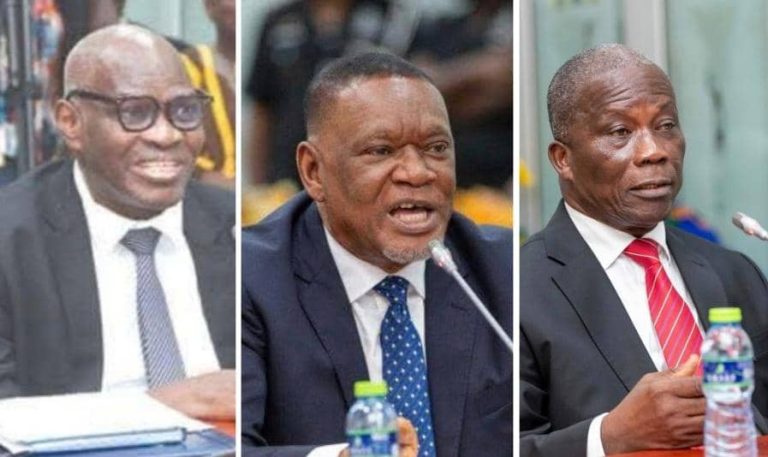
The majority ruling was delivered by Justices Tanko, Surrabareh, Dzamefe, and Bright Mensah.
Justice Ernest Gaewu stood alone in dissent, maintaining that the warrant was lawful and justified under the circumstances.
A Rising Judicial Profile Under Scrutiny
The judges at the heart of this decision—Justices Surrabareh, Dzamefe, and Bright Mensah—are among the latest appointees to the Supreme Court.
Their involvement in such a high-profile and politically charged case so early in their tenure has placed them under public scrutiny, with critics questioning whether their decisions reflect legal independence or external political considerations.
Some legal analysts have argued that the court disregarded long-established procedural rules.
Under Ghanaian law, applications for certiorari must typically be filed within 90 days of the alleged miscarriage of justice unless exceptional grounds exist.
Kevin Taylor’s application was filed nearly five years after the bench warrant was issued, prompting concerns that the Supreme Court set aside its own timelines to accommodate a politically controversial figure.
The Role of the Attorney-General’s Office: Silence That Speaks
Further fueling the controversy is the conspicuous silence of the Attorney-General and Minister for Justice, Dr. Dominic Ayine, and his deputy, Dr. Justice Srem-Sai.
Neither the A-G’s department nor any state legal representative filed opposition to Kevin Taylor’s application or appeared in court during the proceedings.
The lack of state participation has led some observers to allege complicity or quiet endorsement of the outcome, raising questions about whether the ruling had the tacit support of the executive.
Legal Precedents And Concerns
The ruling drew heavily on the 2021 Ex Parte Ken Agyapong case, in which the Supreme Court quashed a contempt order after finding that a judge’s prior public comments had prejudiced the accused’s right to a fair hearing.
However, critics argue that Kevin Taylor’s case differed significantly.
Unlike Ken Agyapong, Kevin Taylor failed to appear in court or engage with the proceedings for over five years, making the delay and sudden success of his application even more questionable in legal circles.
Legal observers worry that the decision sets a dangerous precedent, potentially opening the door for individuals to challenge contempt rulings long after they are issued, undermining judicial authority.
Public Reactions: Divided Opinions
Public reaction has been mixed. Supporters of Taylor have hailed the decision as a victory for free speech and judicial fairness, insisting that he could not have received a fair hearing from a judge who had openly insulted him.
But others, especially within conservative legal and political circles, see the ruling as a politically motivated decision that weakens the judiciary’s power to enforce discipline and maintain its dignity.
A Precedent with Far-Reaching Implications
The Supreme Court’s decision to free Kevin Taylor from the long-standing arrest warrant may have resolved a specific legal conflict, but it has raised deeper questions about judicial consistency, political influence, and the rule of law.
However, as the dust settles, attention will likely turn to the integrity of court processes and the need for clearer procedural timelines—especially in contempt matters involving public figures and political rhetoric.
For Justices Surrabareh, Dzamefe, and Bright Mensah, the ruling marks a controversial milestone in their judicial careers. Whether their decision will be remembered as a defense of fundamental rights or a blemish on judicial independence remains to be seen.

COMMENTS