
Parliament has been sharply divided over the proposed 24-Hour Economy Authority Bill, 2025, with the Minority caucus mounting strong resistance to wha
Parliament has been sharply divided over the proposed 24-Hour Economy Authority Bill, 2025, with the Minority caucus mounting strong resistance to what they describe as unnecessary bureaucracy that fails to deliver the round-the-clock economy promised by President John Dramani Mahama during the 2024 election campaign.
The Bill, a central pillar of the Mahama administration’s economic agenda, seeks to establish a statutory 24-Hour Economy Authority to regulate, coordinate and facilitate the transition to continuous economic activity.
It is intended to replace the existing temporary secretariat overseeing the policy.
However, Minority Members of Parliament argue that the legislation falls far short of its stated objective.
The debate intensified on Thursday after the Attorney-General and Minister for Justice, Dr. Dominic Akuritinga Ayine, moved the motion for the Bill’s second reading, which was seconded by Rockson-Nelson Dafeamekpor.
The Bill, first laid before Parliament on October 24, 2025, is currently at the Committee Stage, following referral to the Committee on Economy and Development.
Opposition Raises Red Flags
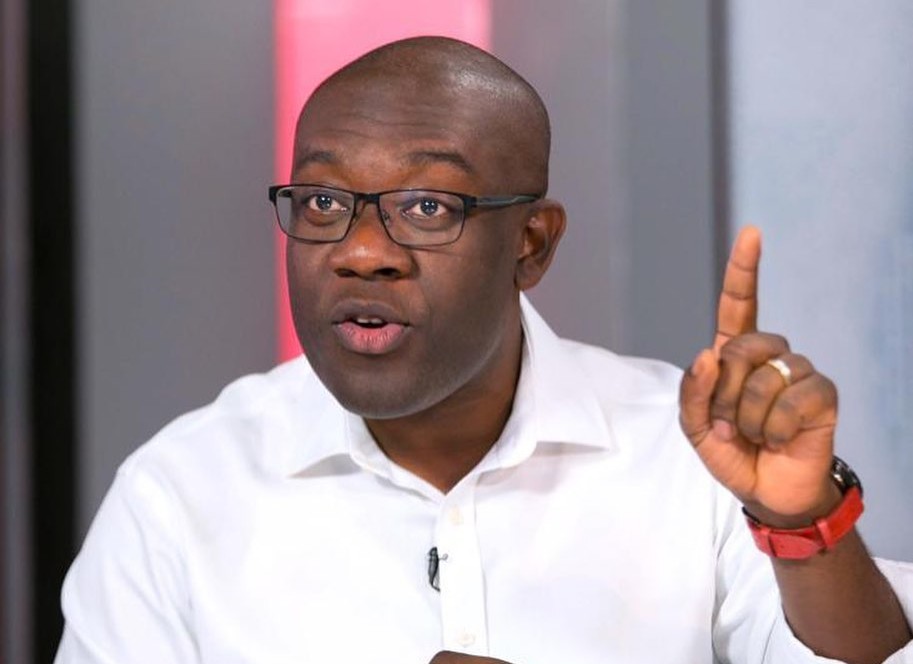
Leading the Minority’s charge, the Ranking Member on the Finance and Economy Committee and MP for Ofoase-Ayirebi, Kojo Oppong Nkrumah, argued that establishing a new authority is “totally unnecessary” for delivering a 24-hour economy.
He cited global examples such as New York, Tokyo, London, Bangkok, Dubai and Berlin, noting that none of these cities began operating 24-hour economies through the creation of special authorities.
According to him, the Bill merely creates an additional layer of bureaucracy—complete with a Chief Executive, Board, internal auditor and staff—without mandating any concrete mechanisms for round-the-clock work.
He warned that the Authority would inevitably require budgetary allocations, diverting scarce public resources into administration rather than job creation.
“This Bill does not deliver a 24-hour economy. It only sets up a new authority,” Oppong Nkrumah told the House, adding that claims the legislation would transform productivity and employment were misleading.
Missing Campaign Promises
A central grievance of the Minority is the absence of the much-publicised “1-3-3” model—one job, three workers, three shifts—which was repeatedly advertised during the NDC’s campaign.
Oppong Nkrumah recalled the party’s manifesto launch, where then-candidate Mahama stood before a clock symbolising the policy.
However, he said a thorough review of the Bill—from Clause 1 to Clause 28—reveals no reference to mandatory round-the-clock operations, three-shift systems, or job-sharing arrangements.
He also noted that key public agencies previously mentioned by the government, including the DVLA and Customs, are conspicuously absent from the Bill.
“If this Bill was meant to compel government agencies to operate 24 hours, they should be listed here. None of them is,” he stated.
Concerns Over Duplication And Cost
Other Minority MPs echoed similar concerns. Isaac Boamah Nyarko warned that the proposed Authority would duplicate the work of existing institutions such as the Ghana Export Promotion Authority (GEPA) and the Ministry of Trade, particularly in areas related to export development and MSME promotion.
He also questioned provisions allowing the Authority to raise capital, cautioning that funds could be absorbed by administrative expenses rather than being channeled into employment opportunities.
Government Defence
The Majority, however, has defended the Bill as a necessary legal backbone for a transformative economic policy.
Isaac Adongo dismissed claims that the absence of detailed formulas undermines the Bill, arguing that not every policy detail needs to be codified in law.
He stressed that unlike earlier initiatives such as Planting for Food and Jobs and One District, One Factory, the 24-Hour Economy is being anchored in legislation.
Minister for Roads and MP for Adaklu, Governs Kwame Agbodza, insisted the policy is already underway, citing the Big Push Programme, including infrastructure projects and access roads to economic hubs, as evidence that thousands of jobs are being created.
However, Minority MPs challenged these assertions, demanding specific examples of companies and projects currently operating 24 hours.
Kojo Oppong Nkrumah described claims of already-created jobs as inconsistent and unsubstantiated.
Further Criticism and Calls for Withdrawal
The Nhyiaso MP, Steven Amoah described the Bill as a “policy cliché disguised as development,” accusing the government of creating false hope for the youth while enriching private interests.
Anyimadu Antwi urged the Attorney-General to withdraw the Bill for further refinement, saying its provisions lacked coherence and clarity.
Energy and employment concerns were also raised by Samuel Abu Jinapor, who questioned the logic of introducing a three-shift system amid ongoing power supply challenges and warned against misleading unemployed youth.
Majority Pushes For Passage
Despite the resistance, Majority Leader Mahama Ayariga appealed to MPs to support the Bill, likening its potential impact to the recently established GoldBod, which he said is already delivering results.
The MPs such as Nikyema Billa Alamzy and Zuwera Mohammed Ibrahim argued that a 24-hour economy would expand access to services, boost productivity and improve emergency response nationwide.
What Lies Ahead
However, as debate continues, the Bill’s fate remains uncertain. While the government maintains that the 24-Hour Economy Authority is essential for coordination and sustainability, the Minority insists it neither mandates round-the-clock work nor fulfills the promises sold to Ghanaians during the election campaign.

COMMENTS