
Tertiary students across Ghana are expressing outrage following a sudden and steep increase in academic fees at public universities, a development man
Tertiary students across Ghana are expressing outrage following a sudden and steep increase in academic fees at public universities, a development many view as a sharp reversal of the promises made by the National Democratic Congress (NDC) during their 2024 election campaign.
Data from the University of Ghana (UG) shows that academic fees for the 2025/26 academic year have risen by over 25 percent in all colleges, with some programs experiencing hikes of up to 34 percent.
At the College of Humanities, first-year students are now required to pay GH¢3,110, up from GH¢2,319 the previous academic year—a 34 percent increase.
Continuing students in the same college face a fee of GH¢2,253, up from GH¢1,777.
Law students under the College of Humanities are similarly affected, with freshers seeing their fees jump from GH¢2,435 to GH¢3,226, and continuing students’ fees rising from GH¢1,890 to GH¢2,396.
Colleges including Health Sciences, Basic and Applied Sciences, and Education have also reported hikes ranging between 25 and 35 percent.
The new fee structure includes significant third-party charges, which appear to be major contributors to the overall increase.
Freshmen now pay GH¢767 in third-party fees, while continuing students pay GH¢455. The breakdown includes an SRC Hostel Development Levy of GH¢300, a GH¢100 contribution to the University’s 75th Anniversary Legacy Project, SRC welfare dues of GH¢50, reprographic fees of GH¢5, and a Telecel data package costing GH¢312 for Level 100 students and diploma freshmen.
The increases have triggered widespread discontent among students and parents, many of whom argue that these hikes directly contradict assurances made by the NDC during the 2024 elections.
During the campaign, the party had pledged to cover academic fees for first-year tertiary students—a promise enshrined in the party manifesto under the tertiary education financing policy (Page 97, Chapter 5, Paragraph 5).
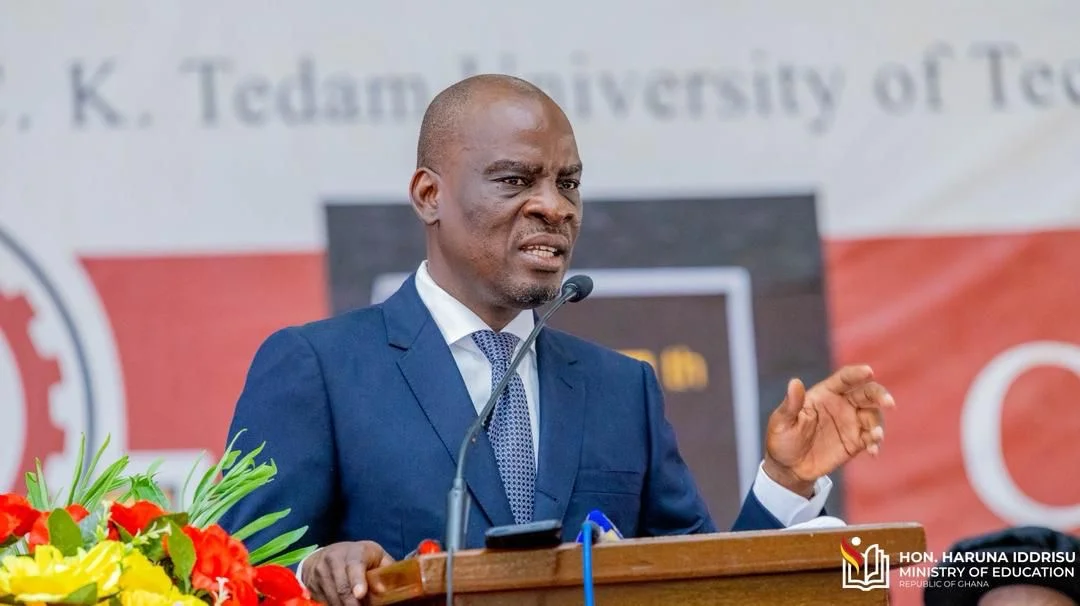
Following the NDC’s electoral victory, Minister for Education, Haruna Iddrisu had reiterated the government’s commitment to this pledge, announcing plans to refund admission fees for first-year students, with a projected budget of GHS 345 million.
The minister’s statement, however, excluded medical students from the initiative, a decision critics describe as discriminatory and inequitable.
Public skepticism is growing over the feasibility of the promise. Observers point to the Free SHS policy implemented by the previous NPP government, which, despite its popularity, struggled with infrastructure deficits, overcrowding, and insufficient resources.
With more than 40 tertiary institutions and thousands of first-year students nationwide, many question whether the GHS 345 million allocation is sufficient to cover tuition for all eligible students.
Students have also criticized the government for not considering the financial hardships already faced by continuing students, who were promised support during the campaign but now face unprecedented fee increases.
“We believed in their promise of free first-year tuition, yet here we are, paying more than ever before. The government needs to justify these increases immediately,” said a Level 200 student at UG.
The controversy comes as the NDC faces growing scrutiny over its ability to manage public finances and fulfill campaign promises amid the broader economic challenges.
Critics warn that without careful planning, transparent execution, and targeted financial support for vulnerable students, the current approach risks deepening inequalities in access to higher education.
However, as 2026 begins, the government’s response to student grievances will likely serve as an early test of the NDC’s credibility and commitment to educational development, with thousands of students and their families watching closely for meaningful action.

COMMENTS