
In a surprising development that appears to bridge Ghana’s deep political divide over economic stewardship, the International Monetary Fund (IMF) has
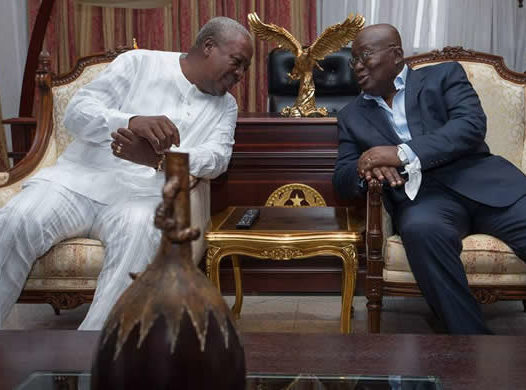
In a surprising development that appears to bridge Ghana’s deep political divide over economic stewardship, the International Monetary Fund (IMF) has disclosed that President John Dramani Mahama’s administration acknowledges the pivotal role played by the previous Akufo-Addo government in stabilising the Ghanaian economy.
This acknowledgment, detailed in the IMF’s latest country report on Ghana, highlights a rare moment of consensus between the ruling National Democratic Congress (NDC) and the opposition New Patriotic Party (NPP) on the trajectory of Ghana’s economic recovery.
The report notes that the Mahama administration has expressed “strong support” for the ongoing IMF-backed reform programme, recognising the Akufo-Addo government’s contributions as laying a “credible anchor” for addressing Ghana’s long-standing economic vulnerabilities and restoring investor confidence.
Economic Transition and Political Rhetoric
The IMF’s report comes at a time when Parliament has been gripped by heated debates over the attribution of Ghana’s recent economic improvements.
With inflation declining from 21.2% in April to 18.3% in May 2025 and the Ghanaian cedi regaining strength against major foreign currencies, both parties have been quick to claim credit.
NDC Member of Parliament for Amenfi West, Eric Afful, argued on the floor of Parliament that the improvements stem from a legacy of macroeconomic discipline under the previous Mahama administration.
He cited fiscal consolidation, tight monetary policy, and improved market sentiment as foundational efforts that predate the current administration’s assumption of office in January 2025.
However, NPP MP for Ofoanse Ayirebi and former Information Minister, Kojo Oppong Nkrumah, pushed back, arguing that the current economic relief is temporary and largely buoyed by emergency measures.
He pointed specifically to a recent $1.4 billion injection from Ghana’s foreign exchange reserves to stabilise the cedi, describing it as a “short-term fix” rather than a reflection of sustainable growth.
Expert Concerns Over Sustainability
Beyond partisan sparring, economic experts and senior lawmakers have raised red flags over the long-term sustainability of the current gains.
Energy Minister John Jinapor warned that while inflation may be declining, the reality for ordinary Ghanaians remains grim as consumer prices continue to rise—a case of disinflation, not deflation.
Renowned economist and legislator for Walewale, Dr. Kabiru Mohammed echoed these sentiments, cautioning that the appreciation of the cedi is artificial and largely driven by aggressive central bank intervention.
He argued that the underlying fundamentals remain weak and that the country’s improving debt-to-GDP ratio is more a result of debt restructuring than actual economic growth.
“This is not yet a turnaround story. It’s more of a temporary reprieve,” Dr. Mohammed said.
“We’re seeing the benefits of reforms that this government didn’t initiate. The structural cracks are still there.”
IMF Programme: A Continuity of Reforms
Ghana is currently under a three-year $3 billion IMF support programme aimed at restoring macroeconomic stability, reducing debt distress, and fostering inclusive growth.
The programme was negotiated by the Akufo-Addo administration in 2023 amid a severe balance of payments crisis that followed the COVID-19 pandemic and global commodity shocks.
The Mahama government’s continued commitment to the IMF programme is seen by analysts as a pragmatic approach to economic governance, signalling that it intends to preserve and build on existing reforms rather than overhaul them entirely.
“This is a significant political statement,” said Dr. Theophilus Mensah, an economist at the University of Ghana.
“For the IMF to report that the new government sees value in its predecessor’s efforts is rare in our highly polarised political environment. It may offer investors a sense of policy continuity and predictability.”
The Bigger Picture
While the economic data points to signs of recovery, the IMF has cautioned that Ghana must remain committed to fiscal discipline, transparency in public financial management, and structural reforms, particularly in the energy and financial sectors.

COMMENTS