
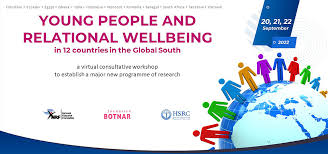
A five-year, multinational research programme has been launched to improve the wellbeing of young people across the Global South, with Ghana among the
A five-year, multinational research programme has been launched to improve the wellbeing of young people across the Global South, with Ghana among the nine participating countries.
Known as u’GOOD, the initiative will fund 23 research projects that place youth at the centre of shaping solutions to some of the most pressing social, economic, digital, and environmental challenges.
The programme, officially announced on August 19, 2025, is the first of its kind to focus specifically on relational wellbeing – the idea that wellbeing is deeply connected to relationships, human connection, and collective belonging, rather than being measured only through income or individual satisfaction.
Ghana’s Involvement
Ghana plays a crucial role in the initiative, with two major projects addressing youth wellbeing. One will explore the development of a culturally sensitive tool to measure relational wellbeing among the youth, rooted in local values and philosophies such as nkonsonkonson – the Akan concept of collective strength and interdependence.
Another Ghana-linked project will examine the relationship between climate change and youth mental health, particularly how ecological challenges such as flooding and extreme weather worsen anxiety and depression among young people.
Researchers are expected to generate insights that will not only influence national policies but also contribute to a broader global understanding of how relational wellbeing can shape more inclusive approaches to development.
A Youth-Centred Approach
Central to u’GOOD is the active participation of young people themselves.
Rather than being mere subjects of study, youth will be collaborators in designing and testing solutions for the unique challenges they face. According to Dr Dorothy Ngila of South Africa’s National Research Foundation (NRF), which co-manages the programme, this focus is critical:
“By focusing on how best to secure the futures of young people in the Global South, we are exploring how to secure the future of humanity. Ninety percent of the world’s citizens aged between 15 and 24 live in the Global South.”
Global South Context
The programme defines the Global South not by geography but by the structural inequalities and historical imbalances that limit economic and industrial development.
Countries involved include Ghana, Tanzania, South Africa, India, Vietnam, Indonesia, Colombia, Ecuador, and Romania.
Over the years, research on wellbeing has largely been dominated by Global North perspectives, often focusing on material wealth or subjective happiness.
But scholars argue that these approaches fail to capture the collective, community-driven nature of wellbeing in Global South societies.
Professor Sharlene Swartz of South Africa’s Human Sciences Research Council (HSRC), one of the programme’s lead institutions, stressed the shift:
“Exploring wellbeing through a relational lens – looking at what people have through or because of others – offers a more inclusive and rounded sense of what it means to be a fulfilled, secure human being.”
Thematic Focus Areas
The u’GOOD programme is structured around four thematic areas:
Livelihoods – exploring how young people are creating meaning and survival strategies in the absence of secure employment.
Mental Health – investigating how social connections and identities shape wellbeing amid rapid social change.
Digitalisation – examining both the risks and opportunities of a digital age, from online exploitation to new avenues for participation.
Climate Change – understanding how environmental crises affect youth resilience, health, and livelihoods.
Backed by Global Partnerships
The initiative is co-funded by Switzerland-based Fondation Botnar, a philanthropic organisation dedicated to improving youth wellbeing.
The NRF provides programme and fund management, while the HSRC leads on research expertise in human and social sciences.
A community of practice has also been established to encourage collaboration, capacity-building, and ongoing knowledge-sharing among researchers, policymakers, and practitioners.

COMMENTS