
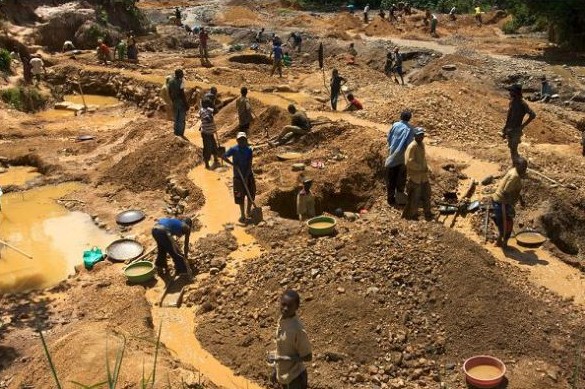
A new scientific report has laid bare the grim reality of how illegal small-scale mining, commonly called galamsey, is slowly poisoning the food, wate
A new scientific report has laid bare the grim reality of how illegal small-scale mining, commonly called galamsey, is slowly poisoning the food, water, and communities, raising fears of a looming public health disaster in Galamsey.
The one-year study, conducted between August 2024 and September 2025 by environmental NGO Pure Earth in collaboration with Ghana’s Environmental Protection Agency (EPA), found widespread contamination of soil, water, crops, fish, and even air in artisanal and small-scale gold mining (ASGM) communities across six regions — Ashanti, Western, Western North, Eastern, Central, and Savannah.
The research, which applied the Toxic Sites Identification Programme (TSIP) methodology, sampled heavily impacted communities including Konongo Zongo, Prestea, Asiakwa, Osino, Bibiani, Dakrupe, and Wassa Kayianko.
The Laboratory results revealed alarming concentrations of mercury, arsenic, and lead, with several sites surpassing both Ghanaian and international safety thresholds by staggering margins.
Mercury Pollution: A Silent Killer
Mercury, commonly used in gold amalgamation, was found in disturbing quantities.
The Konongo Zongo in the Ashanti Region topped the list, recording mean soil mercury levels of 56.4 parts per million (ppm) — more than five times above the recommended safe guideline of 10 ppm for playground soil.
Shockingly, the highest reading reached 1,342 ppm, raising concerns about direct exposure risks to children and farmers.
In the Western Region, airborne mercury in Wassa Kayianko averaged 1.84 µg/m³, already above Ghana’s permissible limit of 1 µg/m.
Peak levels shot up to 150 µg/m³ near gold smelting sites, levels that scientists describe as extremely hazardous to respiratory health.
While fish samples tested within World Health Organization (WHO) mercury limits, researchers cautioned that the limited sampling size prevents ruling out bioaccumulation dangers in local diets.
The Hidden Threats
The study also uncovered dangerous arsenic levels in both soil and water. Konongo Zongo again emerged as a hotspot, with mean soil arsenic levels of 1,066 ppm — about 4,200% higher than internationally accepted standards.
Some samples spiked to 10,060 ppm, posing catastrophic risks for long-term exposure.
Water quality in nearby Konongo Odumase and Nyamebekyere was equally troubling.
One water sample showed 3.3 mg/L of arsenic, over 300 times Ghana’s drinking water threshold of 0.01 mg/L.
Lead contamination was another pressing issue. Fish from Konongo Zongo contained 1.7 mg/kg of lead, nearly six times above the WHO’s 0.3 mg/kg food safety guideline.
In the Central Region’s Akwaboso community, lead levels in fish climbed as high as 2.8 mg/kg.
Even vegetables were not spared: pumpkin leaves from Western North recorded 3.1 mg/kg of lead, compared to the safe limit of 0.1 mg/kg.

COMMENTS