
The dramatic arrest and detention of constitutional activist and private legal practitioner. Martin Kpebu on 3 December 2025 has reignited long-standi
The dramatic arrest and detention of constitutional activist and private legal practitioner. Martin Kpebu on 3 December 2025 has reignited long-standing concerns about the conduct of the Office of the Special Prosecutor (OSP) under Kissi Agyebeng.
What began as a routine invitation for assistance in an investigation has escalated into a national debate over abuse of power, conflict of interest, and the shrinking space for dissent.
According to unconfirmed report there is brewing power struggle at the OSP with some senior officers recruited from other security agencies by Kissi Agyebeng wanting to return to their mother establishments, a demand that is not possible because their roles had been taken over since vacating those organisations.
Some of the officers who had been unfairly dismissed are said to be singing like a canary to information hunters. Already there are three petitions calling for the removal of the Special Prosecutor, Kissi Agyebeng..
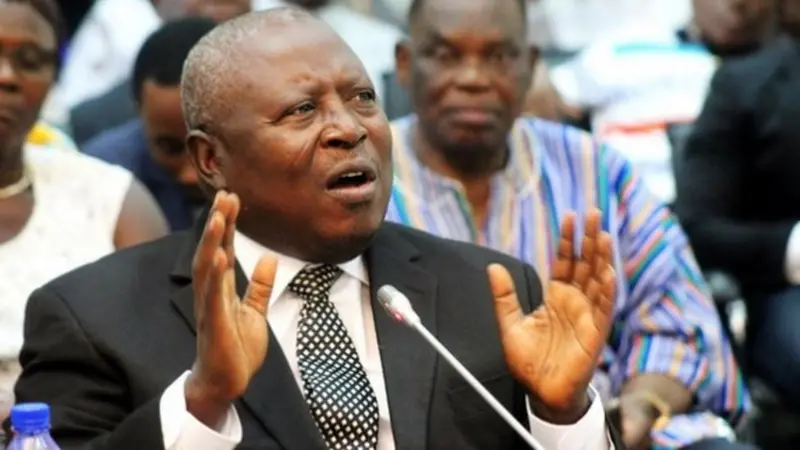
Former Special Prosecutor Martin A.B.K. Amidu, in a sharply worded commentary, argues that the episode has exposed not only institutional weaknesses but also the personal failings of the current Special Prosecutor.
A Conflict Brewing For Weeks
Tensions between Kissi Agyebeng and Martin Kpebu did not erupt overnight.
According to Amidu, the confrontation dates back to 5 November 2025, when Kpebu intensified his criticism of the OSP, accusing the institution — and by extension the Special Prosecutor, Kissi Agyebeng — of corruption and procedural irregularities.
These allegations gained traction through repeated media engagements.
Then, on 18 November 2025, the OSP invited Kpebu and TV3 to “assist investigations” into the corruption allegations raised during a live interview.
For many observers — including Martin Amidu — this was the first sign of a strategic blunder. The OSP appeared to be embarking on an investigation into accusations targeted at itself, an act which Amidu describes as “an absurdity” and a classic case of a public officer attempting to become “a judge in his own cause.”
Rather than weakening Kpebu, the invitation strengthened his hand. Leveraging public sympathy and media attention, he repeatedly insisted that any investigation into his allegations must be conducted by an independent body, not OSP staff under the direct control of the very person accused.
The Morning Of The Arrest
By the time Kpebu arrived at the OSP headquarters on 3 December 2025 for a third meeting, the standoff had reached its peak.
Just before entering the premises, he told journalists he would not return to the OSP again unless an independent investigation panel was constituted.
That public declaration, Amidu argues, was interpreted by the Special Prosecutor as an open challenge to his authority. What followed, he says, was a calculated move.
Although the OSP later claimed that Kpebu had an “altercation” with military and police officers manning the entrance, Martin Amidu dismisses this account as a “red herring.”
Under the OSP Act (Act 959), those officers are not “authorised officers,” and therefore cannot be obstructed under Section 69, since they do not fall under OSP discipline, nor have they taken the oath required under Regulations 34 and 35 of L.I. 2374.
Despite this, Kpebu was not arrested at the gate. Rather, he was arrested after entering the main building and meeting the OSP investigators who invited him — a fact that casts serious doubt on the OSP’s claim of obstruction.
He was whisked away to an undisclosed detention facility and slapped with what many have described as draconian bail conditions, including the requirement to produce a landed property in his name.
From Suspect To Martyr
Martin Amidu argues that by arresting and detaining Martin Kpebu under such controversial circumstances, Agyebeng violated one of the most basic principles of prosecutorial discretion: never create a martyr out of a critic.
Instead of quelling the criticism, the OSP’s actions expanded public support for Martin Kpebu, elevating him to the status of a citizen paying the price for challenging state power. In Amidu’s view, the Special Prosecutor’s conduct demonstrated: Investigatory overreach, Prosecutorial vindictiveness, inexperience and disregard for constitutional freedoms.
Critically, the entire episode shifted public focus away from the original corruption allegations and toward the conduct of the Special Prosecutor himself.
Public Backlash And Parliamentary Scrutiny
The fallout was swift. Public condemnation flooded social platforms, civic society groups called the arrest “abusive and unlawful,” and questions mounted about the legal basis of the OSP’s action.
Parliament intervened, summoning the Special Prosecutor to explain the circumstances of the arrest and the justification for the severe bail terms.
This marks one of the rare occasions when a sitting Special Prosecutor has been publicly called to defend his conduct before lawmakers.
Amidu predicts that Parliament will demand proof that the gate security officers qualify as “authorized officers” under Act 959 and its accompanying regulations — a claim he asserts is legally indefensible.
The controversy has also reignited broader debates on whether the OSP, as currently structured, has become a liability rather than the independent anti-corruption institution it was intended to be.
A Battle That Backfired
In the end, Martin Amidu concludes that the OSP’s decision to arrest Martin Kpebu was driven by a desire to silence an outspoken critic. Instead, it has backfired, transforming him into a national figure of resistance, while exposing deep structural dysfunction within the OSP.
“Every day is for the thief,” Amidu writes, “and one day for the master.” In this case, he suggests, that day came on 3 December 2025 — not for Martin Kpebu, but for the Special Prosecutor whose judgment, he argues, has now been laid bare before the nation.

COMMENTS