
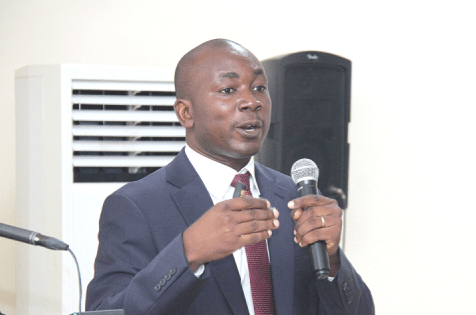
Economist and finance expert, Professor Godfred Bokpin of the University of Ghana, has raised red flags over what he describes as Ghana’s “aggressive”
Economist and finance expert, Professor Godfred Bokpin of the University of Ghana, has raised red flags over what he describes as Ghana’s “aggressive” and “unsustainable” approach to stabilising the national currency — the cedi.
Speaking on Joy FM’s Newsnight on Wednesday, October 16, 2025, Prof. Bokpin cautioned that the recent strengthening of the cedi, though celebrated by the public and government, is coming “at a great cost to the nation,” particularly to the private sector and the environment.
Background:
The cedi has faced a turbulent trajectory in recent years. Following sharp depreciations in 2022 and 2023 — driven by high inflation, fiscal deficits, and external shocks — the government, through the Bank of Ghana (BoG), introduced several interventions to stabilise the currency.
These measures included tightening monetary policy, injecting dollars into the forex market, and securing support from the International Monetary Fund (IMF).
While these actions have helped restore some confidence in the currency, critics argue that they have come at the expense of domestic production, job creation, and long-term economic sustainability.
“A Great Cost to the Nation”
Prof. Bokpin pointed out that the aggressive methods used to achieve the cedi’s current appreciation — including strict monetary interventions and reliance on resource-backed inflows — are straining both the economy and the environment.
“We are achieving this aggressive strengthening of the currency at a great cost to the country,” he said.
“In some instances, our obsession with keeping the exchange rate low is pushing illegal mining activities, destroying water bodies, and costing lives. All of this, just so 32 million Ghanaians can celebrate a temporarily stable cedi.”
The economist noted that the short-term exchange rate gains are overshadowing the damage being done to the natural resources and the long-term health of the economy.
Private Sector Suffering Amid Tight Policies
Beyond environmental implications, Prof. Bokpin warned that the private sector — the engine of job creation — is paying a steep price for the government’s currency control policies.
According to him, the Bank of Ghana’s interventions, which have cost billions of cedis, have drained credit that could have otherwise supported small and medium-scale enterprises (SMEs).
“That credit, which could have been available for businesses to borrow at low cost, expand, and create jobs, is no longer available,” he explained.
“So while the cedi looks strong on paper, our private sector is suffocating, and the growth potential of the economy is being stifled.”
Recent Cedi Gains
His comments come at a time when the cedi has posted its strongest performance against the U.S. dollar in months.
Data from major commercial banks seen by Joy Business revealed that between October 6 and October 10, 2025, the cedi appreciated by approximately 5% on the interbank market — its sharpest gain since the third quarter of the year.
The appreciation has been attributed to increased forex inflows, strict central bank supervision of foreign exchange transactions, and improved investor confidence following the progress in IMF programme reviews.
Call for a Balanced Approach
Prof. Bokpin, however, insists that policymakers must not let short-term exchange rate gains distract them from pursuing long-term structural reforms.
He called for a more balanced approach that combines monetary discipline with policies promoting sustainable growth, environmental protection, and credit availability.
“What we need is a stable cedi that reflects strong fundamentals, not one that is artificially supported at the cost of our people, our businesses, and our environment,” he emphasised.
The economist urged the government to ensure that currency management aligns with national development goals, not just short-term political or cosmetic victories.

COMMENTS