
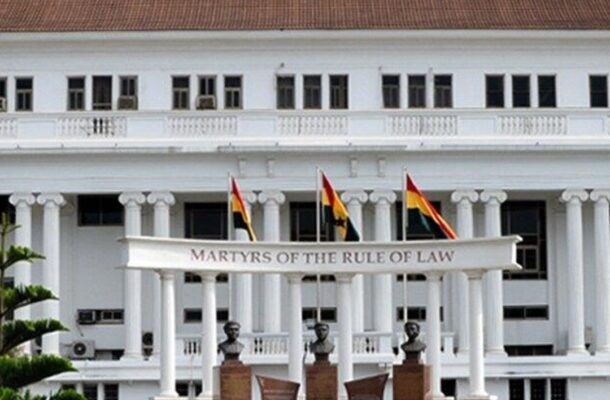
The Supreme Court has directed the Attorney-General to release the full agreement between the Government of Ghana and the United States concerning the
The Supreme Court has directed the Attorney-General to release the full agreement between the Government of Ghana and the United States concerning the acceptance of deported West African nationals to lawyers representing Democracy Hub, paving the way for closer legal scrutiny of the controversial arrangement.
The order follows an earlier directive by the apex court granting both parties a two-week period to file written submissions on whether the documents relating to the agreement should be disclosed.
After considering the arguments, the court ruled that the Attorney-General must make the agreement available to enable proper examination.
The case centres on growing public and legal concerns over the nature and legal status of the reported deal, including whether it amounts to a binding international agreement that requires parliamentary approval and transparency.
During proceedings, Deputy Attorney-General Justice Srem-Sai argued that much of the controversy surrounding the arrangement was driven by media reports rather than direct access to the actual document.
However, the court noted that this very gap underscored the necessity of disclosing the agreement so its contents could be independently assessed.
The legal challenge was initiated after President John Dramani Mahama publicly confirmed Ghana’s participation in a US-led initiative to receive deported West African migrants.
The announcement sparked widespread debate, with civil society groups and legal experts questioning the constitutional and procedural basis of the arrangement.
At the heart of the dispute is whether the agreement—described by government officials as a Memorandum of Understanding (MoU) rather than a formal treaty—constitutes an international commitment that must be approved by Parliament under Article 75 of the 1992 Constitution.
With the Supreme Court’s order now in effect, Democracy Hub’s legal team is expected to review the documents and determine whether further constitutional issues arise, potentially setting the stage for broader judicial and parliamentary scrutiny of the deal.

COMMENTS