
The music scene in 2025 is undergoing one of its most dramatic transformations in recent memory—a revival shaped by nostalgia, innovation, global reco
The music scene in 2025 is undergoing one of its most dramatic transformations in recent memory—a revival shaped by nostalgia, innovation, global recognition, and persistent structural challenges.
What was once a predictable cycle of Highlife, Hiplife, and mainstream Afrobeats has evolved into a bold sonic revolution, driven largely by a new generation of artistes who are unafraid to experiment and equally determined to push Ghana onto the global stage.
The year has become a defining moment in the country’s musical history, one that mirrors past eras while stepping firmly into an unpredictable future.
For decades, Ghanaian music has weathered different waves—from the golden years of Highlife in the 1960s through the rise of Hiplife in the late 1990s led by Reggie Rockstone, to the Afrobeats-dominated 2010s that saw stars like Sarkodie, Stonebwoy, and Shatta Wale take centre stage.
But by the early 2020s, the industry faced an existential struggle: weakening structures, diminished global visibility, competition from Nigeria, and fading confidence in local institutions. Yet, 2025 has flipped the script. Instead of decline, the industry is experiencing a spectacular rebirth, though one riddled with both triumphs and frustrating fault lines.
One of the biggest surprises has been the rebirth of Hiplife, a genre many believed had been relegated to nostalgic playlists. In a stunning twist, Gen Z and Gen Alpha—who never lived the glory days of Obrafour, Lord Kenya, VIP, or Tinny—have rediscovered and reimagined the genre.
Their interest has sparked a new movement of Hiplife remixes, modernized beats, and throwback-style lyricism, proving that the foundation laid by the pioneers remains deeply influential. This resurgence speaks to a broader trend: young artistes want music that grooves, entertains, and feels authentically Ghanaian without the complexities of foreign sonic influences.
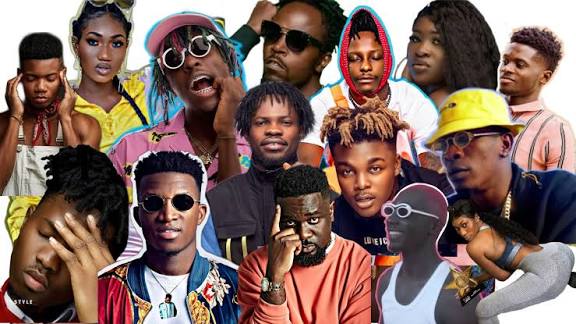
The broader creative landscape is equally colourful. Ghanaian musicians are now blending genres with remarkable fluidity, becoming what industry analysts describe as “sonic polyglots.” Acts like Amaarae, Black Sherif, King Promise, KiDi, and Kuami Eugene are merging Highlife with electronic music, Afrobeats with soul, and drill with gospel influences.
This experimentation has given rise to a hybrid Ghanaian sound—one that is difficult to box into traditional categories but increasingly attractive to global audiences hungry for African creativity.
The global footprint of Ghanaian artistes is also widening. With streaming platforms, diaspora fan bases, and international festival circuits giving more visibility to African talent, Ghanaian musicians are no longer approaching the world stage timidly.
They are performing with a renewed confidence—aided by social media trends, TikTok challenges, and diaspora amplification. These efforts have translated into higher streaming numbers and growing interest in Ghanaian cultural expression abroad.
Institutionally, 2025 marks a subtle but significant shift. Organizations like MUSIGA, the Copyright Office, and rights management bodies have faced years of criticism for inefficiency and lack of transparency.
This year, however, they appear to be making incremental progress. Though far from ideal, the industry now sees a degree of structured effort in royalty tracking, licensing, and administrative reforms. For many musicians who have long lamented poor royalty systems, even these small steps feel like a long-awaited relief.
The surge in talent is undeniable. A new wave of artistes—ranging from Gen Z vocalists to female-led collectives and Asakaa-driven drill groups—are flooding the scene with fresh sounds.
These musicians are bypassing traditional gatekeepers, releasing music independently, and building fan bases with remarkable speed. Their creativity signals that Ghana’s musical future will be even more experimental, digital-driven, and globally competitive.
Still, the industry faces familiar and persistent challenges. Royalty disputes remain unresolved for many musicians. The dominance of foreign sounds—especially Nigerian Afrobeats and South African Amapiano—is affecting local airplay and streaming numbers. Calls to revive Azonto continue to trend annually but never materialize into a concrete movement.
And while Ghana is experiencing a boom in music festivals, issues like weak logistics, poor sound systems, and delayed permits continue to remind the industry of its infrastructural limitations.
Looking ahead, experts predict that the music ecosystem is on the brink of an era defined by fusion, technological advancement, and intensified professionalism. AI-assisted production, VR concerts, and data-driven fan engagement are expected to shape how music is created and consumed.
A new generation of mega-stars is already emerging—digitally savvy, genre-fluid, and uninterested in conforming to traditional industry norms. With the continued rise of music tourism, cities like Accra and Kumasi stand poised to become creative destinations, potentially boosting national revenue.
Ultimately, the music story in 2025 is one of beautiful chaos—a bold intersection of past influences, present challenges, and future possibilities. The industry is vibrant, ambitious, sometimes conflicted, but undeniably alive.
If the structural issues can be addressed and the next generation nurtured, Ghana stands not only to reclaim its continental influence but to establish itself as a global musical powerhouse in the coming decade.

COMMENTS