
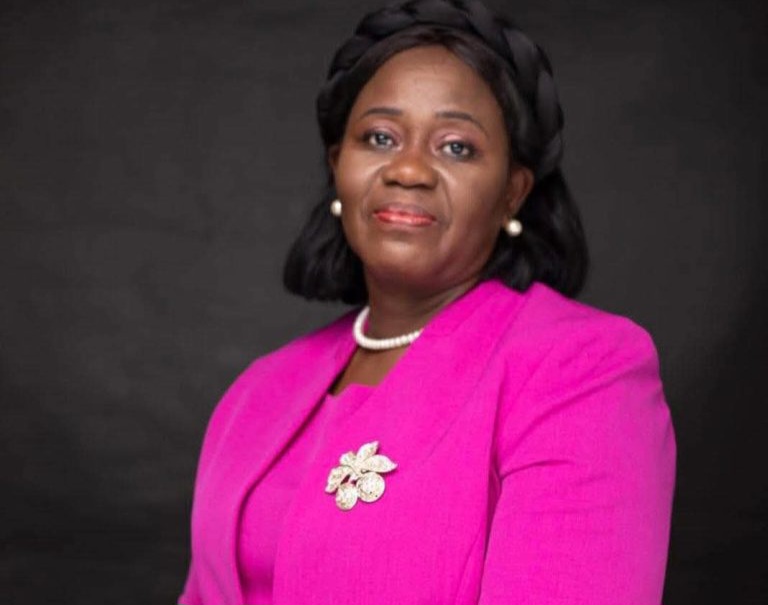
In a significant legal defeat for embattled Chief Justice Gertrude Araba Esaaba Sackey Torkornoo, the Human Rights Division of the Accra High Court ha
In a significant legal defeat for embattled Chief Justice Gertrude Araba Esaaba Sackey Torkornoo, the Human Rights Division of the Accra High Court has dismissed her application for judicial review of proceedings related to her possible removal from office.
The ruling, delivered on Wednesday, July 31, 2025, described her suit as an “abuse of court processes” and concluded that the court lacked jurisdiction to entertain the matter.
This decision marks yet another blow to the Chief Justice’s attempts to legally challenge the constitutional processes set in motion for her potential removal, and it further narrows her options as the impeachment-like proceedings continue to unfold.
No Jurisdiction
Presiding over the case, the High Court ruled that the judicial review application filed by Justice Torkornoo was not only procedurally flawed but amounted to an improper use of the court’s machinery.
The phrase “abuse of court processes,” according to legal experts, typically points to actions intended to frustrate or delay the course of justice.
The court’s rejection of her plea suggests it viewed her action not as a legitimate legal grievance but as a strategic maneuver to stall or derail an ongoing constitutional process — one already in motion under Article 146 of the 1992 Constitution.
Background to the Crisis
Chief Justice Torkornoo, who was sworn in on June 12, 2023, as Ghana’s 15th Chief Justice and the third woman to occupy the role, has been at the centre of controversy since petitions seeking her removal from office surfaced earlier in 2025.
The exact content of the petitions has not been officially disclosed, but sources within the judiciary and the political establishment indicate allegations of abuse of office, bias in judicial assignments, and possible breaches of judicial conduct rules.
Under Article 146, a process for removing a sitting Chief Justice begins when a petition is submitted to the President.
The President, in consultation with the Council of State, is mandated to establish a committee to investigate the claims.
In this case, a five-member special committee was duly constituted to look into the allegations against Justice Torkornoo.
Rather than face the committee, the Chief Justice took the legal route in an attempt to halt the process, arguing that the entire procedure was politically orchestrated and constitutionally flawed.
The High Court’s ruling follows an earlier, equally damning decision by the Supreme Court in May 2025. In that instance, Ghana’s apex court unanimously dismissed an injunction application filed by the Chief Justice, which sought to stop the special investigative committee from proceeding with its mandate.
The ruling cleared the way for the committee to continue its work.
Taken together, the Supreme Court and High Court rulings reveal a judiciary unwilling to bend procedural rules or allow its processes to be bogged down by internal resistance, even when the person at the centre is the head of the judiciary itself.
Chief Justice Torkornoo’s Response
Justice Torkornoo has remained defiant in the face of growing legal setbacks.
Speaking at a press conference on June 25, 2025, she described the process leading to her suspension as “unconstitutional,” “politically motivated,” and “cruel.”
She further revealed that she had received what she termed “veiled threats” from powerful political actors urging her to resign voluntarily — a move she rejected outright.
“I will not legitimise an unconstitutional and coercive process by stepping down,” she declared, vowing to fight the matter to the end.
Since her suspension, the Chief Justice has been battling on multiple legal fronts to overturn or halt the proceedings against her — efforts which now appear to be failing.
Legal and Political Implications
Wednesday’s High Court ruling has major implications for both the legal and political landscape.
It reinforces the independence of the judiciary by showing that the system is willing to allow a constitutional process — even one as sensitive as removing a sitting Chief Justice — to proceed without interference.
However, it also raises deeper questions about internal accountability within the judiciary and the tensions between judicial independence and judicial discipline.
The spectacle of a Chief Justice suing in lower courts, being rebuffed by the Supreme Court, and now dismissed by the High Court is unprecedented in Ghana’s recent legal history.
While the detailed written judgment from the High Court is still pending, legal analysts suggest the decision aligns with a broader judicial philosophy: constitutional processes must not be short-circuited by litigation unless fundamental rights are clearly breached — something the courts apparently believe is not the case here.
What Next?
With the High Court and Supreme Court both dismissing her legal challenges, the special committee investigating Justice Torkornoo is expected to resume its hearings in August.
Should the committee find her culpable, its report will be forwarded to the President, who will make the final decision on her removal.
The Chief Justice, meanwhile, may yet seek redress at the Court of Appeal, but observers say the window for a legal lifeline is rapidly closing.
For now, the future of Ghana’s judiciary remains uncertain — with its highest-ranking judge fighting to save her job, even as the institutional machinery she once led appears determined to see the constitutional process through.

COMMENTS