
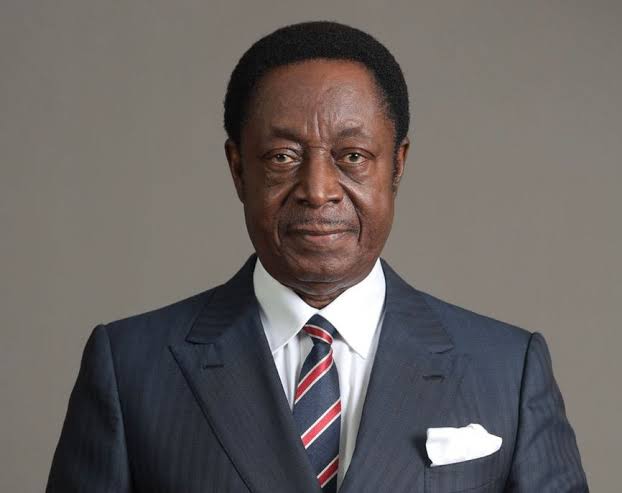
The Attorney-General and Minister for Justice, Dr. Dominic Akuritinga Ayine, has provided further details on the UniBank case, revealing significant r
The Attorney-General and Minister for Justice, Dr. Dominic Akuritinga Ayine, has provided further details on the UniBank case, revealing significant revisions to the financial exposure figures and new recovery efforts, while sparking renewed controversy over the government’s approach to justice in the banking sector collapse saga.
In a public briefing at the Jubilee House as part of the government’s #AccountabilitySeries, the Attorney-General disclosed that following a reconciliation process involving the Bank of Ghana, the Receiver, and the accused parties, the total financial exposure attributed to Dr. Kwabena Duffuor and others has been revised downwards from an initial GH¢5.7 billion to GH¢3.3 billion.
This follows earlier revisions, including a 2024 court-sanctioned adjustment that pegged at GH¢2.8 billion.
These significant changes confirm long-standing assertions by some observers and analysts that the original figure was overstated and did not accurately reflect UniBank’s financial position at the time of its administration.
Importantly, the Attorney-General noted that GH¢824 million worth of assets — including properties held under trust arrangements — have already been transferred to the State as part of a recovery agreement.
Contrary to earlier reports, these assets were neither concealed nor omitted from the bank’s ledger.
The AG also revealed that additional civil proceedings would be initiated to pursue any outstanding balance, particularly from third-party beneficiaries.
However, the announcement has not ended public debate. Instead, it has shifted the conversation from criminal culpability to institutional integrity and political accountability.
Critics point out that the AG’s revelations come just days after he entered a nolle prosequi, officially ending the criminal prosecution of Dr. Duffuor — the founder of UniBank and a former Finance Minister and seven others.
The decision marks a sharp reversal from the hardline stance taken by the current National Democratic Congress (NDC) leadership when it was in opposition.
Then, the NDC loudly condemned the prosecution of Dr. Duffuor by the Akufo-Addo administration, framing it as a politically motivated “witch hunt” against a potential presidential contender.
Now in government, the same NDC appears to have shifted gears — quietly negotiating a property-based settlement instead of pursuing full criminal accountability through the courts.
This U-turn has not gone unnoticed by legal experts, civil society groups, and members of the public, many of whom are questioning the valuation process used to arrive at the GH¢824 million figure and the transparency of the entire settlement.
Dr. Ayine defended the move, stating that an immediate cash recovery was not possible, and the property transfer option was deemed the most viable under the circumstances.
He clarified that the accused would be held liable for any shortfall if the sale of the assets fails to meet the recovery target.
Nonetheless, concerns persist. Legal analysts argue that the absence of a clear court-sanctioned settlement or plea bargain could undermine the legal integrity of the process.
There are also allegations of a conflict of interest, as Dr. Ayine previously served as legal counsel to Dr. Duffuor during the early stages of the UniBank legal battle.
Even more unsettling for many Ghanaians is the revelation that contractors owed UniBank GH¢2.9 billion at the time of its administration — a debt the bank had been attempting to recover.
The failure to recoup those funds, according to financial observers, may have played a decisive role in the bank’s liquidity crisis and ultimate collapse.

COMMENTS