
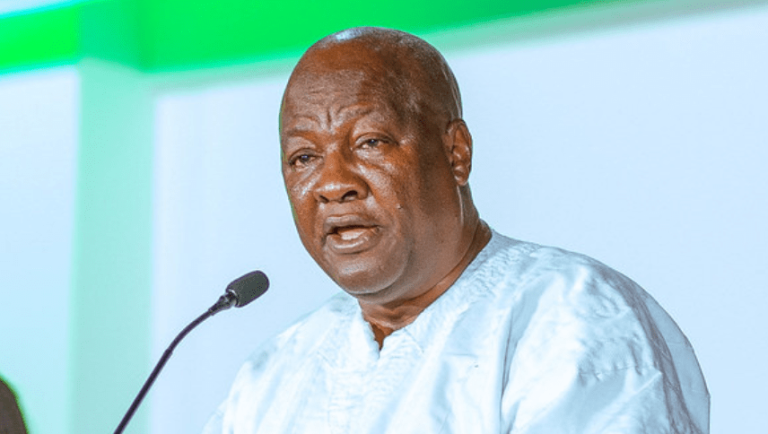
Private legal practitioner and vice president of IMANI Africa, Kofi Bentil, has raised concerns about what he describes as the “imperial presidency”
Private legal practitioner and vice president of IMANI Africa, Kofi Bentil, has raised concerns about what he describes as the “imperial presidency” of John Dramani Mahama.
According to him, the President has consolidated so much power that both Parliament and the judiciary — two critical state institutions mandated to check executive authority — have been rendered ineffective.
Speaking on TV3’s current affairs program The Key Points on Saturday, Mr. Bentil argued that President Mahama’s growing influence and popularity have created a governance imbalance.
“Today, President Mahama is becoming an imperial president. What do I mean by that? He has total control over Parliament and the judiciary; he has muted them,” Bentil said.
His remarks come at a time when a new poll conducted by Global InfoAnalytics suggests that Ghanaians increasingly prefer younger leadership ahead of the 2028 general elections.
The survey, led by Executive Director Mussa Dankwah, revealed that 64 percent of respondents would like a youthful president who reflects the energy and aspirations of the country’s growing young population.
Kofi Bentil noted that the findings signal a shift in public expectations, especially after a period dominated by older leaders such as Nana Akufo-Addo, who assumed office at age 73.
“The respondents want somebody who is young,” he explained. “They are looking at the recent past… the people want someone who reflects their youthful exuberance.”
Pressed on what age range qualifies as “young,” Bentil admitted the study did not define specific brackets but stressed the trend was unmistakable.
“I will go back to the republic and ask them what they mean by young. The preferences are going towards younger leaders.”
Fellow legal practitioner Martin Kpebu, who was also on the panel, welcomed the survey results, saying they marked a positive turning point in Ghana’s political culture.
“It is heartwarming to see that the majority of the people agree we should have young leaders,” Kpebu said. “The older people have had their time; they should allow the younger ones to take over.”
The discussion reflects broader debates about governance in Ghana as Mahama, who returned to power after the 2024 elections, faces scrutiny over his style of leadership.
Critics like Kofi Bentil argue that the President’s dominance undermines democratic checks and balances, while supporters point to his ability to maintain political stability and popularity.
With three years to go before the next elections, the growing call for generational change may shape the political strategies of both the ruling National Democratic Congress (NDC) and opposition parties.

COMMENTS