
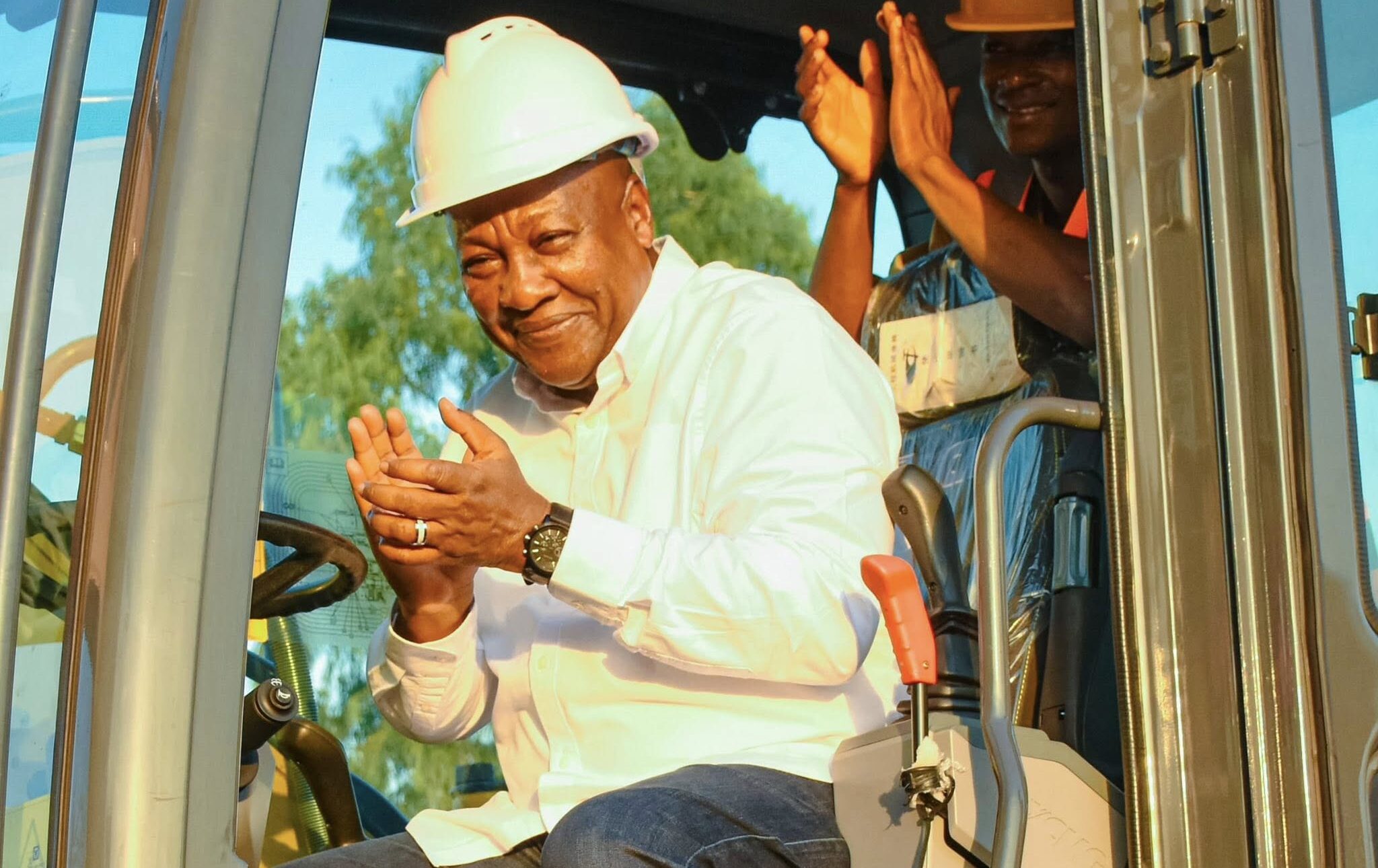
In a major infrastructure drive aimed at bridging the development gap between northern Ghana and the rest of the country, President John Dramani Maham
In a major infrastructure drive aimed at bridging the development gap between northern Ghana and the rest of the country, President John Dramani Mahama has officially cut the sod for the construction of a network of key highways linking Wa, Han, Tumu, Navrongo, and Hamile under his administration’s flagship “Big Push Initiative.”
The project, covering more than 260 kilometers of major road networks, is estimated at GH¢3.7 billion, making it the single largest road infrastructure investment in the northern region.
The initiative is designed to enhance trade, agriculture, and social mobility across the Upper West and East Regions, connecting remote communities to major markets and public services.
Need for the Project
For decades, road infrastructure in the northern corridor has lagged behind national averages, leaving vast farming areas isolated during rainy seasons and limiting trade between Ghana and neighboring Burkina Faso.
Poor road conditions have also contributed to post-harvest losses, increased transport fares, and limited access to healthcare and education.
Under the Big Push Initiative—first announced by President Mahama in 2024 as part of his government’s broader infrastructure transformation agenda—priority is being placed on strategic road networks that link regional capitals, border towns, and economic hubs.
The Wa-Han-Tumu-Navrongo-Hamile project is one of several multi-billion-cedi investments earmarked to stimulate job creation and boost regional development.
Details of the Road Components
The expansive project scope includes the following major components:
Wa City Centre: Dualization of the Wa–UDS–City Centre stretch to ease congestion and modernize the capital’s road landscape.
Wa Corridors: Construction of the Wa–Bulenga–Yaala Road (37 km) and rehabilitation of the Wa–Han Road (22 km new works, 54 km rehabilitation).
Regional Links: Upgrading the Tumu–Han–Lawra Road (70 km) and the Navrongo–Tumu–Sandema Road (50 km).
Border Access Routes: Construction of Tumu–Hamile (15 km), Tumu–Sissili–Navrongo (15 km), and Tumu–Chuchuliga–Navrongo (32.6 km) roads.
These roads will open up access between the Upper West and East Regions, boost agricultural trade with the Sahel region, and serve as a key link in the northern trade corridor.
President Mahama’s Assurance
Speaking at the sod-cutting ceremony, President Mahama emphasized that the initiative reflects his administration’s commitment to equitable development and rural transformation.
“For years, these roads have been in deplorable condition. Farmers have struggled to move their produce. Traders have lost goods. Children have spent long hours commuting to school. But no more. Today, we are saying, ‘Enough is enough,’” he declared to cheering residents in Wa.
He assured the gathering that the project will be completed on schedule, noting that local contractors and labor would be prioritized to ensure job creation and community involvement.
Oversight and Quality Control
The Minister for Roads and Highways, Kwame Agbodza, also issued a stern directive to contractors handling Big Push projects nationwide, cautioning against delays and substandard work.
“Ghana has changed. Deliver quality, deliver on time, and deliver within budget. There will be no room for shoddy work or inflated claims,” he warned.
The Roads Ministry has announced that a dedicated monitoring and evaluation unit will oversee implementation to ensure compliance with engineering and environmental standards.
Economic and Social Impact
When completed, the Wa–Han–Tumu–Navrongo–Hamile corridor is expected to serve over 1.5 million people, improve agricultural exports, and significantly reduce travel time between the Upper West and East Regions.

COMMENTS