
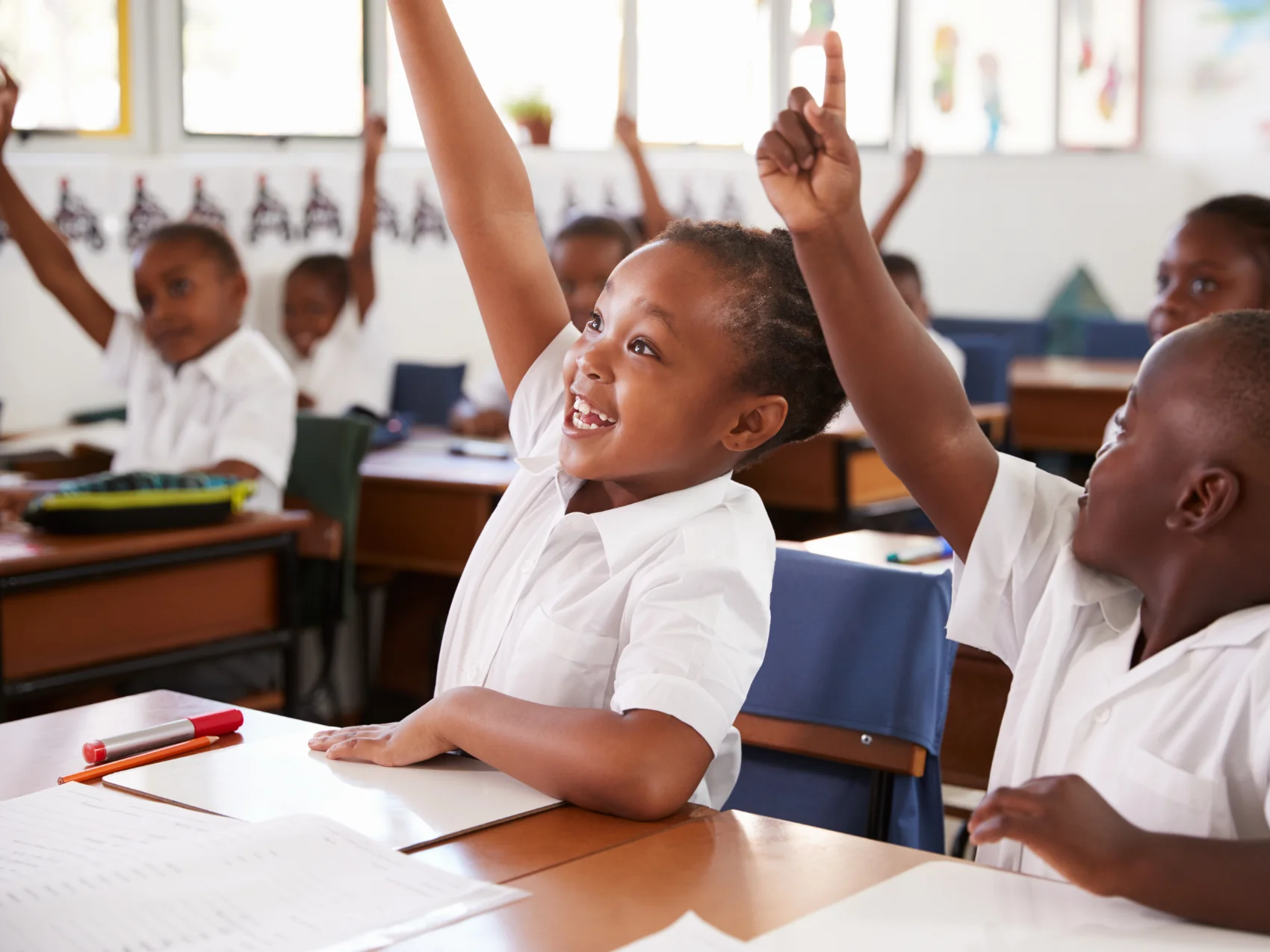
Across Africa today, a quiet but profound truth is emerging: the continent’s greatest resource is not its minerals, its land, or even its strategic ge
Across Africa today, a quiet but profound truth is emerging: the continent’s greatest resource is not its minerals, its land, or even its strategic geography. It is its people — more specifically, its children. With the world’s youngest population and millions of new learners entering school each year, Africa is standing at the threshold of a historic opportunity: to build the most dynamic, educated, and innovative workforce the world has ever seen. To seize this moment, Africa must embark on the most ambitious educational reform project in its history — one bold enough to match the scale of its future.
The foundation of this new vision is simple: every African child, from Grade 1, should have a laptop or digital learning device. This is not a luxury. It is not a Western import. It is a necessity for survival in the digital economy. Nations do not become global powers by accident — they become powerful through deliberate investment in human capital. By equipping every child with a tool for digital literacy from the earliest years, Africa can leapfrog the educational models of the past and build a generation fluent in technology, coding, artificial intelligence, e-commerce, and global innovation.
The world’s leading economies understood this decades ago. China’s technological surge began when it expanded digital education on a massive scale. India’s rise in the global software industry came from early investment in STEM training. South Korea transformed itself by turning classrooms into research laboratories. Today, Africa sits in a similar moment — but with far more potential because it has the world’s youngest and fastest-growing population. A child entering Grade 1 today in Africa will inherit a world fully shaped by digital economies. The question is whether African leaders will give them the tools to shape that world, or merely participate from its margins.
A laptop for every child is the first step. The second step is far more radical but even more important: ensuring that every African child has access to higher education. Not a privileged few. Not the wealthy. Not the top performers alone. Every child.
In a world defined by advanced technology, complex markets, and globalized systems, higher education is no longer optional. It is the minimum requirement for global competitiveness. Africa cannot rise through extractive industries alone. It will rise through engineers, data scientists, researchers, agritech innovators, lawyers, medical professionals, economists, cybersecurity experts, and teachers trained in modern pedagogies. A continent of 1.4 billion people must produce knowledge — not merely consume it.
But this transformation requires more than classrooms and certificates. It requires a complete reimagining of Africa’s educational philosophy. For too long, African schools have operated with curriculums designed during the colonial era — focused on memorization, obedience, and rote learning. These systems were not created to produce innovators or global leaders. They were created to produce compliant administrators. That era must end.
A modern African curriculum must teach problem-solving, innovation, critical thinking, entrepreneurship, Pan-African identity, coding, robotics, climate strategy, and global diplomacy. It must train students to ask bold questions, not to fear them. It must teach children not only mathematics and science, but also who they are — Africans with a shared destiny and an obligation to build a continent capable of leading the world.
Economist Jeffrey Sachs has long argued that Africa’s rise will depend less on mineral wealth and more on human capital. He has emphasized that “education is the most powerful investment a nation can make,” highlighting how deliberate investments in knowledge systems lifted countries like China, Singapore, and South Korea into global power. Sachs’ message is clear: Africa’s path to global leadership begins in its classrooms.
This educational revolution will not be achieved by individual countries acting in isolation. Just as Africa needs unity in economics and geopolitics, it needs unity in education. A harmonized continental curriculum, shared digital platforms, Pan-African research networks, cross-border teacher training institutes, and integrated university systems could transform Africa into the world’s largest knowledge ecosystem. A unified Africa could negotiate global ed-tech partnerships, secure low-cost devices for millions of children, and build continental centers of excellence in engineering, medicine, and artificial intelligence.
The power of such a system would be unmatched. No region on earth would possess as many young, trained, digitally literate minds. No continent would have as much human potential ready to innovate. And no global power could ignore Africa’s voice if Africa produces the world’s largest educated workforce.
Critics will say this vision is too ambitious, too expensive, too idealistic. Yet what is truly unrealistic is expecting Africa to compete in the 21st century with 19th-century educational models. What is unaffordable is the cost of ignorance. What is impractical is expecting global respect without continental investment in the minds of Africa’s children.
Africa is not late. Africa is early. Africa stands at the beginning of a demographic super-cycle that could redefine global labor, global innovation, and global culture. But only if the right foundation is laid — a foundation built on universal digital access and universal higher education.
A laptop in the hands of a first-grader is not a gadget. It is a declaration. It says the child is not a spectator in the future — the child is a creator of it. And a university degree in the hands of every African youth is more than a certificate. It is the confirmation that Africa finally understands where its power truly lies: in the brilliance, imagination, and unlimited potential of its people.
The world is ready for a new leader. And Africa, if it chooses, can be that leader.
But it begins in the classroom.

COMMENTS