
Public frustration is mounting over the failure of Finance Minister Dr. Cassiel Ato Forson to release a long-promised investigative report into the wi
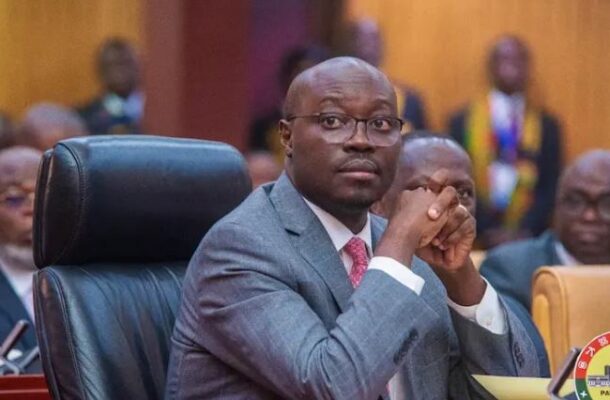
Public frustration is mounting over the failure of Finance Minister Dr. Cassiel Ato Forson to release a long-promised investigative report into the widely publicised GH¢85 million alleged transit goods diversion scandal, with critics now questioning both the credibility of the initial claims and the delay in providing official findings.
The controversy dates back to February 2026, when the Minister raised alarm apparently a false one over what he described as a major customs breach at the eastern frontier, involving the alleged diversion of transit goods destined for landlocked Niger into the Ghanaian market to evade taxes.
The claims pointed to a supposed collusion between customs officers and a Nigerien importer to defraud the state of more than GH¢85 million.
At the time, the Minister moved swiftly, visiting the eastern corridor and ordering immediate investigations into the incident, assuring the public that a comprehensive report would be released within one week.
That deadline has since passed—by a month—without any official report being made public, fueling suspicion and calls for accountability.
How The Alleged Scandal Began
According to official records, the incident dates back to the afternoon of February 16, 2026, when a convoy of articulated trucks departed the Akanu Border Post at 1:18 p.m. under transit documentation.
The trucks were scheduled to travel through Akanu, Dabala, and Techiman, and exit Ghana via Kulungugu, en route to Niger.
The shipment, processed under Bill of Entry (BOE) Number 80226125039, was supervised by Principal Revenue Officer Joseph Manu as second-in-command, with Ayiku Charles Tei serving as the examination officer.
The consignment, owned by a Nigerien trader identified as Adamou Moumouni, consisted of 44,055 packages of goods including cooking oil, tomato paste, and spaghetti, weighing a total of 879,860 kilograms.
As transit cargo originating from the Port of Lomé and passing through Ghana, the goods were exempt from import duties and taxes, provided they exited the country as declared.
Interception and Initial Allegations
On February 18, 2026, the Customs Division of the Ghana Revenue Authority (GRA) reportedly intercepted 18 articulated trucks, which authorities initially claimed were being diverted into the local market.
The trucks were said to be moving without a Customs Human Escort, a requirement for high-risk transit consignment
A joint enforcement operation, involving Customs officials, the National Security Revenue Mobilisation Taskforce, and officers from Tema Collection, intercepted 12 of the trucks along the Dawhenya–Tema Road during an overnight exercise led by Deputy Commissioner for Operations, Aaron Kanor who is now the acting Commissioner of Customs.
These developments formed the basis of the Minister’s assertion that a major diversion scheme had been uncovered.
Emerging Contradictions
However, subsequent information from internal sources has cast doubt on the original narrative. Investigators reportedly confirmed that all 18 trucks had been properly cleared and electronically gated out of the customs system as transit goods destined for Niger.
Sources further indicated that the trucks were on the approved route to Kulungugu, contrary to claims that they had deviated.
The use of the Dabala–Accra–Techiman corridor, rather than the Eastern Corridor road, was also explained as a technical necessity due to the lack of network connectivity required for the Integrated Customs Management System (ICUMS) tracking system along the eastern route.
Additionally, the operation that led to the interception was reportedly triggered by faulty or misleading intelligence from an informant, raising questions about whether the alleged diversion ever occurred.
Fallout And Leadership Shake-Up
Despite the emerging contradictions, the scandal triggered swift administrative consequences.
The then Customs Commissioner, Brigadier General Glover Ashong Annan, was relieved of his post, while at least five customs officers were interdicted pending investigations.
In the aftermath, the GRA undertook a major internal restructuring. In a circular dated February 27, 2026, Acting Commissioner-General Anthony Akwasi Sarpong announced a series of new appointments across key departments.
Among the changes, Theresa Potakey was named Acting Head of Port Operations, Nana Birago Owusu-Ansah took over as Acting Head of Suspense Regimes, while Eric Kweku Bonney, Divine Agbeko Mawutor, and Charles Agbeke assumed leadership roles in Mining, Policy and Programmes, and Preventive Services respectively.
Other appointments included Nelson Michael Essilfie as Acting Head of Tema Port Sector Command, Hawawu Salifu as Acting Head of Administration, and Emmanuel Ayisi as Acting Head of Internal Audit, alongside several strategic reassignments aimed at tightening oversight and restoring confidence.
Officials described the shake-up as part of broader efforts to address systemic weaknesses, particularly in high-risk areas such as transit trade, port operations, and revenue assurance.
Diplomatic And Public Pressure
The controversy has also taken on a diplomatic dimension, with the Nigerien Ambassador to Ghana reportedly intervening and calling for the release of the trucks and goods, insisting that the consignment was legitimately in transit.
Meanwhile, civil society groups and policy analysts are increasingly demanding answers, particularly in light of the Minister’s failure to publish the promised report within the stipulated timeframe.
The continued absence of the report has now become a major issue in itself.

COMMENTS