
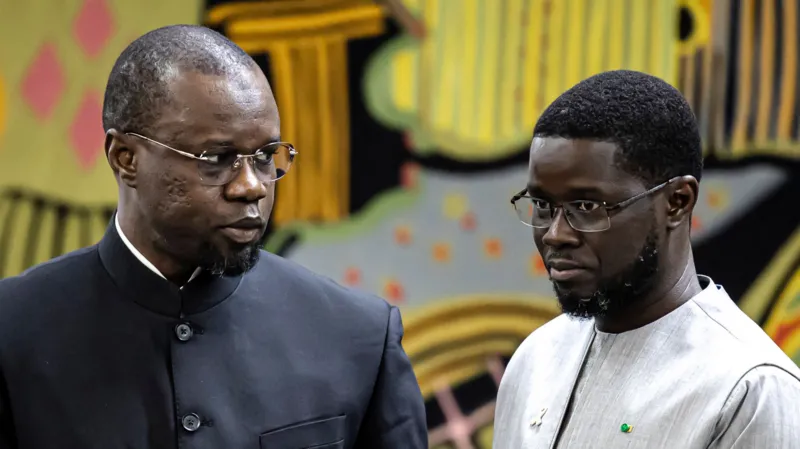
Senegalese President Bassirou Diomaye Faye has dismissed Prime Minister Ousmane Sonko and dissolved the government after months of escalating tensions
Senegalese President Bassirou Diomaye Faye has dismissed Prime Minister Ousmane Sonko and dissolved the government after months of escalating tensions between the two former allies. The move deepens political uncertainty in Senegal, already burdened by a severe debt crisis and stalled negotiations with the International Monetary Fund (IMF).
Political Fallout
President Faye announced the dismissal in a decree broadcast on state television, ending Sonko’s tenure and that of all ministers. Sonko, once instrumental in Faye’s rise to power, responded defiantly on social media, saying he would “sleep with a light heart.” The split is striking given that Sonko’s popularity among Senegal’s youth was crucial in Faye’s 2024 electoral victory, which unseated former President Macky Sall. Both men had been released from prison just days before that election, and Sonko’s backing of Faye under the slogan “Diomaye is Sonko, Sonko is Diomaye” was pivotal in mobilising voters.
Economic Strains
The dismissal comes at a time when Senegal faces mounting financial challenges. The IMF has frozen its $1.8 billion lending programme after discovering misreported debt, pushing the country’s debt to 132% of GDP. Sonko had openly criticised Faye’s handling of the debt crisis during a tense parliamentary session earlier this week, opposing restructuring plans and rejecting proposals to raise fuel prices. Finance Minister Cheikh Diba has warned that fuel subsidies could exceed the 2026 budget by as much as **$2 billion if oil prices rise further, underscoring the urgency of securing IMF support.
Uncertain Future
Sonko’s removal raises questions about Senegal’s political stability and the future of the ruling Pastef party, which dominates parliament. While Faye holds constitutional power to dismiss the prime minister, Sonko’s influence among the youth and his potential candidacy in future elections—possibly in 2029—could complicate governance. Protests have already erupted in Dakar, with students rallying in support of Sonko, highlighting the risk of further unrest. No successor has yet been named, leaving Senegal’s leadership in flux as the country navigates both political division and economic crisis.

COMMENTS