
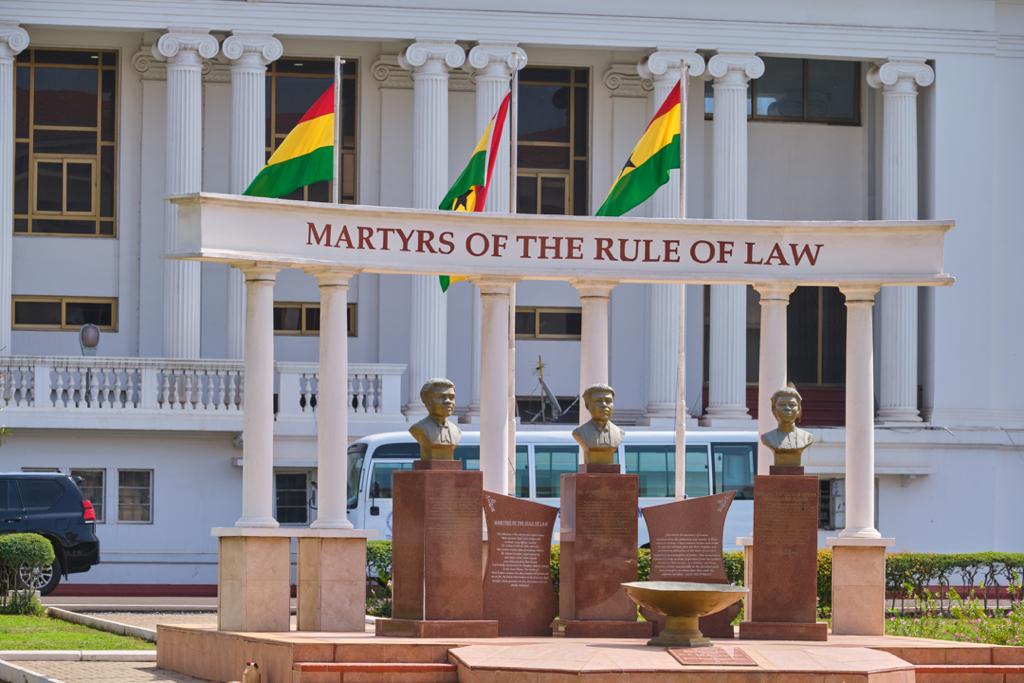
In what is being described as one of the most consequential political rulings ever handed down by Ghana's apex court, the Supreme Court has thrown out
In what is being described as one of the most consequential political rulings ever handed down by Ghana’s apex court, the Supreme Court has thrown out the delegate-based system political parties have long relied on to elect their presidential and parliamentary candidates, branding it unconstitutional.
Delivering judgment on Wednesday, July 29, a seven-member panel voted 5-2 in favour of scrapping the system, directing that every registered member of a political party in good standing must henceforth have a say in choosing its leaders and candidates.
The decision clears the path for parties to adopt a “one member, one vote” model of internal democracy. According to the court, restricting the franchise to a select group of delegates falls foul of Article 55(5) of the 1992 Constitution.
Political parties have been handed a one-year window from the date of judgment to fall in line.
The ruling brings the curtain down on decades of practice in which a limited pool of accredited delegates cast ballots on behalf of the wider membership in presidential and parliamentary primaries.
Behind the case were Professor Kwabena Frimpong-Boateng, who once headed the Ministry of Environment, Science, Technology and Innovation; longtime political figure Dr Nyaho Nyaho-Tamakloe; and Dr Christine Amoako-Nuamah, a former Minister for Lands and Forestry.
Their argument centred on fairness — that the old system handed voting power to a privileged minority while shutting out rank-and-file members.
The court, however, was careful to preserve continuity, ruling that elections and decisions already taken under the delegate system remain valid.
Major parties, notably the National Democratic Congress (NDC) and the New Patriotic Party (NPP), now face the task of overhauling their internal electoral structures to comply — a shift likely to carry considerable financial and logistical weight even as it deepens grassroots participation.
Oversight of the transition has been placed in the hands of the Electoral Commission, with the court’s full written judgment expected by August 5, 2026.

COMMENTS