
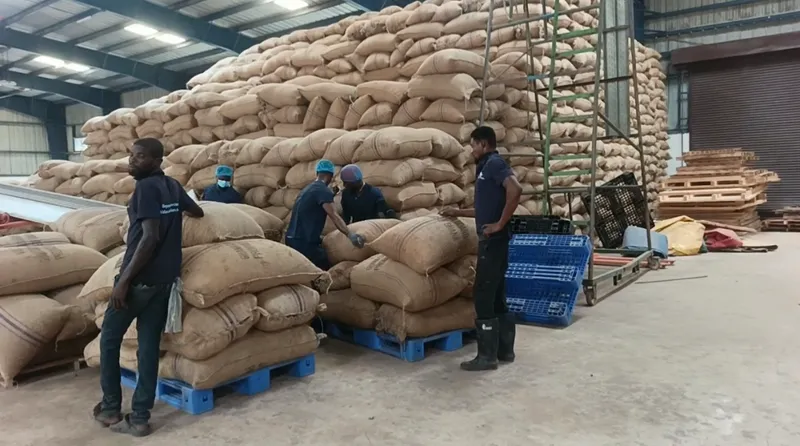
Cashew traders and exporters in the Techiman North and South municipalities of the Bono East Region have petitioned President John Dramani Mahama over
Cashew traders and exporters in the Techiman North and South municipalities of the Bono East Region have petitioned President John Dramani Mahama over the government’s proposed three-month restriction on raw cashew nut exports, warning that the policy could threaten thousands of livelihoods and destabilise Ghana’s cashew industry.
The traders, exporters and farmer-led associations, operating under the Techiman North and South Cashew Traders and Exporters Association, say the proposed restriction, alongside a planned export levy, could impose severe financial difficulties on farmers, aggregators and exporters if implemented without adequate consultation and safeguards.
In a joint petition dated November 17, 2026, and addressed to President Mahama through the Chief of Staff at Jubilee House, the association called for the immediate withdrawal of the proposed blanket three-month export restriction pending comprehensive stakeholder consultations and an assessment of its economic implications.
The petition comes barely a day after the commissioning of the NADKANSCO cashew processing factory in Techiman on November 16, 2026, an initiative expected to strengthen local processing, industrialisation, employment creation and value addition within the cashew sector.
Although the traders acknowledged the government’s commitment to developing domestic cashew processing, they argued that policies aimed at promoting local processing should not undermine the existing raw cashew trading and export market, which provides income and employment for thousands of Ghanaians.
According to the petitioners, the association represents more than 1,200 registered members, while its broader network of traders and aggregators from Nkoranza North and South, Kintampo North and South, and farmer-led associations across Ghana’s cashew-producing communities brings together approximately 3,500 traders and aggregators.
They warned that restricting raw cashew exports could reduce competition among buyers, weaken farmers’ bargaining power and ultimately result in lower farmgate prices.
The association further expressed concerns that the proposed policy could expose traders and exporters to financial losses, disrupt existing investments, affect banking arrangements and undermine international supply contracts already entered into by businesses within the industry.
Another major concern raised in the petition is whether Ghana’s domestic processing industry currently has sufficient capacity to absorb the country’s entire raw cashew production should exports be restricted.
The traders questioned the economic implications of compelling the industry to depend heavily on local processors without first establishing whether existing factories have the financial, technical and operational capacity to purchase and process the available quantities of raw cashew nuts.
They also argued that the proposed export levy could create additional financial burdens for traders and exporters, particularly those who have already committed resources to purchasing cashew stocks and fulfilling contractual obligations.
Interestingly, the petitioners have not rejected government’s ambition to expand local processing. Rather, they insist that the development of domestic processing must go hand in hand with protecting farmers’ incomes, existing investments and the competitiveness of Ghana’s raw cashew export market.
As an alternative, the association proposed the introduction of a fair and reasonable export levy or tax on raw cashew exporters, arguing that a properly structured levy could contribute to price stabilisation, protect farmers’ incomes and promote a more sustainable cashew industry.
They are therefore advocating stakeholder consultations to agree on an appropriate levy structure and its implementation rather than imposing what they describe as a blanket restriction that could disrupt the industry.
The petitioners have also called on government to protect existing cashew stocks, commercial contracts, banking facilities and legitimate investments, while providing adequate financing and incentives for local processors to compete fairly for raw cashew nuts.
They further want recognised farmer, trader and exporter associations to be formally represented in future policy decisions concerning the cashew industry.
The association has consequently requested an urgent meeting with President Mahama or his designated representatives to present its concerns and propose practical alternatives capable of protecting all stakeholders.
Copies of the petition were also sent to the Ministers of Trade and Industry, Finance, and Food and Agriculture, the Chief Executive Officer of the Tree Crops Development Authority, the Presidential Adviser for the 24-Hour Economy and Accelerated Export Development, and Members of Parliament for Techiman North and South, alongside traditional authorities across cashew-producing regions.
The petition was signed on behalf of the joint petitioners by the leadership of the Techiman North and South Cashew Traders and Exporters Association and representatives of farmer-led associations.

COMMENTS