
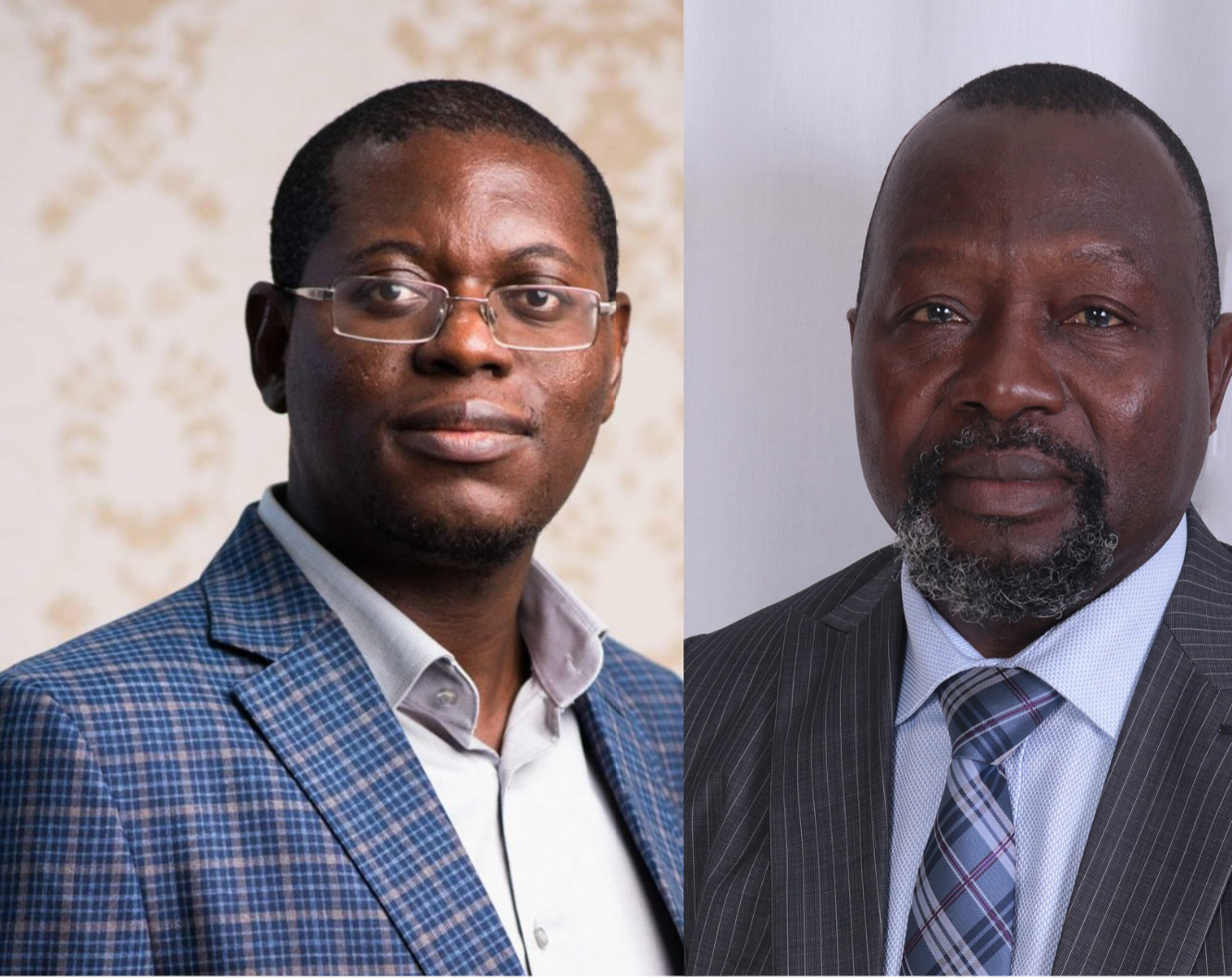
Governance expert and Vice President of IMANI Africa, Bright Simons, has sharply criticised the Attorney General’s (AG) recent claims about recovering
Governance expert and Vice President of IMANI Africa, Bright Simons, has sharply criticised the Attorney General’s (AG) recent claims about recovering losses from the collapsed Unibank, describing the government’s reported 60% recovery figure as “mathematically and financially misleading.”
The AG, on July 22, 2025, announced that the state had reached a settlement with the shareholders of the defunct Unibank—led by former Finance Minister Dr. Kwabena Duffuor—who have been under criminal and civil prosecutions since 2018 over allegations of financial misconduct and banking infractions.
According to the AG, the state had agreed to discontinue certain proceedings and accept assets and funds amounting to 60% of the re-evaluated liability of GHS 3.3 billion.
However, Simons has debunked the figure, insisting that what has truly been recovered so far is no more than 10.6% of the actual loss Ghana has suffered.
Background: Rise and Fall of Unibank
Unibank was once one of Ghana’s most prominent indigenous banks. Between 2013 and 2016, its assets grew from GHS 825 million to nearly GHS 2.9 billion. By 2017, it boasted over 400,000 customer accounts and was a recipient of several local awards.
However, its collapse in 2018 was emblematic of a broader financial sector crisis that rocked Ghana, triggered in part by regulatory reforms pushed by the World Bank and IMF.
By early 2018, the Bank of Ghana (BoG), under new leadership, had initiated multiple audits and declared the bank insolvent due to capital adequacy failures and impaired assets. Unibank’s license was revoked on August 1, 2018, and a receiver was appointed to recover assets and settle debts.
The state eventually assumed responsibility for protecting depositors through the creation of Consolidated Bank Ghana (CBG), costing the public purse billions.
AG’s Deal and the Numbers Game
In his press conference, the AG revised the government’s previously stated direct exposure from GHS 5.7 billion to GHS 3.3 billion, arguing that after further assessment, only GHS 800 million would be recovered through asset forfeiture and GHS 1.2 billion from debts owed to Unibank.
Bright Simons, however, argues that the numbers simply don’t add up.
He cited a critical letter dated July 31, 2018, from Unibank shareholders themselves, in which they acknowledged liabilities of GHS 4.9 billion and expressed willingness to liquidate assets worth at least GHS 3.52 billion at forced-sale value.
This, Simons noted, clearly contradicts the current narrative that liabilities are only GHS 3.3 billion.
Furthermore, KPMG’s audited figures indicated liabilities of GHS 9.2 billion as of May 2018—comprising BoG support, customer deposits, and corporate borrowings.
Simons contends that while Unibank’s owners claimed they were owed some GHS 1 billion by government contractors, actual validated receivables amounted to less than $200 million.
The Capital Hole: Billions Still Unaccounted For
Simons revealed that a significant portion of Unibank’s loan book—especially loans to related parties—was unrecoverable. He cited KPMG’s findings that:
$400 million was loaned to companies owned by Unibank’s shareholders and never recovered.
Between $300 million and $450 million of an additional $600 million lent to external companies was written off as bad debt.
These, he says, point to a capital hole of at least $1.8 billion that remains largely unexplained or unaccounted for. “Even the $1 billion liability Unibank’s owners admitted to has not been fully addressed in the so-called settlement,” he stated.
Public Accountability Missing
Simons questioned why key stakeholders—the Bank of Ghana and the Receiver—remain silent. BoG was reportedly owed over GHS 2.8 billion, with only about GHS 600 million in offsetting claims. Even under the best-case scenario, the current GHS 800 million and GHS 1.2 billion recovery plan does not cover these obligations.
He further questioned the quality of the assets being surrendered, stressing that even the $160 million expected to be recovered—$80 million in cash and $120 million in “undisclosed” properties—is grossly insufficient.
By Simons’ calculation, this represents only 10.6% of the total liabilities incurred by the country—a far cry from the 60% figure quoted by the Attorney General.
Legal Pressure or Political Compromise?
The controversy has also drawn scrutiny over whether the deal is politically motivated, considering that the key figure behind Unibank—Dr. Duffuor—is a prominent member of the ruling NDC party.
Bright Simons argued that even if the state wanted a negotiated settlement, the parallel criminal proceedings should not have been dropped as it served as critical leverage for the government.
“Claiming ‘pragmatism’ is not enough,” he stated. “In any serious country, the Attorney General’s announcement would be the beginning—not the end—of a national conversation on how to address massive financial losses caused by politically connected individuals.”
Conclusion: A Call for Transparency
Bright Simons is calling on the government to come clean about the real costs Ghana has incurred from the Unibank collapse and the exact value of what has been recovered.
He also called on institutions like the Bank of Ghana and the Receivership to speak publicly and clarify the remaining liabilities and recoveries.

COMMENTS