
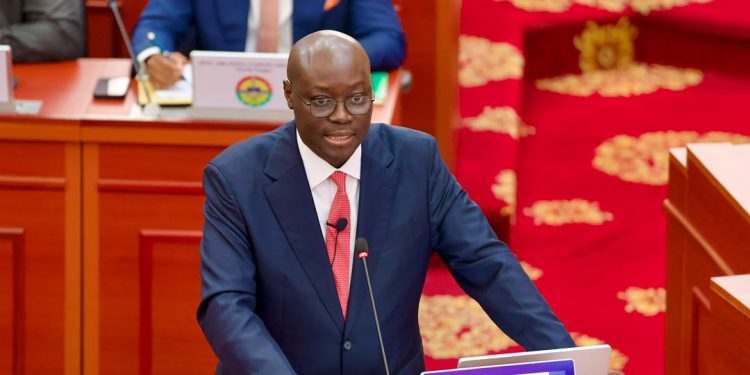
Finance Minister Dr. Cassiel Ato Forson has called for a restructuring of Ghana’s economy, arguing that the country’s economic model over the past 69
Finance Minister Dr. Cassiel Ato Forson has called for a restructuring of Ghana’s economy, arguing that the country’s economic model over the past 69 years has not delivered sufficient jobs, improved livelihoods, or sustainable prosperity for its people.
He believes the country must abandon its dependence on economic approaches that offer short-term relief and instead build a productive economy capable of creating lasting employment, particularly for its rapidly growing youth population.
Dr. Forson outlined this vision while addressing the National House of Chiefs ahead of the presentation of the 2027 Budget, seeking the support of traditional authorities for the government’s proposed ‘New Economy’ initiative.
He said the initiative is designed to reshape the country’s economic structure and expand opportunities for young people entering the labour market.
The Finance Minister questioned the long-term effectiveness of temporary employment interventions, including the National Builders Corps (NABCO) and the Youth Employment Agency (YEA), arguing that such programmes cannot substitute for a strong economy that generates sustainable jobs.
While acknowledging the immediate benefits of these interventions, he said they leave young people uncertain about their future once their placements come to an end.
“The temporary models may offer immediate relief and experience to our people, but our young people need dependable livelihoods beyond the end of the placement of these temporary models. Their future cannot depend on moving from one temporary opportunity to the next,” he stated.
Beyond employment creation, Dr. Forson identified value addition to Ghana’s natural resources as another important pillar of the proposed economic transformation.
He argued that the country must move away from exporting raw commodities and prioritize local processing and industrial development.
According to him, strengthening domestic production and adding value to locally available resources would generate employment, support businesses, and deepen the country’s industrial base.
He also assured traditional leaders that the government’s economic agenda would be underpinned by fiscal discipline and responsible public financial management.
The Finance Minister warned that failure to address unemployment among young people could have consequences beyond the economy, potentially escalating into a broader social crisis.
Dr. Forson urged the National House of Chiefs and other stakeholders to lend their support to the proposed ‘New Economy’ agenda as the government prepares to present the 2027 Budget to Parliament on Thursday, November 12, 2026.

COMMENTS