
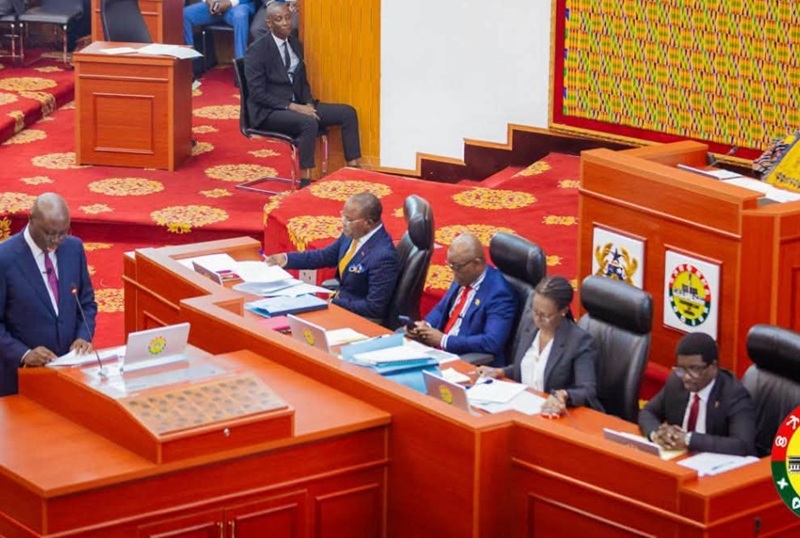
Speaker of Parliament Alban Sumana Kingsford Bagbin has directed the referral of the 2027 Budget Statement and Economic Policy to the relevant parliam
Speaker of Parliament Alban Sumana Kingsford Bagbin has directed the referral of the 2027 Budget Statement and Economic Policy to the relevant parliamentary committees in accordance with the revised Standing Orders, urging government officials to submit detailed expenditure estimates within a week to allow adequate scrutiny.
The directive is intended to ensure the effective implementation of Parliament’s revised procedural rules, which took effect in January 2024 and provide a clearer framework for the consideration of the national budget.
Ruling on the matter, Mr Bagbin drew attention to Order 195 of the Standing Orders, which requires the Budget Statement and Economic Policy, presented by the Finance Minister on behalf of and under the authority of the President, to be referred to the appropriate parliamentary committees.
Under Order 195(4), estimates relating to Ministries, Departments and Agencies (MDAs), Parliament, the Judiciary and other independent constitutional bodies must be referred to the respective committees with oversight responsibility for those sectors.
The Finance Committee, on the other hand, is responsible for considering the portions of the Budget Statement and Estimates relating to revenue and expenditure.
The Speaker also cited Order 196, which allows the President, in the absence or incapacity of the Finance Minister, to designate another Minister in writing to present the Budget on his behalf.
Emphasising the need to move away from the practices under the previous Standing Orders, Mr Bagbin directed that the current rules be fully implemented.
“These are relevant Standing Orders governing this matter before us and came into effect January 2024 and so since 2024 these are applicable Rules of Procedure we use in this House. I direct that these rules be implemented according to details and clarity that we have put in rules, different from old Standing Orders,” he stated.
He consequently confirmed that the Budget Statements already presented to the House stood referred to the relevant subject-matter committees, while matters concerning revenue and expenditure had been referred to the Finance Committee.
All committees are expected to consider their respective portions within the timeframe to be determined by the Business Committee and subsequently report to the House.
Bagbin Warns Against Delays in Budget Estimates
The Speaker further stressed the urgency of making detailed Budget Estimates available to parliamentary committees, warning that delays in their submission could undermine the time available for effective scrutiny.
He urged Ministers, Chief Directors and Budget Directors to ensure that the detailed estimates were submitted within a week.
“We have to get Estimates presented as soon as possible but at least within a week, detailed Estimates before Committees so that we can have enough time to consider them and report to House,” he said.
Mr Bagbin expressed concern about the recurring delays in making the estimates available to committees, which often affect the scheduling of meetings and the timely examination of budgetary allocations.
“Please Ministers, Chief Directors, Budget Directors, don’t disappoint us because sometimes there is long delay before we get meetings for Estimates that have been presented in Budget,” he cautioned.
The Speaker’s directive places the relevant parliamentary committees at the centre of the next phase of the 2027 budget process, with their examination of sectoral allocations expected to provide Parliament with an opportunity to interrogate government spending priorities, proposed revenue measures and the resource requirements of public institutions before the House concludes its consideration of the budget.

COMMENTS