
A fresh scandal has hit Ghana’s Computerized School Placement System (CSSPS), raising renewed fears over corruption and threatening the credibility of
A fresh scandal has hit Ghana’s Computerized School Placement System (CSSPS), raising renewed fears over corruption and threatening the credibility of the Free Senior High School (Free SHS) policy.
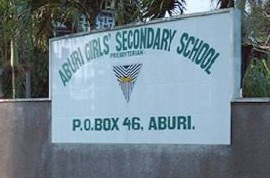
Allegations surfaced last week claiming that admission into Aburi Girls’ Senior High School—one of the country’s most prestigious institutions—was being sold for GH¢5,000.
The claim, which went viral on social media, was attributed to a woman identified as Gertrude Adzo Borklo.
In her post, she alleged that parents desperate to secure placement for their wards were being asked to pay bribes to officials or middlemen in exchange for slots at top schools.
Her account was, however, deactivated shortly after the publication, complicating efforts to trace her.
Ministry Responds with National Security Involvement
The Ministry of Education, led by Deputy Minister Dr. Clement Abas Apaak, swiftly issued a press release describing the matter as “grave” and confirmed that national security operatives, the Cyber Security Authority, and other state agencies had been tasked to investigate.
“The Ministry wishes to state categorically that the BECE Computerized School Placement System is entirely free of charge.
At no point is payment required to access this service,” the statement read. It further appealed to the public to provide evidence of anyone—whether Ministry officials or third-party agents—demanding money for school placement, promising “swift and decisive action” against culprits.
Hotlines were also released for the public to report extortion attempts: 0541548223 (calls) and 0244908957 (WhatsApp).
A Recurring Problem
This scandal is not the first time the placement system has been dogged by allegations of bribery and corruption. Since the introduction of the CSSPS in 2005, complaints of manipulation have been a recurring feature.
In previous years, reports surfaced of parents paying thousands of cedis to secure slots at top-performing schools such as Wesley Girls’, Achimota, and PRESEC.
Civil society groups and education think-tanks have repeatedly warned that such practices erode trust in Free SHS, a flagship government programme introduced in 2017 to expand access to secondary education.
The policy, which has increased enrolment by hundreds of thousands, relies heavily on the placement system to fairly allocate students to schools across the country.
Critics argue that persistent bribery allegations undermine not only fairness but also the future of bright but underprivileged children who cannot afford to pay for what is supposed to be a free public service.
Shadow Over Free SHS
The Free SHS policy remains a politically sensitive subject, having been touted as one of the most transformative social interventions in recent history. As Ghana heads into another election cycle, questions about sustainability, infrastructure, and fairness continue to dominate debate.
Education analysts caution that if the placement system is perceived as corrupt or inaccessible to ordinary families, the credibility of Free SHS itself could collapse.
“When the public loses faith in the fairness of placement, it affects the entire foundation of Free SHS,” one policy expert said.
Next Steps
For now, the Ministry insists the allegations are part of a “conspiratorial narrative” meant to discredit the system.
However, with the social media post continuing to circulate, pressure is mounting for authorities to identify the culprits—if any—and restore public confidence.
The investigation has therefore become a test case for the government’s resolve to protect the integrity of Free SHS, a programme that has become both a social lifeline for many Ghanaian families and a political legacy issue.
As the probe unfolds, the fate of thousands of students awaiting placement still hangs in the balance, with parents anxiously watching how the state handles what could become one of the biggest scandals yet in the education sector.

COMMENTS