
A former Member of Parliament for Sekondi and leading member of the New Patriotic Party (NPP), Andrew Egyapa Mercer, has launched a sharp critique of
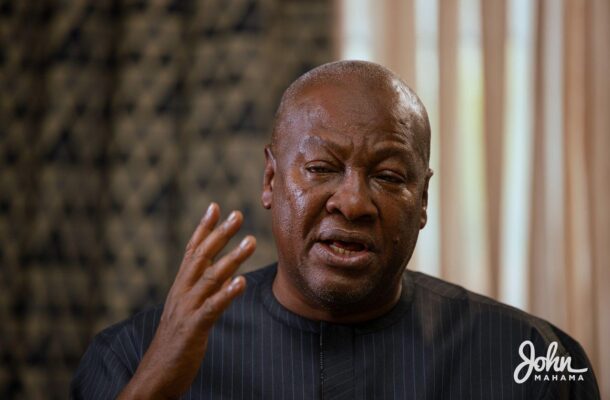
A former Member of Parliament for Sekondi and leading member of the New Patriotic Party (NPP), Andrew Egyapa Mercer, has launched a sharp critique of President John Dramani Mahama, accusing him of political inconsistency over the impact of global events on Ghana’s economy.
Speaking on TV3 New Day programme, where he appeared alongside the Chief Executive of the National Petroleum Authority (NPA), Godwin Edudzi Tamakloe, Mercer questioned what he described as a reversal in Mahama’s long-held position regarding external economic shocks.
Debate Over Global Shocks
The debate over whether global events significantly impact the economy has been a central feature of political discourse in recent years.
During the administration of former President Nana Addo Dankwa Akufo-Addo, the NPP government consistently attributed the economic difficulties—particularly between 2020 and 2023—to external shocks such as the COVID-19 pandemic and the Russia–Ukraine War.
However, while in opposition, Mahama and the National Democratic Congress (NDC) rejected this argument, insisting that the economic crisis was largely driven by domestic mismanagement, excessive borrowing and structural weaknesses in the economy.
Andrew Mercer recalled that at the time, Mahama had publicly dismissed claims that global events were responsible for the economic downturn, arguing instead that such explanations were misleading.
He questioned Mahama’s shift in stance. Andrew Mercer expressed surprise that the same political figures who once dismissed the role of global events are now acknowledging their impact.
According to him, “it is surprising that after Ghanaians were told just a few years ago that exogenous factors do not affect the economy, today we are being told the exact opposite.”
He referenced earlier comments made by NDC figures questioning how economic developments in countries such as China could affect Ghana while seemingly bypassing neighbouring countries like Côte d’Ivoire, Burkina Faso and Togo.
Mercer argued that such statements ignored the broader context of the economic vulnerabilities at the time, including financial sector reforms, energy sector debts and fiscal pressures that existed before global crises struck.
Russia–Ukraine War And Global Supply Chain Disruptions
The former MP emphasised that when Russia invaded Ukraine in 2022, it triggered widespread disruptions across global supply chains.
According to him, freight costs surged globally, and oil prices spiked significantly, affecting economies worldwide, including Ghana.
Despite these developments, Mercer said the NDC maintained that events occurring thousands of kilometres away had no bearing on Ghana’s economic situation.
He argued that this position was misleading and politically motivated, stating that “bombs flying thousands of kilometres away were dismissed as irrelevant, despite clear global economic consequences.”
Fuel Prices And Government Control Debate
He also addressed the issue of fuel pricing, which became a major political talking point during the Akufo-Addo administration. He noted that global crude oil prices rose to about $120 per barrel during 2021–2022, contributing to significant increases in fuel prices in Ghana.
At the time, he said, the NDC criticised the government heavily, accusing it of mismanagement and blaming it for rising petrol prices.
However, Andrew Mercer argued that the Ghanaian government does not directly control fuel prices, as petroleum products are largely imported and distributed by private sector players.
He explained that while government can regulate the sector and impose taxes, it does not determine the base price of fuel on the international market.
Price Stabilisation Measures Under NPP
According to him, the NPP government implemented measures such as the Price Stabilisation and Recovery Levy to cushion consumers during periods of high global oil prices.
He disclosed that there were instances where the government sought to suspend or reduce certain levies to ease the burden on Ghanaians.
He contrasted this with the current situation, questioning whether the Mahama administration would take similar steps if global oil prices surge again due to ongoing geopolitical tensions.
Emerging Middle East Crisis And Economic Risks
Andrew Mercer’s comments come at a time when President Mahama has warned that escalating tensions in the Middle East—particularly involving the United States, Israel and Iran—could have serious economic implications for Ghana.
The President has cautioned that disruptions to global oil supply routes, especially through the Strait of Hormuz, could lead to increases in crude oil prices, higher fuel costs and rising inflation.
Economic analysts have also warned that increased shipping costs, insurance premiums and supply chain disruptions could reverse recent gains in inflation control and economic stability.
“Full Circle” Moment In Ghana’s Politics
Andrew Mercer described the current situation as a “full circle” moment in the political discourse, arguing that the realities of governance have forced the NDC to acknowledge the very factors it once dismissed.
He criticised what he described as a pattern in Ghanaian politics where parties in opposition downplay complex realities, only to confront them when in power.
According to him, “when in opposition, politicians say anything to win power, but when they assume office, they are faced with the realities they once denied.”
Call For Honest Political Discourse
The former MP urged political actors to adopt a more honest approach to national discourse, stressing the importance of acknowledging economic realities rather than politicising them.
He warned that escalating global conflicts could further increase crude oil prices, with projections suggesting prices could rise to between $150 and $200 per barrel if tensions intensify.
Such developments, he said, would have serious consequences for the economy, regardless of which party is in power.
Broader Political Implications
The exchange highlights ongoing tensions between the NPP and NDC over the management of the economy and the role of global factors in shaping economic outcomes.
While the Mahama administration maintains that external shocks remain a key risk to the economic stability, the opposition insists that government policy decisions remain the primary driver of economic conditions.
However, as global uncertainties persist, the debate over economic accountability and political consistency is expected to remain a central issue in the governance and public discourse.

COMMENTS