
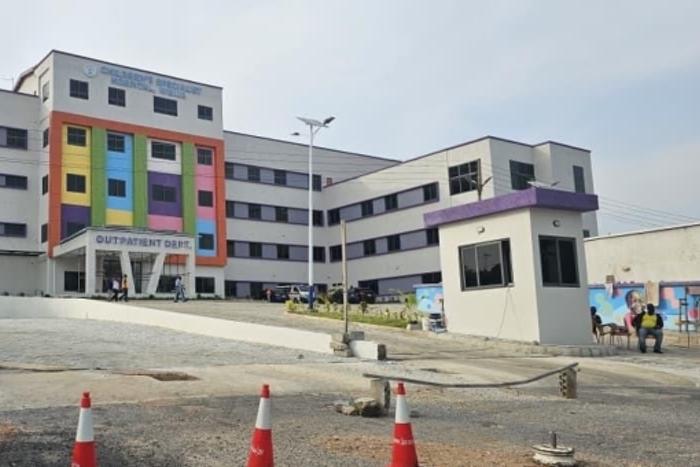
The long-delayed Weija Children’s Hospital is set to begin operations after the Economic and Organised Crime Office (EOCO) successfully facilitated an
The long-delayed Weija Children’s Hospital is set to begin operations after the Economic and Organised Crime Office (EOCO) successfully facilitated an agreement between the Ministry of Health and the project’s contractor, Awerco Construction Limited, to hand over the completed facility despite ongoing investigations into the project.
In a press statement issued on July 16, 2026, EOCO announced that after a series of engagements involving the Ministry of Health and Awerco Construction Limited, both parties had agreed to immediately hand over the hospital to enable the government to operationalise the facility for public use.
According to EOCO, the agreement was reached even though several outstanding issues surrounding the project remain unresolved.
These include claims by the contractor over unpaid contractual obligations and concerns raised by the project’s financier relating to procurement processes and other financial matters.
The anti-graft agency explained that the parties agreed it was in the national interest for the completed hospital to begin serving its intended purpose instead of remaining unused while legal and financial disputes continue.
EOCO expressed optimism that the agreement would pave the way for the commissioning of the Weija Children’s Hospital, enabling children and families to access specialised healthcare services that have long been unavailable despite the completion of the facility.
The Office, however, stressed that the decision to hand over the hospital does not affect its ongoing investigations into alleged procurement breaches, financial impropriety and other suspected irregularities associated with the execution of the project.
According to EOCO, investigations into all allegations connected to the hospital project will continue independently, adding that operationalising the facility should not be interpreted as bringing the investigations to an end or absolving any person or institution of potential liability.
The Office commended both the Ministry of Health and Awerco Construction Limited for prioritising the national interest and cooperating to reach an agreement that allows the hospital to finally serve the Ghanaian public.
EOCO further reiterated its commitment to protecting public resources, promoting transparency and accountability, and ensuring that public infrastructure projects deliver value for money and benefit citizens.
The announcement has, however, generated public debate over the role played by EOCO in communicating the development.
Some governance commentators have questioned whether it was appropriate for the anti-corruption agency to announce the impending opening of a public hospital instead of leaving that responsibility to the Ministry of Health.
One of the critics, commenting shortly after the statement was released, argued that EOCO’s statutory mandate is to investigate economic and organised crime rather than make policy or operational announcements concerning the commissioning of public health facilities.
The commentator questioned the legal basis under the EOCO Act for the Office to publicly announce when the hospital would be opened, suggesting that any findings arising from EOCO’s engagements should have been transmitted to the Minister of Health for an official announcement.

COMMENTS