
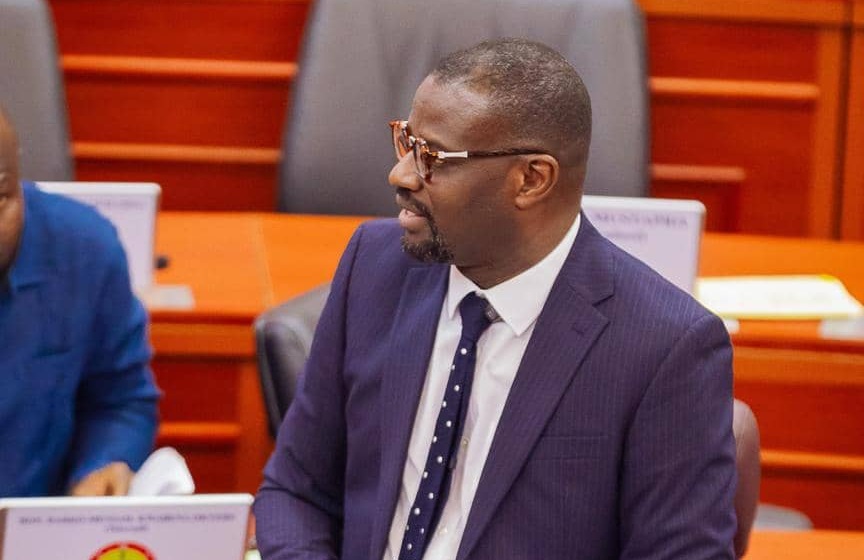
Minority Chief Whip and Member of Parliament for Nsawam-Adoagyiri, Hon. Annoh-Dompreh, has urged Parliament to allow broader debate on the devastating
Minority Chief Whip and Member of Parliament for Nsawam-Adoagyiri, Hon. Annoh-Dompreh, has urged Parliament to allow broader debate on the devastating floods that have affected several parts of the country, warning that limiting Members of Parliament from speaking on the tragedy would amount to silencing the voices of thousands of affected Ghanaians.
Speaking on the floor of Parliament on Tuesday during proceedings on statements relating to the recent floods, Annoh-Dompreh initially raised procedural concerns over the handling of the Maritime Bill. He argued that while the House was expected to consider the second reading of the bill, the Minister introducing it had relied on provisions applicable to the laying of papers rather than those governing the second reading of legislation.
He reminded the House that Standing Order 97(3) relates to the laying of papers, whereas the second reading of a bill should proceed under the relevant provisions governing legislative motions. Although he acknowledged that the procedural issue was not sufficient to halt proceedings, he appealed to the Speaker to continue upholding the high procedural standards for which Parliament is known.
The Minority Chief Whip, however, shifted attention to what he described as the more pressing national concern—the devastating floods that have claimed lives, displaced families and destroyed properties across several regions of the country.
He objected to proposals to restrict the number of Members permitted to comment on statements concerning the disaster, arguing that Parliament had a duty to provide a platform for representatives from affected communities to express the concerns of their constituents.
According to him, limiting the debate to only a handful of Members would deny Parliament the opportunity to fully appreciate the scale of the humanitarian crisis.
He revealed that the Minority had several Members prepared to contribute to the discussion and had already reduced the number of intended speakers in the interest of time. Nevertheless, he appealed to the Speaker to increase the allocation from five Members on each side to at least six, with leadership concluding the debate.
Annoh-Dompreh stressed that the flood disaster was not an ordinary parliamentary matter but a national emergency requiring extensive deliberation.
He maintained that Parliament must demonstrate empathy by allowing MPs to speak on behalf of the people who had lost loved ones, homes and livelihoods.
In an emotional appeal, he cautioned that flood victims across the country would be disappointed if Parliament appeared unwilling to dedicate sufficient time to discussing their plight. He specifically mentioned affected communities in Greater Accra, the Central Region and the Western Region, noting that many families were grieving while others had suffered extensive destruction to their homes and businesses.
Referring to reports from colleagues who had visited affected areas, Annoh-Dompreh noted that some constituencies had already recorded fatalities, underscoring the severity of the disaster.
He argued that Parliament should not appear more eager to move on to other legislative business than to deliberate on the suffering of ordinary Ghanaians.
“The people affected by these floods will not forgive Parliament if we fail to speak for them,” he cautioned, insisting that the House must rise above procedural convenience and give adequate attention to one of the country’s most pressing humanitarian crises.
His intervention comes as Ghana continues to grapple with the aftermath of widespread flooding following heavy rains, which have resulted in deaths, displacement and significant damage to infrastructure in several communities.
The Minority believes Parliament has both a constitutional and moral responsibility to ensure that the voices of victims are heard and that meaningful responses are pursued through legislative oversight and government action.

COMMENTS