
Government has taken a decisive step toward revitalising the long-struggling creative sector by establishing a Creative Arts Fund with an initial GH¢2
Government has taken a decisive step toward revitalising the long-struggling creative sector by establishing a Creative Arts Fund with an initial GH¢20 million allocation in the 2026 Budget.
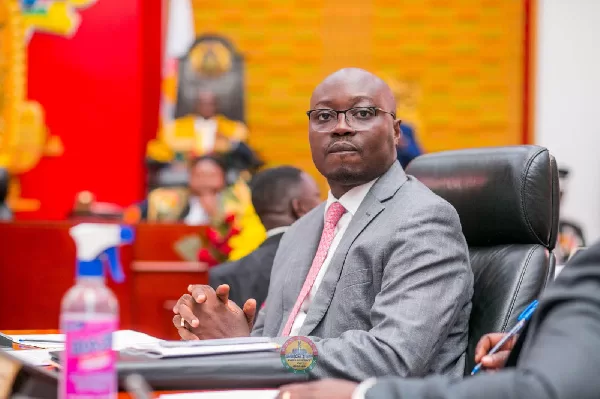
The announcement, made by Finance Minister Dr. Cassiel Ato Forson, signals one of the most concrete financial commitments to the arts in years—after decades of policy promises, stalled initiatives, and inconsistent public support.
For years, the creative industry—spanning music, fashion, visual arts, culinary arts, film, design, crafts and cultural tourism—has been widely acknowledged as one of the country’s most vibrant but least funded sectors.
Despite producing global icons such as Sarkodie, Stonebwoy, Amaarae, Christie Brown, Ibrahim Mahama and a growing number of internationally recognised designers and filmmakers, industry growth has often been limited by weak funding, minimal infrastructure investment and the absence of a structured financing framework.
The new Creative Arts Fund is designed to change that narrative. Presenting the 2026 Budget to Parliament, Ato Forson described the GH¢20 million seed capital as a catalyst for transforming the arts from a peripheral economic activity into a strategic national growth sector.
“We will establish the Creative Arts Fund for the arts, music, fashion, food and other creative sectors,” he said, underscoring government’s intention to support value chains that have long operated without predictable financing.
According to the Ministry’s plan, the Fund will support small production grants, technical upgrades, artist training programs, market access initiatives and creative start-ups seeking to commercialise their work. If properly managed, it could become a risk-absorbing pool of capital capable of funding the early-stage creative ventures that private investors routinely avoid.
This is not the first time government has announced ambitious support for creative industries.
Previous administrations launched the Creative Arts Council, the Year of Return initiative, and several skills-development schemes, but many of these interventions suffered from weak monitoring systems, short-term planning, and limited disbursement transparency. For many creatives, trust in public sector commitments has eroded over time.
That history explains the cautious optimism surrounding the new initiative. Industry players are expected to demand strong governance structures, clear disbursement criteria and an independent board with expertise in creative business management.
Stakeholders also want assurances that funds will be equitably distributed across regions—preventing the usual concentration of support in Accra and Kumasi.
The Ministry of Tourism, Culture and Creative Arts has been tasked with upgrading cultural infrastructure, strengthening copyright enforcement, and aligning tourism promotion with Ghana’s creative exports. If the new fund is linked to skills development, export promotion and small-business incubation, analysts say it could unlock new revenue streams and spur thousands of creative jobs, particularly among young people.
Still, the real test will be implementation. Creatives will be watching closely for the release of guidelines, the appointment of an autonomous board, and the selection of the first batch of beneficiaries.
Failure to follow through could risk reducing the fund to yet another well-written budget promise that never reaches the people it aims to empower.
But if the programme is executed with transparency and consistency, the Creative Arts Fund could unlock a new era of professional studios, globally competitive fashion houses, innovative digital content ventures, bustling galleries, and culinary enterprises rooted in the heritage.

COMMENTS