
The Government of Ghana and Organised Labour have signed a multi-year public service remuneration agreement covering 2027 and 2028, locking in a 9 per
The Government of Ghana and Organised Labour have signed a multi-year public service remuneration agreement covering 2027 and 2028, locking in a 9 per cent total pay increase for next year (2027) and a 10 per cent base pay increase for the year after (2028).
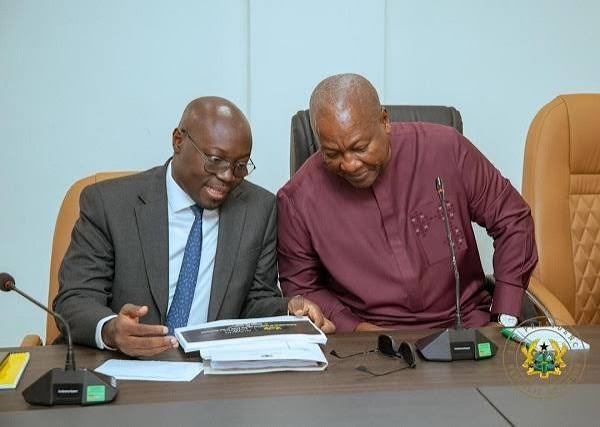
The agreement, dated Wednesday, October 28, 2026, was concluded by the Public Services Joint Standing Negotiating Committee (PSJSNC) at the premises of the Ghana Employers Association. It was signed by Dr George Smith-Graham, Chief Executive of the Fair Wages and Salaries Commission (FWSC), and Bro. Joshua Ansah, Secretary-General of the Trades Union Congress (TUC).
What workers will get
Under the deal, public sector workers will receive a 9 per cent increase in total remuneration effective January 1, 2027. Of this, eight percentage points are earmarked for an across-the-board base pay increase, while one percentage point is set aside for Conditions of Service.
For 2028, the parties agreed to a 10 per cent across-the-board base pay increase, effective January 1, 2028, calculated on the applicable base pay as at December 31, 2027.
The framework runs for two years, from January 1, 2027 to December 31, 2028. The parties said the arrangement recognises workers’ contributions to economic recovery and the need for income protection, fiscal sustainability and industrial harmony.
Inflation safeguard
A notable feature of the agreement is an income protection clause tied to inflation. According to the document, the 2028 base pay was agreed after considering current inflation of 5.2 per cent and the government’s projection of 8 per cent, give or take 2 percentage points, for both 2027 and 2028.
If year-on-year inflation for December 2027 overshoots the 8 per cent mid-point projection by a factor of two, the PSJSNC will reconvene to review the 2028 base pay.
Preparing for the move from FWSC to IPEC
The two-year arrangement is also intended to provide predictability and a stable environment for the transition of the Fair Wages and Salaries Commission to the Independent Public Emoluments Commission (IPEC), subject to the applicable legislative processes.
On this, the agreement says the government will pursue a lawful and orderly transition, including the proposed legislative framework, institutional design, a National Emoluments Policy, a National Negotiations Policy and a Performance and Productivity-linked Pay Framework. Stakeholder consultations and operational readiness are also listed.
The parties further agreed to use the transitional period to review some allowances, with a view to addressing distortions in the current compensation arrangement before IPEC is implemented.
Organised Labour is to be consulted quarterly on reforms affecting workers. The FWSC and other existing bodies will keep their lawful functions until any transfer of authority takes legal effect.
Dispute resolution
The agreement states that negotiations for public service remuneration for 2027 and 2028 are settled by the deal. Both sides committed to constructive dialogue and to resolving any dispute that arises during implementation peacefully, through established negotiation and lawful dispute-resolution procedures.
Background
The deal follows negotiations that, according to the Ghana News Agency, opened on October 15 at the Ghana Employers Association’s conference hall in Accra. Last year, the government and Organised Labour agreed a 9 per cent base pay increase for 2026, signed on November 9, 2025.
This year’s agreement is the first to fix pay for two years at once, a change that gives workers and government a longer planning horizon as the FWSC-to-IPEC transition gets underway. Public sector workers will now be watching how quickly the increases are implemented in January, and whether the promised review of allowances is delivered before IPEC takes over.

COMMENTS