
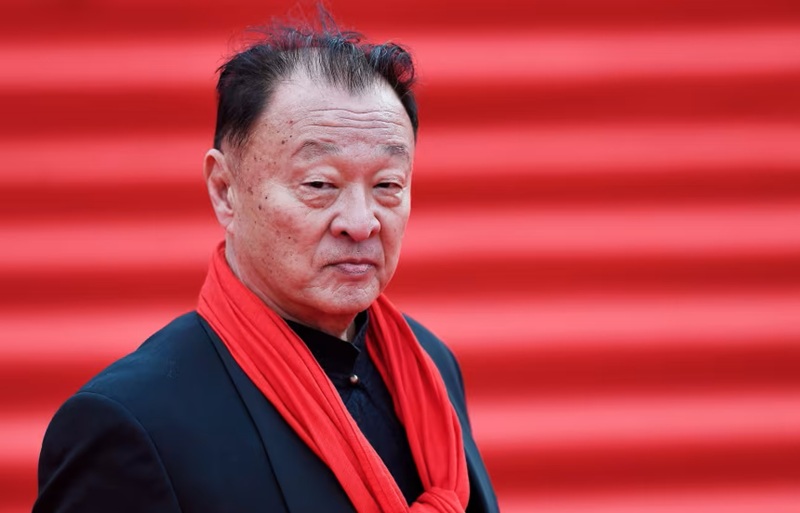
The global film community is grieving the passing of Cary-Hiroyuki Tagawa, the distinguished Japanese-American actor whose powerful screen presence an
The global film community is grieving the passing of Cary-Hiroyuki Tagawa, the distinguished Japanese-American actor whose powerful screen presence and cultural advocacy left a lasting mark on Hollywood.
Tagawa, best known for his memorable role as Shang Tsung in the 1995 hit Mortal Kombat and his acclaimed performance in Amazon’s The Man in the High Castle, died at age 75.
His manager, Margie Weiner, confirmed that the actor passed away peacefully in Santa Barbara, surrounded by family, after complications from a stroke.
Tagawa’s career spanned nearly four decades, but his path to stardom was far from conventional. Born in Tokyo in 1950 to a Hawaii-born U.S.
Army officer and a Japanese stage actress, Tagawa spent his childhood moving across U.S. Southern states as his father was posted to various military bases.
His mother, Ayako—herself an accomplished performer—discouraged him from pursuing acting, fearing the limited and often stereotypical roles available to Asian actors in Hollywood.
Despite her reservations, Tagawa would eventually challenge and redefine those boundaries.
Before embracing acting at age 36, Tagawa held an eclectic range of jobs: celery farmer, limousine driver, pizza supply truck driver, and even a photojournalist.
His breakthrough came in 1987 when he appeared in Bernardo Bertolucci’s Oscar-winning epic The Last Emperor. The performance launched him into major Hollywood productions, including Pearl Harbor, Planet of the Apes, and the James Bond film License to Kill.
Throughout his career, Tagawa became one of Hollywood’s most recognizable Asian actors, often portraying powerful or enigmatic characters.
While he acknowledged the increased visibility of Asian actors in the 2000s, he repeatedly stressed that meaningful opportunities remained limited.
“The good news is it’s better than it’s ever been,” he told Midweek in 2005, “but the bad news is that it hasn’t changed that much.”
His commitment to portraying Asian stories authentically was evident in his role as the Baron in the 2005 adaptation of Memoirs of a Geisha.
When critics accused the film of insufficient cultural accuracy, Tagawa responded that Western interpretations of Japanese narratives inevitably reflected their creators.
“It wasn’t a documentary,” he reminded skeptics in a 2006 interview with the Associated Press.
Beyond acting, Tagawa explored martial arts not for combat, but for spiritual and physical healing.
He developed Ninjah Sportz, a system blending martial arts techniques with wellness practices. His expertise attracted professional athletes, including World Boxing Council champion Brian Viloria, and members of the University of Hawaii football team.
Despite his many achievements, Tagawa’s life was not without controversy.
In 2008, he pleaded guilty to a petty misdemeanor charge of harassing a girlfriend.
Police reported visible bruises on the victim, and Tagawa’s attorney stated that the actor took full responsibility from the beginning.
Cary-Hiroyuki Tagawa’s legacy, however, remains one of resilience, cultural pride, and artistic excellence.
His journey from an itinerant childhood to international acclaim stands as a testament to perseverance. For many Asian actors who followed, he broke barriers, challenged stereotypes, and proved that Hollywood had room—indeed, a need—for stories told by and about Asian people.

COMMENTS